
Pollution Is Choking India’s Economic Growth: An Economic Perspective
How Pollution Is Impacting India and Odisha’s Growth, Jobs, and Economy
Quick Summary
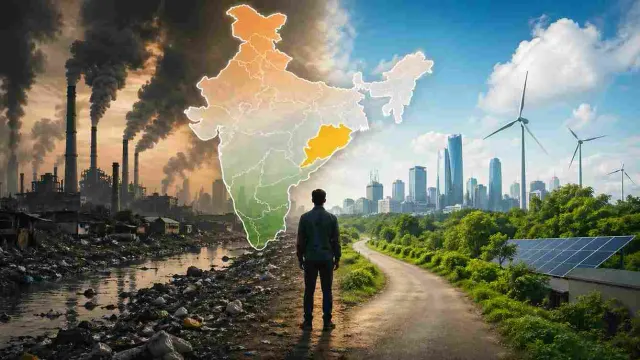
- Pollution is severely impacting India’s economy, increasing healthcare costs, reducing productivity, and causing losses of up to 6–9% of GDP.
- Key sectors like agriculture, tourism, construction, and industry are facing major setbacks, while foreign investment and workforce efficiency are declining.
- Despite government initiatives, weak implementation and rising environmental stress make pollution an urgent economic crisis that demands immediate and coordinated action.
India’s battle with pollution has entered a dangerous phase—where the cost is no longer limited to health, but extends deep into the economy. Every year, hundreds of thousands of lives are lost, while productivity declines and investor confidence weakens.
What makes this crisis more alarming is its silent nature: pollution is not only choking cities but also slowing economic growth, reducing workforce efficiency, and creating long-term financial strain.
Beyond health impacts, pollution is discouraging foreign investors, who increasingly view India’s unsafe and degraded environment as a major risk. As a result, the country is struggling to meet its Foreign Direct Investment (FDI) targets. Adding to this concern, the continuous depreciation of the Indian Rupee against the US Dollar has accelerated capital outflows, with nearly ₹1.14 lakh crore withdrawn in March alone.
A Growing Burden on the Economy
The economic cost of pollution has reached critical levels. It is estimated that pollution-related issues are imposing an additional burden of 6–9% on India’s GDP.
This man-made crisis is no longer just an environmental issue—it has evolved into an undeclared national emergency. The consequences include:
- Rising healthcare expenditure, now nearly 3.5 times higher due to pollution-related illnesses
- Increasing pressure on public health infrastructure
- Disruption across key sectors like real estate, agriculture, tourism, and renewable energy
The very pillars of India’s rapid economic growth are being weakened.
Also Read: Why Is Odisha Burning? The Real Reasons Behind Rising Forest Fires
Impact on Productivity and Human Resources
According to IMF expert Gita Gopinath, pollution has become one of the most serious challenges to India’s economic progress.
Its impact on human productivity is severe:
- Every Indian loses around 20 working days annually due to pollution-related health issues
- A significant portion of GDP (6–10%) is diverted into non-productive sectors
- Annual economic losses are estimated at ₹31 lakh crore
Even in major tech hubs like Bengaluru, productivity drops by 8–10% on highly polluted days, highlighting how deeply pollution affects modern industries.
Sector-Wise Economic Damage
Pollution is disrupting multiple sectors simultaneously:
- Construction Sector: Project timelines are delayed by 1–1.5 months annually due to pollution-related constraints
- Tourism Industry: Nearly 20% of hotels in North India faced closures last year due to pollution
- Agriculture: Crop productivity has declined, with losses reaching around 12%
- Solar Energy: Pollution reduced efficiency, causing nearly 13% losses
- Business Sector: Air pollution alone leads to losses of about ₹9 lakh crore annually
These setbacks ultimately increase costs for consumers and slow down overall economic momentum.
Also Read: From Books to Reels: Endless Scrolling Is Silently Damaging Your Child’s Brain
Regional Imbalance in Pollution Levels
Pollution levels vary significantly across India:
- Several cities in Uttar Pradesh, Rajasthan, and Gujarat still fail to meet pollution-free standards
- Northern regions remain severely affected
- Southern states like Karnataka and Tamil Nadu show relatively better environmental conditions
Major causes of pollution include:
- Burning of agricultural residue
- Construction dust
- Industrial emissions
- Coal mining pollution
- Unregulated use of old vehicles
Impact on Odisha’s Economy
In Odisha, pollution contributes to a 1–2% loss in state GDP.
Although the state benefits from a strong green cover, challenges remain:
- Average per capita income drops by around ₹3,000 due to pollution
- Industrial regions like Angul, Talcher, and Jharsuguda face severe pollution levels
- Mining contributes over 49% to the state economy, increasing environmental stress
Rising temperatures—crossing 44°C in Jharsuguda—along with toxic emissions from industries and mines are worsening the situation. Acid rain caused by sulfur dioxide and nitrogen oxides is further damaging agricultural productivity.
Why Pollution Is Becoming a Crisis
The urgency of tackling pollution has increased in recent years. Rapid urbanisation, industrial expansion, and rising vehicle usage are intensifying environmental stress.
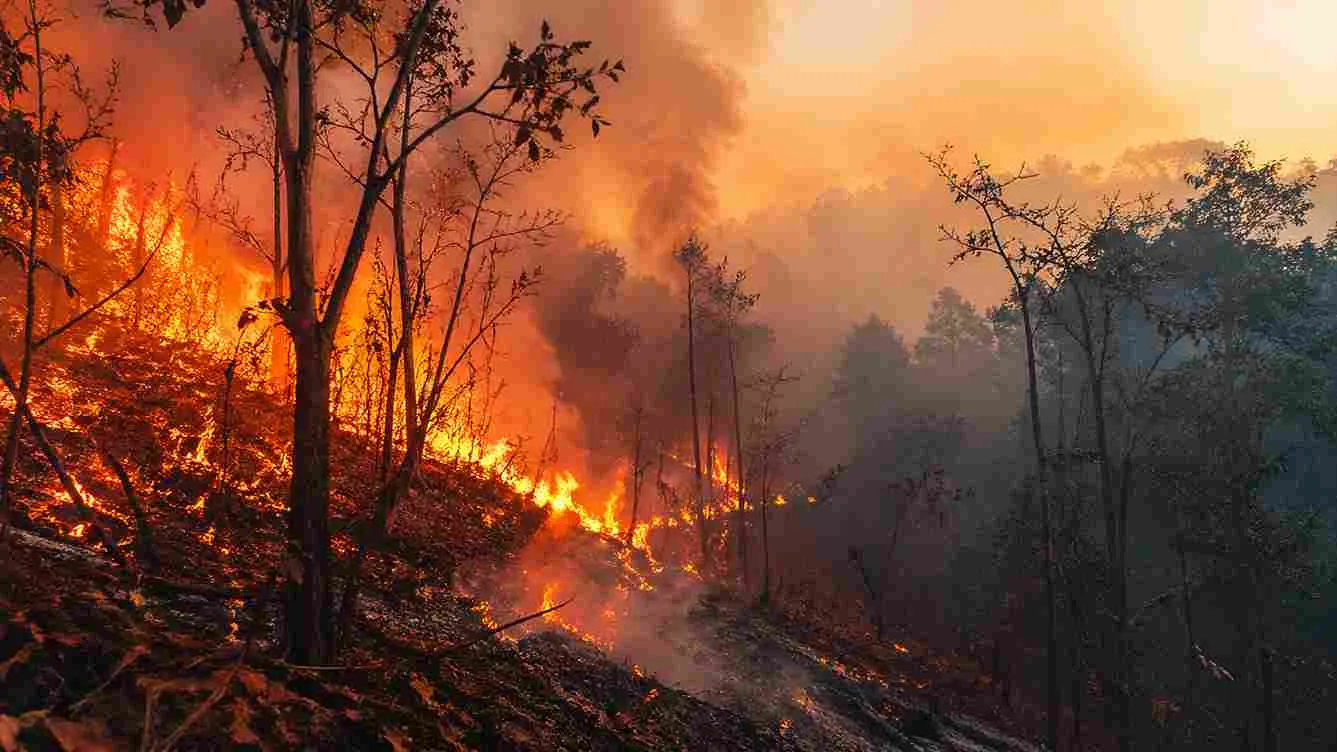
At the same time, extreme heatwaves and forest fire incidents—especially in states like Odisha—are amplifying the impact of pollution. The combined effect is creating a cycle where environmental degradation and economic losses reinforce each other.
Government Measures and Their Limitations
The government has initiated several steps to control pollution, including the National Clean Air Programme, stricter emission norms, and promotion of electric vehicles.
Institutions like the Central Pollution Control Board continue to monitor air quality and enforce regulations. Global institutions such as the World Bank and International Monetary Fund have also highlighted the economic risks of pollution in India.
However, implementation gaps, weak enforcement, and lack of coordination between states limit the effectiveness of these initiatives.
Strategic Actions to Combat Pollution
Addressing pollution requires a multi-layered approach:
- Strengthening green cover, especially in industrial regions
- Strict enforcement of emission and environmental compliance norms
- Promoting renewable energy and reducing dependence on fossil fuels
- Improving waste management and urban planning
- Expanding public transport and discouraging old vehicle usage
A coordinated effort between government, industries, and citizens is essential to reverse current trends.


Human Impact: The Ground Reality
In industrial belts like Talcher and Jharsuguda, residents are already experiencing the direct effects of pollution. Rising respiratory illnesses, declining agricultural yields, and increasing living costs are becoming part of everyday life.
These local realities reflect a larger national crisis that goes beyond statistics.
Long-Term Risks and Partial Progress
Pollution has long-term consequences for India’s future:
- Declining workforce productivity
- Reduced life expectancy by about 3.5 years
- Falling standard of living
While government initiatives have made some progress—reducing economic losses from 7% of GDP in 2024—these efforts are still insufficient.
The scale of the problem remains massive, with its economic impact exceeding even the country’s total defense budget.
An Urgent Call for Action
Environmental pollution is no longer just an ecological concern—it is a direct threat to India’s economic stability and future growth. Without aggressive policy action, stronger enforcement, and public participation, this silent crisis will continue to expand.
If ignored, pollution will not just choke India’s air—it will choke its economic future.
Author Details
He is a writer and content creator with 4 years of experience covering Odisha, India, and economic news, crafting insightful stories that bridge local issues with national and global trends.
Reader Feedback
Was this article useful?
Stay Connected
Get the next important story before you miss it.
Subscribe to the newsletter for trusted updates, or join our WhatsApp channel for quick top-story alerts from The Eastern Times.
WhatsApp Channel
Prefer instant alerts? Join our WhatsApp channel for top stories and breaking updates.
Join on WhatsApp