
Why Is Odisha Burning? The Real Reasons Behind Rising Forest Fires
A closer look at the causes, climate impact, and human factors driving the rising forest fire crisis in Odisha
 The Eastern Times
 Quick Summary
- Fires rising due to human activities and heatwave in Odisha.
- Dry forests make fires spread quickly.
- Awareness and prevention are key to control.
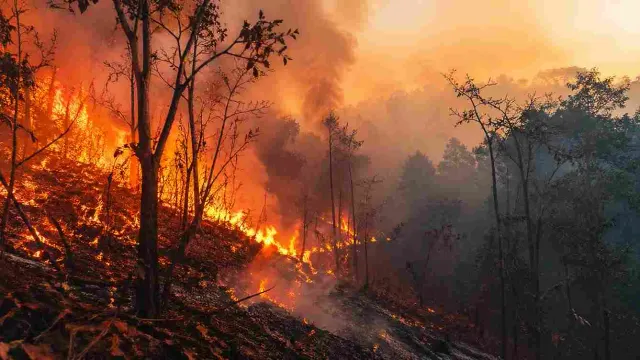
As summer tightens its grip, Odisha is experiencing a severe heatwave, with temperatures soaring across several districts. Alongside the rising heat, frequent incidents of forest fires have emerged as a major environmental concern, threatening biodiversity, livelihoods, and ecological balance.
Forest fires in India are not new, but their frequency and intensity have increased in recent years. These fires typically occur during the dry months from November to June, when vegetation becomes highly flammable. Among various forest types, dry deciduous forests—common in Odisha—are particularly vulnerable due to the accumulation of dry leaves that act as fuel.
What the Data Shows
More than 36% of India’s forest area is regularly affected by fires, and nearly 4% is extremely fire-prone. According to official data:
- 54.40% forests face occasional fires
- 7.89% face moderate fires
- 2.4% are severely affected
- 35.21% remain largely unaffected
Regions like the Western Himalayas, Northeast India, Odisha, Chhattisgarh, and Andhra Pradesh are among the most vulnerable.
The leading districts contributing to Odisha’s forest richness include:
- Kandhamal district – Over 67% forest cover
- Gajapati district – Around 57%
- Deogarh district – Around 50%
- Sambalpur district – Nearly 49%
Within Odisha, districts like Kandhamal, Gajapati, Deogarh, and Sambalpur play a key role in maintaining forest cover, with some areas having more than half their land under forests. These regions are also among the most vulnerable to seasonal fires.
Causes of Forest Fires in Odisha
Forest fires in Odisha are largely driven by a combination of human activity and climatic conditions. In fact, over 90% of the fires are human-induced, though not always intentional.
Livelihood Practices
- Mahua flower collection – People burn dry leaves under trees to make it easier to collect fallen Mahua flowers during the season.
- Kendu leaf regeneration – Small fires are set to promote fresh growth of Kendu leaves, which are used for making bidis.
- Poaching activities – Sometimes fire is used to drive animals like deer or wild boar into open areas, which can spread uncontrollably.
Climate Conditions
- Extreme heatwaves – High temperatures (above 40°C) dry out forests, making them highly prone to catching fire.
- Dry deciduous forests – Large amounts of dry leaves and vegetation act as fuel, helping fires spread quickly.
- Lack of pre-monsoon rains – When expected early rains do not arrive, forests remain dry and fires become more likely.
Rising Human Pressure
- Podu (slash-and-burn) farming – Fire is used to clear land for cultivation, which can sometimes go out of control.
- Increased dependence on forests – More human activity inside forests increases the chances of accidental fires.
- Careless human behaviour – Throwing burning cigarettes or leaving small fires unattended can easily start forest fires.
Also Read: Why Is Odisha Implementing a Universal Mental Health Policy in Schools?
Why Fires Become Hard to Control
Once ignited, forest fires spread quickly due to natural and geographical factors:
- Difficult terrain in regions like Similipal and the Eastern Ghats.
- Strong summer winds that carry embers across large distances.
These conditions make firefighting operations more challenging and time-sensitive.



How Odisha Is Responding
To tackle the growing threat, Odisha has adopted a modern “space-to-ground” approach, combining advanced technology with grassroots action.
Technology and Monitoring
Satellite-based monitoring systems such as MODIS and VIIRS help detect fire hotspots in real time. Alerts are sent immediately to forest officials, allowing quicker response. In addition, drones and AI-enabled systems are being used to monitor sensitive and remote areas.
Ground-Level Measures
On the ground, forest departments are creating fire lines—cleared strips within forests that prevent fires from spreading. In water-scarce areas, leaf blowers are used to remove dry leaves and cut off fuel supply. Control rooms operate round the clock to track and coordinate firefighting efforts.
Community Participation
Local communities are at the centre of fire prevention efforts:
- Vana Surakshya Samitis act as first responders
- Ama Jungle Yojana promotes community-led conservation
- Awareness drives encourage safer alternatives to burning practices
What More Needs to Be Done to Control Forest Fires in Odisha
- Change livelihood practices: Many fires start due to activities like Mahua and Kendu collection. Promoting safer methods, such as using collection nets instead of burning leaves, can reduce fire incidents without affecting livelihoods.
- Strengthen community involvement: Encouraging village-level responsibility, rewarding fire-free areas, and training local youth for quick response can make forest protection more effective in Odisha.
- Improve pre-season preparation: Clearing dry forest fuel, maintaining fire lines, and strengthening early warning systems can help prevent fires from spreading.
A Collective Responsibility
Odisha has set an ambitious target to increase its forest and tree cover to 45% by 2030 through plantation drives and community-led conservation efforts. However, achieving this goal will require sustained efforts to control forest fires.
While technology has improved detection and response, preventing fires ultimately depends on human behaviour. Greater awareness, responsible practices, and stronger community engagement will be crucial in protecting Odisha’s forests for the future.
Reader Feedback
Was this article useful?
Stay Connected
Get the next important story before you miss it.
Subscribe to the newsletter for trusted updates, or join our WhatsApp channel for quick top-story alerts from The Eastern Times.
WhatsApp Channel
Prefer instant alerts? Join our WhatsApp channel for top stories and breaking updates.
Join on WhatsApp