
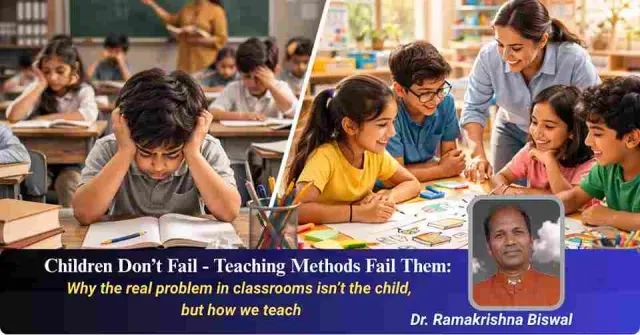
Children Don’t Fail — Teaching Methods Fail Them: Why the real problem in classrooms isn’t the child, but how we teach
Quick Summary
- Children don’t fail because of their ability — they struggle when teaching methods don’t match how they learn.
- One-size-fits-all classrooms ignore differences in pace, background, and learning style, leading to confusion, stress, and disengagement.
- Teaching that is flexible, practical, and child-centered helps improve understanding, confidence, and long-term success.
“Children do not fail to learn because they lack capability. They fail to learn because we design instruction for a fictional average child and call it a standard.”
— Dr. Lilian Katz
Walk into any classroom in India — whether in a government school in Bihar, a private school in Bengaluru, or a municipal school in Mumbai — and the scene is familiar.
Dozens of children sit in rows.One teacher teaches the same lesson to everyone.
The syllabus moves ahead, no matter who understands and who does not.
For a few children, this system works. For many, it leads to confusion or boredom.
For some, it slowly takes away confidence, curiosity, and the joy of learning.
But decades of research from neuroscience, developmental psychology, and classroom practice tell us something important: children learn best when teaching aligns with how they naturally grow and develop. This idea is not new — it forms the foundation of the National Association for the Education of Young Children (NAEYC) framework known as Developmentally Appropriate Practice (DAP).
Although DAP started in early childhood education, its ideas are useful for all children — from young preschoolers to teenagers preparing for board exams.
Today, classrooms in India are more diverse than ever. At the same time, students are facing more stress and bigger learning gaps.
Because of this, it is more important than ever to teach children in ways that match how they actually grow and learn.
What Exactly Is Developmentally Appropriate Practice?
DAP is a simple but powerful idea:
Teach children in ways that match their developmental stage, individual strengths, and cultural context.
DAP is based on three key things:
- First, understanding child development
How children usually grow, think, feel, and learn at different ages - Second, understanding each child
Their interests, learning style, pace, and needs - Third, understanding their social and cultural context
Their family enviornment, language, culture, and everyday experiences
DAP does not mean lowering expectations.
It means setting high expectations in a smarter way — based on real children, not an imaginary “average” child.
These ideas are supported by researchers like Lev Vygotsky, Jean Piaget, and Urie Bronfenbrenner.
Their work shows that children learn best when learning is at the right level —
not too easy, not too hard — and when they are supported by caring adults.
Four Pillars of DAP — What It Looks Like in Real Classrooms
1. Whole-Child Learning
Children don’t learn only through books.
Their emotions, confidence, and physical well-being also matter.
A child who is scared or anxious cannot focus on maths.
A child who feels ignored will slowly lose interest, even in subjects they like.
2. Learning Through Activity
Children are naturally curious.
They learn better through touch, movement, questioning, and experimenting.
Hands-on, project-based, and play-informed activities help them understand deeply and remember longer.
3. Teaching That Responds to Each Learner
Every classroom in India has different kinds of learners. Some children understand quickly.
Some need more practice. Others need examples, materials, or personal guidance.
DAP supports teaching in different ways, so that every child can learn and move forward.
4. Respecting Culture & Language
India is a very diverse country with many languages and cultures. Children learn better when their background, stories, and language are respected.
An Odia-speaking or Kui-speaking child should never feel that their identity is a barrier to learning.



Why the Current System Is Failing
India’s education system is at a turning point.
The 2023 ASER report highlighted that many Class 5 children in rural India cannot read a Class 2-level text or solve basic arithmetic. Urban schools face a different challenge — rising anxiety, academic pressure, and burnout.
These problems are not accidental.
When children are pushed through a syllabus designed for an imaginary “average learner”, many experience repeated failure.
Neuroscience tells us that this stress floods the brain with cortisol, affecting memory, focus, and motivation.
We are unintentionally creating conditions that make learning neurologically harder.
On the other hand, long-term studies (like the HighScope Perry Preschool Study) show that developmentally responsive teaching leads to stronger academic success, healthier social skills, higher graduation rates, and greater employment stability.
The message is simple:
Teaching children the way they actually learn produces better results than forcing them into a one-size-fits-all curriculum.
Two Classrooms, Two Outcomes
Example 1- A Kindergarten Classroom
In one classroom, children are given worksheets.
They circle numbers, count pictures, or fill in blanks.
Some finish quickly and get restless.
Others don’t understand and sit quietly, confused.
In another classroom(DAP-informed), things look different.
The teacher creates a small “Mini Mandi” using everyday items like vegetables, bottle caps, bangles, and pulses.
Children sort, count, and compare.
Some even create their own small “shops” with price tags.
Those who need help work closely with the teacher.
Here, every child is involved.
Every child is learning — at their own level.
Research also shows that when children learn maths through play and hands-on activities, they understand better and remember longer.
This kind of classroom is not easier. It is simply smarter.
Example 2: A Grade 5 Social Studies Class
Bringing Learning Closer to Home
Instead of only reading textbook chapters on migration, a DAP-based classroom takes a different approach.
Students talk to their family members about their migration journeys.
They map movements, compare stories with classmates, and turn these experiences into their own narratives.
They also discuss and debate real-world migration issues using evidence.
Across India — from first-generation migrant families in Delhi to tribal communities in Chhattisgarh — children see their own identities reflected in the classroom.
Research shows that culturally responsive teaching leads to:
- Higher engagement
- Better comprehension
- Improved academic performance
No extra budget required — only intentional planning and teacher training.
What Can Each Stakeholder Do?
Parents
- Ask teachers how they adjust lessons for different learners.
- Support play-based and project-based learning.
- Notice your child’s curiosity, not just marks.
- Share your family’s stories, culture, and language with teachers.
Teachers
- Use ongoing observation and simple formative assessments.
- Differentiate tasks based on readiness.
- Design classrooms with movement, collaboration, and inquiry
- Build strong relationships with families
Policymakers & School Leaders
- Reduce excessive testing that restricts learning time
- Invest in teacher preparation aligned with child development
- Support portfolio-based assessments
- Prioritize manageable class sizes so teachers can know each child well
Answering the Critics
Is DAP less rigorous?
No.
A major 2016 international analysis found that inquiry-based, hands-on learning outperforms direct instruction on deep understanding and problem-solving — and performs equally well or better on tests.
Can DAP work at scale in India?
Yes.
Countries like Finland have built entire national systems around principles nearly identical to DAP — with excellent results. India is already moving in this direction through the National Education Policy (NEP 2020), which emphasizes experiential learning, multilingualism, foundational literacy and numeracy, and flexible teaching pathways. DAP aligns directly with these reforms.
The Choice We Must Make Today
Every child in an Indian classroom is a life in the making — not a mark sheet, not a future IIT aspirant, not just a number in school rankings.
They learn best when they feel safe, seen, supported, and challenged, not when they feel pressured, ignored, or rushed through a system that does not notice them.
Developmentally Appropriate Practice does not ask us to choose between rigour and joy; it shows that the best learning happens when both exist together.
The science is clear, the evidence is strong, and the examples are already in front of us. What remains is the will to act — from parents, teachers, school leaders, and policymakers.
Our children cannot wait for a "future" system. They are in classrooms today, asking — quietly, through their curiosity and struggles — whether this system is built for them.
The answer we give will shape not just their future, but India’s.
Author Details
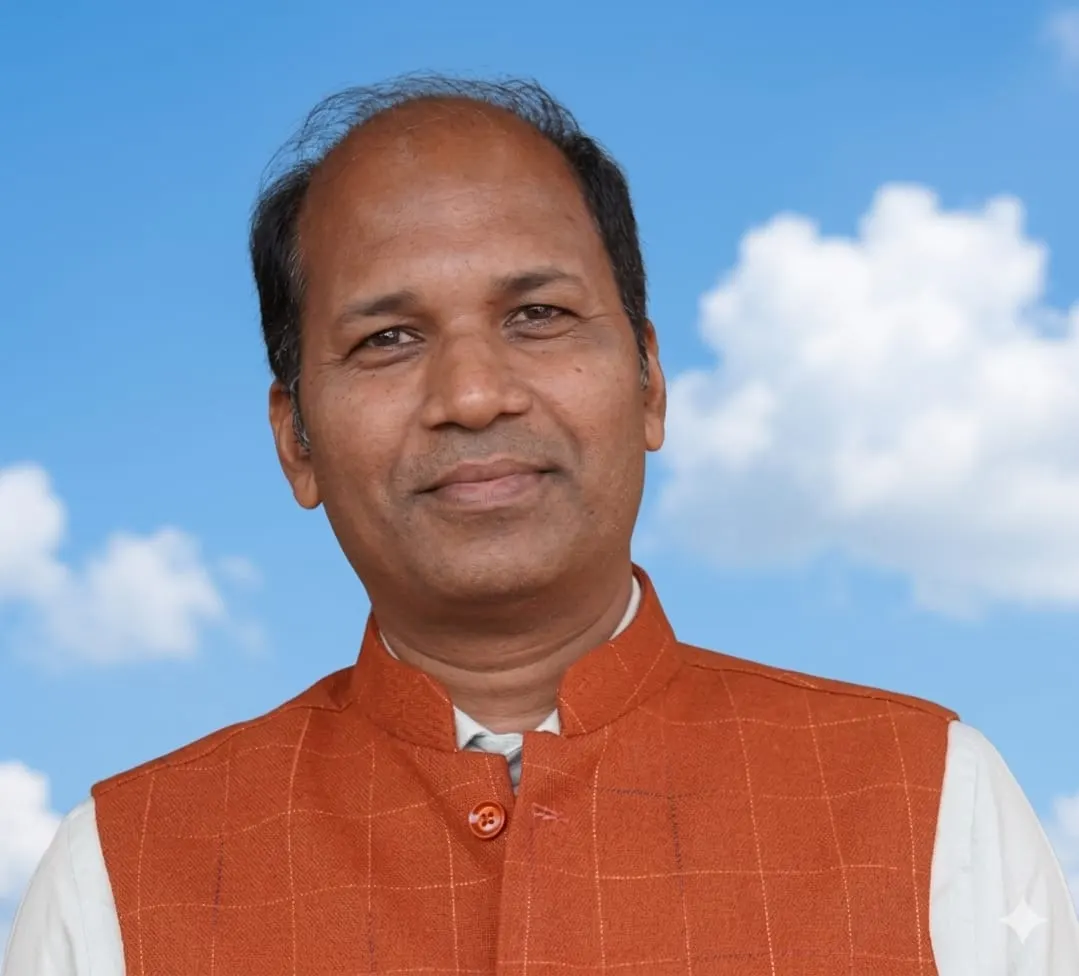
Dr. Ramakrishna Biswal is a Professor of Psychology in the Department of Humanities and Social Sciences at the National Institute of Technology (NIT) Rourkela. With a Ph.D. from the University of Delhi, he is a recognized expert in developmental psychology. His research and teaching primarily focus on mental health and well-being, inclusive education and disability, and sustainability and social issues. Beyond his classroom leadership, he is a prolific researcher who has co-authored five books and contributed extensively to international journals of repute.
Poll
Do you agree: Children don’t fail — teaching methods do?
Reader Feedback
Was this article useful?
Stay Connected
Get the next important story before you miss it.
Subscribe to the newsletter for trusted updates, or join our WhatsApp channel for quick top-story alerts from The Eastern Times.
WhatsApp Channel
Prefer instant alerts? Join our WhatsApp channel for top stories and breaking updates.
Join on WhatsApp