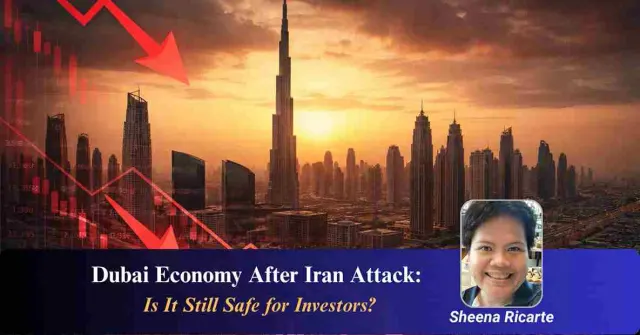
Dubai Economy After Iran Attack: Is It Still Safe for Investors?
Quick Summary
- Dubai grew into a global hub through diversification and global investment.
- Its economy differs from Gulf nations by relying on services, not oil.
- The Iran conflict has hurt markets, tourism, and investor confidence.
- Dubai remains strong, but its future depends on stability and trust.
For many across the world, Dubai represents ambition fulfilled. Popularized by shows like Dubai Bling, the city is seen as a symbol of luxury, opportunity, and global success. This idea, often called the “Dubai Dream,” has attracted millions hoping to build a better life.
For decades, Dubai delivered on that promise. Its open economy, tax advantages, and global connectivity made it one of the most attractive destinations for investors, businesses, and skilled workers. However, in 2026, this dream faces uncertainty as geopolitical tensions rise in the Gulf region.
The ongoing conflict involving Iran, Israel, and the United States has created a new sense of instability. For a city built on confidence and global trust, even the perception of risk can have serious consequences.
From Desert Village to Global City
Dubai’s transformation is one of the most remarkable economic success stories in modern history. Once a small settlement dependent on pearl diving, fishing, and trade, it began to change after the formation of the United Arab Emirates in 1971.
The discovery of oil in 1966 helped finance early development. But unlike Abu Dhabi, which relies heavily on oil wealth, Dubai chose a different path. It focused on diversification and built an economy driven by services and global trade.
Today, sectors like tourism, logistics, finance, real estate, and technology define Dubai’s growth. This model has attracted a vast expatriate population, which now makes up around 92% of the city’s residents.


How Dubai’s Economic Model Differs from Other Gulf Countries
1. Diversification Over Oil Dependence
Unlike many Gulf economies such as Saudi Arabia or Kuwait, which rely heavily on oil revenues, Dubai built its economy on non-oil sectors. Tourism, finance, logistics, and real estate form the backbone of its growth, reducing vulnerability to oil price fluctuations.
2. Open Economy and Global Integration
Dubai has adopted a highly open economic model. Free zones allow 100% foreign ownership, minimal taxation, and simplified regulations. This contrasts with more state-controlled economic structures in parts of the Gulf, where foreign participation can be more restricted.
3. Expatriate-Driven Workforce
Dubai’s population is overwhelmingly expatriate, with foreigners making up about 92% of residents. In contrast, countries like Saudi Arabia have pursued nationalization policies to prioritize local employment. Dubai’s model relies on global talent to sustain rapid growth.
4. Service and Trade-Oriented Economy
While many Gulf countries focus on energy exports, Dubai has positioned itself as a service-based economy. Banking, aviation, tourism, and logistics play central roles, making it more comparable to global cities like Singapore than traditional oil economies.
5. Business-Friendly Regulatory Environment
Dubai’s regulatory framework emphasizes ease of doing business, fast approvals, and investor-friendly policies. This agility gives it a competitive edge over more bureaucratic systems in the region.
Pillars of the Dubai Dream
1. Global Financial Powerhouse
Dubai ranks 7th in the Global Financial Centres Index (March 2026) and hosts over 9,000 companies, including fintech firms and hedge funds. Its tax-friendly policies and regulatory strength attract global capital.
2. World-Class Tourism Destination
With nearly 20 million annual visitors, Dubai thrives on tourism, supported by cultural events, luxury experiences, and landmarks like the Burj Khalifa.
3. Strong Indian and Global Business Presence
Indian and global firms benefit from free zones, reduced costs, and trade agreements like CEPA, strengthening Dubai’s role as a commercial hub.
4. Preferred Employment Destination
Zero income tax, high wages, and programs like the Golden Visa make Dubai attractive to global talent, especially from South Asia.
5. Global Transit and Logistics Hub
Strategically located between three continents, Dubai’s infrastructure—including DXB and DWC—supports global trade and travel.
6. Thriving Real Estate Market
High rental yields (6–8%), tax-free returns, and strong demand make real estate a key driver of investment and growth.
Impact of the 2026 Iran Conflict
Despite its strengths, Dubai now faces significant challenges due to regional instability. Since February 28, 2026, the Iran-related conflict has intensified, affecting the Persian Gulf region.
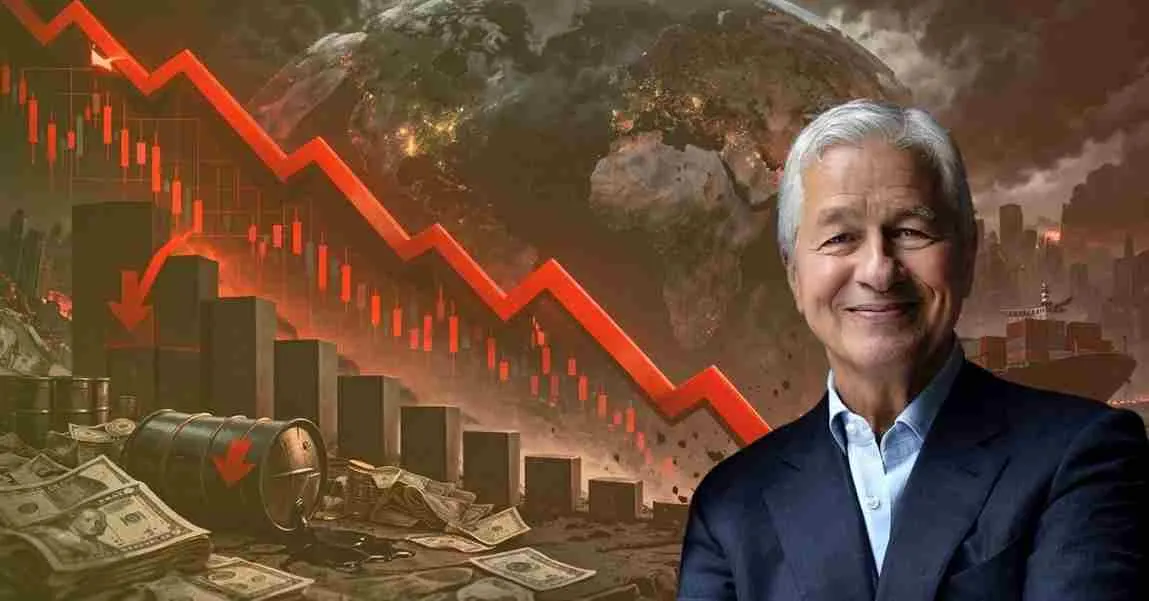
The economic impact has been severe. The Dubai Financial Market has fallen by 16%, and around US$120 billion has been erased from UAE-listed stocks. Hotel bookings have declined by 60%, while retail and service sectors report revenue drops of 60% to 90%. Major global banks have relocated staff or shifted to remote operations.
Overall, the UAE economy is estimated to have suffered losses of approximately US$200 billion. These disruptions highlight Dubai’s vulnerability to external shocks, particularly given its reliance on global flows of capital, trade, and tourism.

Is the Dubai Dream Over?
Despite the current challenges, it would be premature to declare the end of the Dubai Dream. History shows that major global cities can recover from crises.
Dubai has strong financial backing and institutional support. The UAE government has already introduced measures to stabilize the economy, including emergency funding for key sectors.
Sovereign wealth funds with assets exceeding 430 billion dollars provide a significant safety net. This financial strength gives Dubai the ability to absorb shocks and rebuild if necessary.
Long-term planning also continues. The D33 Economic Agenda, launched by Mohammed bin Rashid Al Maktoum, aims to double the economy by 2033 and strengthen Dubai’s global position.
According to the International Monetary Fund, the UAE remains a high-income economy with a GDP of over 600 billion dollars. This indicates strong capacity for recovery.
The Future of the Dubai Dream
The Dubai Dream is not over, but it is under pressure. The city’s strengths remain intact, but the current geopolitical situation has exposed new risks.
Dubai’s future will depend on stability in the region, investor confidence, and effective policy responses. While growth may slow in the short term, its long-term importance is unlikely to disappear.
Dubai has built its reputation on resilience and reinvention. The real challenge now is whether it can adapt once again and maintain its place as a global hub in an uncertain world.
Author Details

Sheena Ricarte is a freelance finance writer and professional investor specializing in international finance, global markets, and wealth management. Since 2017, she has covered global economic trends, oil markets, and investment strategies, providing clear and data-driven insights for readers. She holds a BA in Consular and Diplomatic Affairs (Magna Cum Laude) from De La Salle-College of Saint Benilde and has completed the thesis stage of an MA in Political Science at De La Salle University Manila. Her work is influenced by leading financial experts such as John Bogle, Suze Orman, and Donald Trump. Her expertise includes market analysis, long-term investing, and macroeconomic trends, with a focus on helping readers understand complex financial developments in a simple and practical way.
Reader Feedback
Was this article useful?
Stay Connected
Get the next important story before you miss it.
Subscribe to the newsletter for trusted updates, or join our WhatsApp channel for quick top-story alerts from The Eastern Times.
WhatsApp Channel
Prefer instant alerts? Join our WhatsApp channel for top stories and breaking updates.
Join on WhatsApp