
Why Odisha High Court Issued New Arrest Guidelines for Odisha Police: What Every Citizen Should Know About Their Legal Rights
 The Eastern Times
 Quick Summary
- The Odisha High Court ruled that every arrested person must be produced before the nearest magistrate within 24 hours, even in inter-state arrests, and issued fresh police guidelines.
- The court granted bail after finding that police violated mandatory arrest procedures in a human trafficking and gang rape case linked to Raighar Police Station.
- The judgment highlights important arrest safeguards under the Bharatiya Nagarik Suraksha Sanhita, including legal rights, magistrate oversight, family notification, and protection against illegal detention.
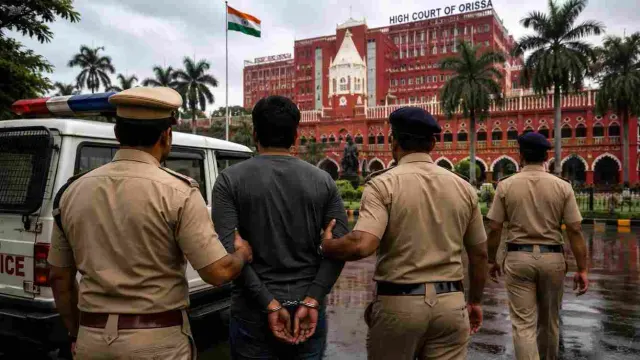
In an important judgment, the Odisha High Court stated that any accused person must be produced before the nearest magistrate within 24 hours of arrest. The court clarified that even if the arrest is made in another state, police cannot bypass this legal procedure.The court also expressed dissatisfaction over repeated violations of arrest procedures by police in several cases and issued detailed guidelines to prevent such incidents in the future.
What is the case?
A human trafficking and gang rape case was registered at Raighar Police Station. The accused was arrested in Andhra Pradesh but was not produced before the nearest magistrate within 24 hours and was later brought to Odisha, leading to a bail plea before the Odisha High Court.
What did the court observe?
Justice Gourishankar Satapathy observed that producing an arrested person before the nearest magistrate within 24 hours is not a mere formality but a constitutional safeguard linked to the protection of fundamental rights.
New Guidelines Issued by Highcourt For The Police
- Every arrested person must be produced before the nearest local magistrate within 24 hours of arrest.
- Police must submit complete details related to the arrest before the magistrate.
- The magistrate may grant transit remand only after being satisfied with the facts presented.
- Investigating officers must inform the local police station about the arrest and provide all relevant details.
- If a person is arrested outside the state without a warrant, the local court and police station must immediately be informed through email.
- A senior police officer of the area to which the accused belongs must also be notified.
- Police must strictly follow constitutional safeguards during inter-state arrests.
- Violation of these procedures may make the arrest illegal and can become grounds for bail.
Rights of a Person After Arrest in India
- You have the right to know why you are being arrested.
- Police must take you before a magistrate within 24 hours.
- You have the right to talk to a lawyer.
- Your family or friends must be informed about your arrest.
- Police cannot keep you illegally or torture you.
- You can ask for medical treatment or a health check-up.
- You can apply for bail in eligible cases.
- You do not have to forcefully confess anything.
- You can ask for the names and identity of the police officers arresting you.
- Police must prepare an arrest memo with details of your arrest.
- Women usually cannot be arrested at night without court permission.
- Every arrested person must be treated with dignity and respect.



What the News BNSS says about arrest?
The Bharatiya Nagarik Suraksha Sanhita (BNSS), which replaced the CrPC, outlines specific procedures and safeguards regarding arrest to balance law enforcement powers with individual liberty.
Here are the key guidelines as per the BNSS:
1. The 24-Hour Rule (Section 58)
The core principle highlighted in recent legal rulings remains a pillar of the BNSS.
-
Mandatory Production: No police officer can detain a person in custody for more than 24 hours without producing them before a Magistrate.
-
Travel Time: This 24-hour limit excludes the time necessary for the journey from the place of arrest to the Magistrate's Court.
-
Extension: Detention beyond 24 hours requires a specific order from a Magistrate (Transit Remand or regular Remand).
2. Right to Information and Legal Aid (Section 47 & 48)
-
Grounds of Arrest: Every person arrested without a warrant must be immediately informed of the full particulars of the offense and the grounds for their arrest.
-
Bail Rights: If the offense is bailable, the officer must inform the person that they are entitled to be released on bail.
-
Right to Counsel: Under Section 48, the arrested person has the right to meet an advocate of their choice during interrogation, though not throughout the entire process.
3. Notification to Relatives (Section 48)
-
The police are legally obligated to inform a relative, friend, or any person designated by the arrested individual about the arrest and the location where they are being held.
-
This information must be recorded in a book kept at the police station.
4. Arrest of Women (Section 43)
-
Time Constraints: Generally, no woman can be arrested after sunset and before sunrise.
-
Exceptions: In exceptional circumstances, a woman police officer must make a written report and obtain prior permission from a Judicial Magistrate of the first class.
-
Procedure: Arrests must be made by a female officer. Unless circumstances dictate otherwise, the officer should not touch the person of the woman to make the arrest.
5. Health and Safety (Section 53 & 54)
-
Medical Examination: The BNSS mandates a medical examination of the arrested person by a medical officer (or registered practitioner) immediately after the arrest. This creates a record of the person's physical condition to prevent custodial torture.
-
Duty of Care: It is the duty of the person having custody to take reasonable care of the health and safety of the accused.
6. Use of Handcuffs (Section 43(3))
One notable inclusion in the BNSS is the clarified stance on handcuffs.
-
Handcuffs may be used by a police officer while making an arrest or producing a person before court if the individual is a habitual or repeat offender, has escaped from custody, or is involved in serious offenses such as:
-
Terrorist acts
-
Organized crime
-
Rape or Acid attacks
-
Drug trafficking
-
Offenses against the State
-
7. Digitization of Records (Section 37)
The BNSS emphasizes transparency through digital records.
-
State governments must establish a Police Control Room (PCR) in every district and at the State level.
-
The names and addresses of arrested persons, along with the names of the arresting officers, must be displayed (digitally or on boards) outside the PCRs and district headquarters.
Summary Table of BNSS Arrest Safeguards
| Feature | BNSS Section | Requirement |
| Magistrate Production | Section 58 | Must be within 24 hours. |
| Arrest Memo | Section 46 | Police must prepare a memo attested by at least one witness. |
| Right to Inform | Section 48 | Mandatory notification to a friend or relative. |
| Medical Checkup | Section 53 | Mandatory examination immediately after arrest. |
| Women's Arrest | Section 43 | Female officer required; prohibited at night without judicial order. |
Why It Matters?
As informed and aware citizens of India, it is important to understand our legal and constitutional rights. Knowing arrest procedures and safeguards helps people protect themselves, their family members, and friends from illegal detention, misuse of police powers, and violation of fundamental rights. Awareness of these rights also ensures that authorities remain accountable and follow due legal process during arrests and investigations.
Reader Feedback
Was this article useful?
Stay Connected
Get the next important story before you miss it.
Subscribe to the newsletter for trusted updates, or join our WhatsApp channel for quick top-story alerts from The Eastern Times.
WhatsApp Channel
Prefer instant alerts? Join our WhatsApp channel for top stories and breaking updates.
Join on WhatsApp