Why PM Modi Urged Indians to Reduce Fuel Use, Avoid Gold Purchases and Focus on Natural Farming — Is India Heading Towards an Economic Crisis?
 The Eastern Times
 Quick Summary
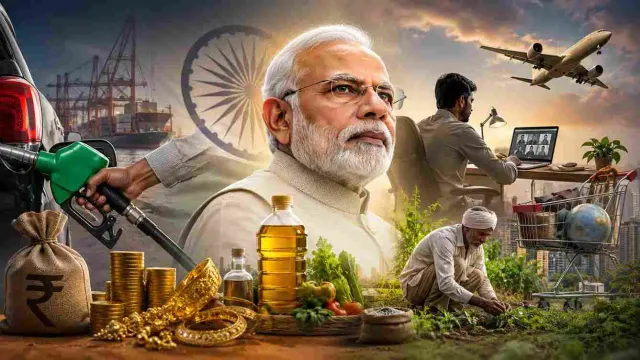
- Prime Minister Narendra Modi urged citizens to reduce fuel use, avoid unnecessary gold purchases, cut cooking oil consumption, focus on natural farming, and postpone foreign travel amid rising economic pressure.
- The government is concerned about rising import costs, heavy dollar outflows, weakening of the Rupee, and increasing inflation due to India’s dependence on imported oil, gold, fertilizers, and edible oils.
- Economists say India is not facing an immediate collapse, but the government is using preventive measures and “behavioral economics” to avoid a larger external sector and inflation crisis
Addressing a rally in Hyderabad, Prime Minister Narendra Modi urged citizens to adopt several economic precautionary measures amid concerns over rising global instability and pressure on India’s economy.
The Prime Minister appealed to the public to:
- Reduce fuel consumption
- Encourage Work From Home (WFH) to save fuel
- Avoid unnecessary gold purchases
- Cut down cooking oil usage
- Reduce dependence on chemical fertilizers
- Focus on natural farming
- Avoid excessive foreign brand purchases
- Postpone foreign travel for one year
The government’s message reflects concern over a possible external sector crisis, where excessive dependence on imports and heavy dollar outflows could weaken the Rupee, increase inflation, and widen India’s Current Account Deficit (CAD).
Why Reduce Petrol & Diesel Consumption?
India imports nearly 85% of its crude oil requirements, making the economy highly vulnerable to global oil shocks.
The ongoing US-Iran-West Asia conflict has sharply increased crude prices, forcing Indian oil marketing companies to absorb massive losses because retail fuel prices have not fully matched international rates.
Key Concerns:
-
State-owned oil companies are estimated to have suffered nearly ₹1 lakh crore in losses in the last two months.
-
Higher crude prices increase India’s import bill dramatically.
-
Oil imports are paid in US Dollars, increasing pressure on Forex reserves.
-
A weaker Rupee makes all imports costlier, including food and medicines.
Why the Government Wants Reduced Consumption:
-
Lower demand means reduced import burden.
-
Work From Home (WFH) can significantly reduce daily fuel usage.
-
Reduced fuel demand helps the government avoid sharp petrol and diesel price hikes.
-
Lower fuel consumption also helps control inflation in transport and agriculture sectors.
Economists describe this as “demand moderation” — reducing non-essential fuel use before the situation worsens.
Why Avoid Buying Gold?
India is one of the world’s largest gold importers and imports nearly 90% of its gold demand.
Gold may be culturally important, but economically it creates a massive dollar outflow because all imports are paid for in foreign currency.
Economic Impact:
-
Gold imports alone crossed approximately $72 billion in FY26.
-
Rising gold imports widen the trade deficit.
-
High dollar demand weakens the Indian Rupee.
Government’s Concern:
During periods of global instability, countries try to conserve foreign exchange reserves for essential imports like:
-
Crude oil
-
Fertilizers
-
Defense equipment
-
Food commodities
The government’s appeal is aimed at reducing “non-productive imports” temporarily without imposing harsh restrictions or higher duties.
Why Cut Down Cooking Oil Consumption?
Cooking oil has unexpectedly become a major economic issue.
India imports around 60% of its edible oil requirements, including:
-
Palm oil
-
Sunflower oil
-
Soybean oil
The Financial Burden:
-
India spends nearly ₹1.61 lakh crore ($18 billion) annually on edible oil imports.
-
Due to global shipping disruptions and rising war-risk insurance costs, edible oil prices have already increased sharply.
The “Food vs Fuel” Crisis:
Globally, vegetable oils are increasingly being diverted toward biodiesel production as crude oil prices rise.
This reduces edible oil availability and increases international prices.
Why the PM is Asking for Reduction:
-
A 10% reduction in consumption could save billions in Forex.
-
Lower imports help stabilize the Rupee.
-
Reduced oil consumption also improves public health outcomes by lowering lifestyle disease risks.
The government is presenting it as both:
-
Economic discipline
-
Health discipline
Why Reduce Dependency on Fertilizers and Promote Natural Farming?
India depends heavily on imported fertilizers and raw materials.
The global conflict has sharply increased fertilizer prices, especially for:
-
Urea
-
DAP (Di-Ammonium Phosphate)
-
Potash
-
NPK fertilizers
India’s Fertilizer Dependency:
India imports major fertilizer supplies from:
-
Oman
-
Russia
-
Saudi Arabia
-
Morocco
-
China
-
Qatar
The Economic Pressure:
-
Fertilizer subsidy burden may cross ₹2 lakh crore if prices remain elevated.
-
Potash is almost entirely imported.
-
Fertilizer imports are paid in Dollars, adding pressure on Forex reserves.
Why Natural Farming is Being Promoted:
-
Reduces import dependency.
-
Cuts government subsidy burden.
-
Improves soil sustainability.
-
Protects farmers from global price volatility.
The government is also encouraging:
-
Nano Urea
-
Organic alternatives
-
Indigenous farming methods
This is part of a long-term Atmanirbhar Bharat strategy aimed at insulating Indian agriculture from global crises.
Also Read: Why Is Odisha Implementing a Universal Mental Health Policy in Schools?
Why Avoid Foreign Brand Products?
The government’s “Vocal for Local” campaign has gained renewed importance during the present economic situation.
Economic Logic:
When consumers buy imported or foreign-owned products:
-
Profits often leave the country.
-
Foreign exchange outflow increases.
-
Domestic manufacturing weakens.
Why Local Consumption Matters:
Supporting Indian products:
-
Keeps money circulating inside the domestic economy.
-
Creates local jobs.
-
Reduces dependency on imports.
-
Strengthens MSMEs and manufacturing industries.
Economists view this as an attempt to strengthen domestic demand-led growth during global instability.
Why Avoid Foreign Travel for One Year?
Foreign travel has become another major source of dollar outflow.
The Numbers:
-
Indians spent nearly $17 billion on international travel in recent years.
-
Overseas remittances under the Liberalised Remittance Scheme (LRS) crossed $31 billion.
Why This Matters:
Every international trip requires:
-
Conversion of Rupees into Dollars or Euros.
-
Spending abroad instead of inside India.
Government’s Concern:
At a time when India urgently needs dollars for:
-
Oil imports
-
Fertilizer purchases
-
Currency stabilization
large-scale outbound tourism increases pressure on Forex reserves.
The Alternative Strategy:
The government wants citizens to shift spending toward:
-
Domestic tourism
-
Spiritual circuits
-
Indian hospitality and transport sectors
This keeps economic activity within India while preserving foreign currency reserves.
A Preventive Economic Strategy
Most economists say India is not facing an immediate economic collapse, but the country is clearly under pressure from rising import costs and global geopolitical instability.
| Indicator | Current Situation |
|---|---|
| GDP Growth | Still projected around 6.6%–6.9% |
| Forex Reserves | Strong but under pressure |
| Main Risk | Imported inflation due to costly oil and imports |
| Government Strategy | Behavioral “nudges” instead of hard restrictions |
Rather than imposing strict controls immediately, the government appears to be using behavioral economics — encouraging voluntary sacrifice before taking tougher steps like:
-
Fuel rationing
-
Heavy import duties
-
Currency controls
-
Major fuel price hikes
The broader objective is to:
-
Reduce unnecessary dollar outflows
-
Protect the Rupee
-
Prevent inflation from spiraling
-
Strengthen self-reliance
-
Avoid harsher economic measures later
In simple terms, the government is asking citizens to temporarily adjust spending and consumption habits so the economy can withstand the current global energy and geopolitical crisis with minimal disruption.
Reader Feedback
Was this article useful?
Stay Connected
Get the next important story before you miss it.
Subscribe to the newsletter for trusted updates, or join our WhatsApp channel for quick top-story alerts from The Eastern Times.
WhatsApp Channel
Prefer instant alerts? Join our WhatsApp channel for top stories and breaking updates.
Join on WhatsApp