
The Joy We Took Away Without Knowing- Marks, Ranks, and Mental Health

Quick Summary
- A comparison-driven education and social culture is fueling rising anxiety, low self-esteem, and burnout among students, worsened by social media’s “upward comparison” effect.
- Constant ranking and competition undermine intrinsic motivation, harming both mental health and genuine learning, while creating a cycle of inadequacy and dependency on external validation.
- Breaking this cycle requires practical shifts—focusing on personal growth, limiting toxic comparisons, encouraging effort over results, and embedding mental health awareness in families and institutions.
From preschool rankings to university cut-offs, a society addicted to comparison is manufacturing a silent mental health crisis. Something quietly sinister happens the first time a child hears the words, “But look how well Rohan did.” It does not arrive as a thunderbolt. It seeps in — through report cards, class rankings, WhatsApp parent groups, and perfectly curated Instagram feeds — until the child grows into an adult who has forgotten how to measure themselves by anything other than someone else’s yardstick.
We have built an education system that churns out comparison as its primary byproduct, and then we have built a multi-billion-dollar wellness industry to clean up the damage. The time has come to name this cycle honestly and break it deliberately.
Mental health in educational institutions — from the finger-painting years of preschool to the dissertation-defending halls of higher education — is no longer a fringe concern whispered among school counsellors. It is a full-blown crisis. Studies consistently show that anxiety, depression, and burnout among students have risen sharply over the last two decades. The reasons are layered, but the thread running through all of them is remarkably consistent: the relentless, socially sanctioned habit of measuring human worth through comparison.
“We make children compete with everything they have, and when they lose, we sell them self-help books about resilience. That is not education. That is an extractive economy built on manufactured inadequacy.”
Consider the typical academic year's architecture. From the very first term, children are sorted — by marks, by percentile, by seat in the classroom. Parents receive rank cards not just to track progress but, implicitly, to locate their child on a social ladder. A child who scores 88% is consoled, not celebrated, because somewhere another child scored 91%. By the time students enter competitive entrance examinations, the comparison has become existential. They are not just competing for seats; they are competing for the right to feel worthy.
Social media has poured kerosene on this fire. Platforms designed for social connection have become showcases of curated perfection. A teenager scrolling through peers’ posts does not see the three rejected drafts, the crying into a pillow, or the parental pressure behind that gleaming internship announcement. They see only the highlight reel and measure their own blooper reel against it. Research in psychology terms this “upward social comparison,” and it is reliably associated with lower self-esteem, heightened anxiety, and a pervasive sense of being perpetually behind in a race that has no finish line.
The cruel irony is that this architecture does not even produce the excellence it promises. Decades of research in educational psychology show that intrinsic motivation — doing something because it is meaningful — produces deeper learning, greater creativity, and longer-lasting achievement than extrinsic pressure rooted in competition. We are not just harming children emotionally; we are short-changing their intellectual potential in the bargain.
Practical Ways to Escape the Trap
Awareness alone does not heal. What follows are concrete, evidence-informed practices for students, parents, and educators — because escaping the comparison trap requires action at every level.
Run Your Own Race — Literally Define It
Each week, write down three personal benchmarks: a skill you want to improve, a habit you want to build, a fear you want to face. Progress is only meaningful when measured against your own last position, not someone else’s current one.

Audit Your Social Media Diet
Treat your feed like food. Unfollow accounts that consistently make you feel inadequate. Actively seek out creators who show process, failure, and honest growth. A 30-minute daily limit, enforced by a screen-time app, has shown measurable improvements in adolescent mood within two weeks.
Practise Gratitude as a Cognitive Reset
Each night, note three specific things that went well — not accomplishments, but moments. A good conversation, a problem you figured out, a meal you enjoyed. This rewires the brain away from deficit-scanning toward abundance-noticing, and it takes less than five minutes.
Reframe Failure as Data, Not Verdict
When you receive a disappointing result, ask: “What does this tell me about my preparation, not about my worth?” Failure is a feedback loop, not a life sentence. Journalling about setbacks with curiosity rather than self-blame builds genuine resilience.
Also Read: Why Is Odisha Implementing a Universal Mental Health Policy in Schools?
Seek Mentors, Not Competitors
Instead of watching a high-achiever with envy, approach them with questions. Understanding the story behind someone’s success — the failures, the pivots, the ordinary days — transforms a rival into a resource and dissolves the illusion of effortless perfection.
For Parents: Celebrate Effort Loudly
Replace “What did you score?” with “What did you try today that was difficult?” Stanford psychologist Carol Dweck’s decades of research confirm that praising effort over outcome builds a growth mindset that sustains children through far harder challenges than any exam.
Build Offline Identity Anchors
Sport, music, cooking, gardening, volunteering — any activity pursued without grades or likes creates a self that exists beyond performance. These anchors are what hold a person steady when academic or professional identity is shaken.
Institutionalise Conversations About Wellbeing
Schools must embed mental health literacy into the curriculum — not as a one-off workshop but as a recurring, destigmatised discussion. Students who can name their emotions and ask for help are dramatically less likely to reach crisis point.
At the End: Play your own Game
None of these steps is a magic remedy. The social pressures that manufacture comparison are structural, and individual habits alone cannot dismantle systems. But they can build a strong enough interior life that the noise outside loses its power to define you. The goal is not to become indifferent to excellence; it is to pursue excellence on your own terms, at your own pace, rooted in your own values.
A society that constantly ranks its children is a society that is terrified of ordinariness. But ordinariness — a life of quiet competence, genuine relationships, and personal meaning — is not a consolation prize. For most of human history, it was the very definition of a life well lived. Reclaiming that wisdom, in classrooms and living rooms alike, may be the most radical act of mental health protection available to us today.
The race was never about beating anyone. It was always about becoming — slowly, imperfectly, and entirely — yourself.
Author Details
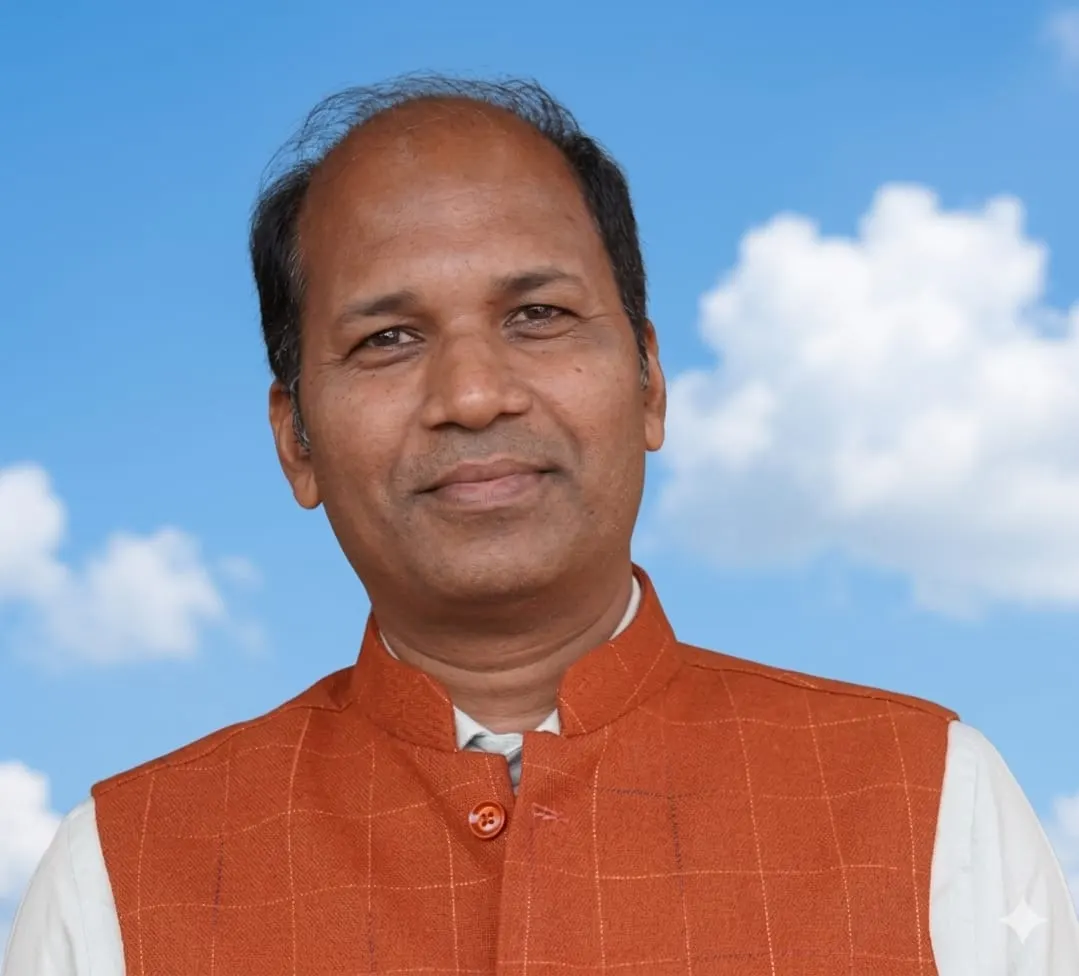
Dr. Ramakrishna Biswal is a Professor of Psychology in the Department of Humanities and Social Sciences at the National Institute of Technology (NIT) Rourkela. With a Ph.D. from the University of Delhi, he is a recognized expert in developmental psychology. His research and teaching primarily focus on mental health and well-being, inclusive education and disability, and sustainability and social issues. Beyond his classroom leadership, he is a prolific researcher who has co-authored five books and contributed extensively to international journals of repute.
Reader Feedback
Was this article useful?
Stay Connected
Get the next important story before you miss it.
Subscribe to the newsletter for trusted updates, or join our WhatsApp channel for quick top-story alerts from The Eastern Times.
WhatsApp Channel
Prefer instant alerts? Join our WhatsApp channel for top stories and breaking updates.
Join on WhatsApp