Organic Farming vs Modern Agriculture: Can India Feed 145 Crore People Without Chemical Fertilizers?
Quick Summary
- Khet Bachao Abhiyan has sparked debate over whether it aims to promote natural farming or address fertilizer shortages.
- India's food security was achieved through scientific farming, including improved seeds, irrigation, and fertilizers.
- Experts favour a balanced approach, combining modern agriculture with organic practices to protect both productivity and soil health.
The government has launched Khet Bachao Abhiyan to reduce fertilizer use and promote natural farming. However, questions are being raised over whether the move is truly aimed at sustainable agriculture or driven by fertilizer shortages and supply disruptions linked to the West Asia conflict.
But here arises question Organic farming has gained significant popularity in recent years as concerns over food safety, environmental degradation, and soil health continue to rise. Advocates argue that chemical fertilizers, pesticides, and weedicides have damaged agricultural ecosystems and introduced health risks through chemical residues in food.
As a result, many people view organic farming as the ideal alternative to modern agriculture.
What Organic Farming Really Means
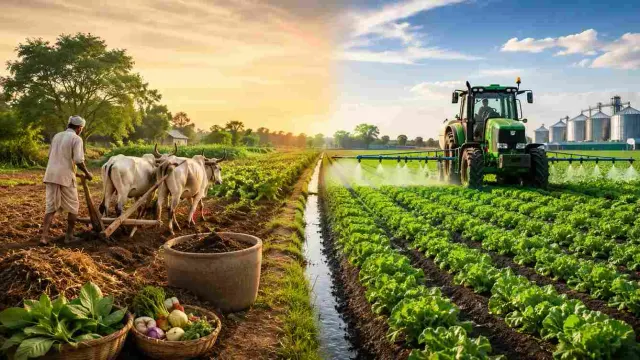
Organic farming generally involves avoiding chemical fertilizers, pesticides, weedicides, and preservatives. It also emphasizes traditional cultivation methods, indigenous seeds, and the use of organic manure instead of synthetic inputs.
Supporters believe these practices help preserve soil fertility, protect beneficial microorganisms, and produce healthier food. Some even argue that modern agricultural science has moved farming away from sustainable practices.
However, the debate is often presented as a choice between organic and chemical farming, when the reality is far more nuanced.
Lessons from India's Agricultural Past
Before the Green Revolution of the 1960s, Indian agriculture largely depended on indigenous seeds and organic manure derived from cattle and other livestock.
Despite these traditional methods, agricultural productivity remained low. In 1951, India had a population of 36 crore and produced only 51 million tonnes of food grains. By 1961, food grain production had increased to 80 million tonnes, while the population had grown to 44 crore.
Yet the country remained dependent on food imports and struggled to achieve food self-sufficiency.
The Food Crisis and the Green Revolution
The vulnerability of India's agricultural system became particularly evident during the 1965 India-Pakistan war, when fears of food shortages intensified. Prime Minister Lal Bahadur Shastri responded by giving the slogan "Jai Jawan, Jai Kisan" and urging citizens to voluntarily skip one meal a week.
At the same time, the Malthusian theory was gaining attention worldwide, predicting that population growth would eventually outstrip food production.
Those predictions, however, were challenged by the Green Revolution. The introduction of high-yielding wheat and rice varieties, combined with irrigation and chemical fertilizers, dramatically transformed Indian agriculture.
How Scientific Farming Changed India
The results of agricultural modernization are evident today.
India's population has reached approximately 145 crore, while annual food grain production has climbed to 332 million tonnes. Per capita monthly food grain availability has increased from 31 kilograms in 1951 to 38 kilograms today.
These gains were achieved through high-yielding seeds, scientific crop management, irrigation, and chemical fertilizers—not solely through traditional farming practices.
What the Research Reveals
Research conducted by a retired professor of Agricultural Chemistry provides important insights into the organic-versus-chemical farming debate.
In maize cultivation trials:
- Balanced use of chemical fertilizers and organic manure produced 138 quintals per hectare
- Only chemical fertilizers produced 128 quintals per hectare
- Only organic manure produced 92 quintals per hectare
- No fertilizer or manure produced only 25 quintals per hectare
The findings suggest that the highest productivity comes from integrating organic and chemical nutrient sources rather than relying exclusively on one system.
Nutrition, Health, and the Organic Debate
The same research found no significant difference in nutritional value between food grains grown organically and those produced using chemical fertilizers.
However, pesticide residues can remain in food grains and may pose certain health concerns. This underlines the need for responsible and regulated use of agricultural chemicals rather than indiscriminate application.
Dr. M.S. Swaminathan's Pragmatic View
The late Dr. M.S. Swaminathan, regarded as the father of India's Green Revolution, offered a practical perspective on the issue.
According to him, traditional farming methods alone cannot produce enough food to feed India's vast population. Scientific agriculture, supported by improved seeds and fertilizers, remains essential for ensuring national food security.
His position was not a rejection of organic practices, but a recognition of the realities of feeding a nation of more than 145 crore people.
Why Soil Health Still Matters
While modern agriculture has increased production, maintaining soil health remains equally important.
Experts recommend several complementary practices:
Green Manuring
Reviving the cultivation of Dhanicha (Sesbania) in paddy fields to naturally enrich soil fertility.
Composting Agricultural Waste
Converting farm residues into compost and returning nutrients to the soil.
Crop Rotation and Water Management
Improving long-term productivity through diversified cropping systems and efficient water use.
Utilizing Paddy Straw
Ongoing research on converting paddy straw into bio-mulch and organic inputs may provide a sustainable source of organic matter in the future.
Can India Go Fully Organic?
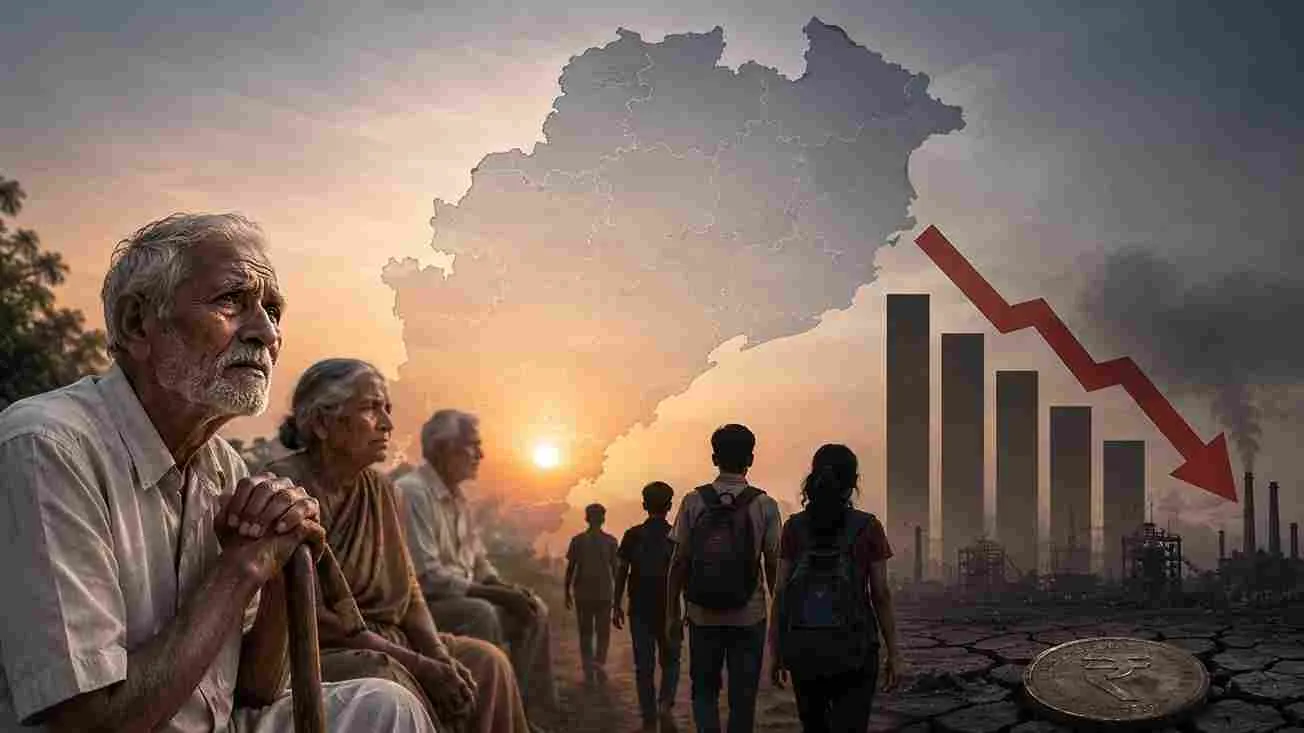
A complete shift to organic farming on a commercial scale presents significant challenges.
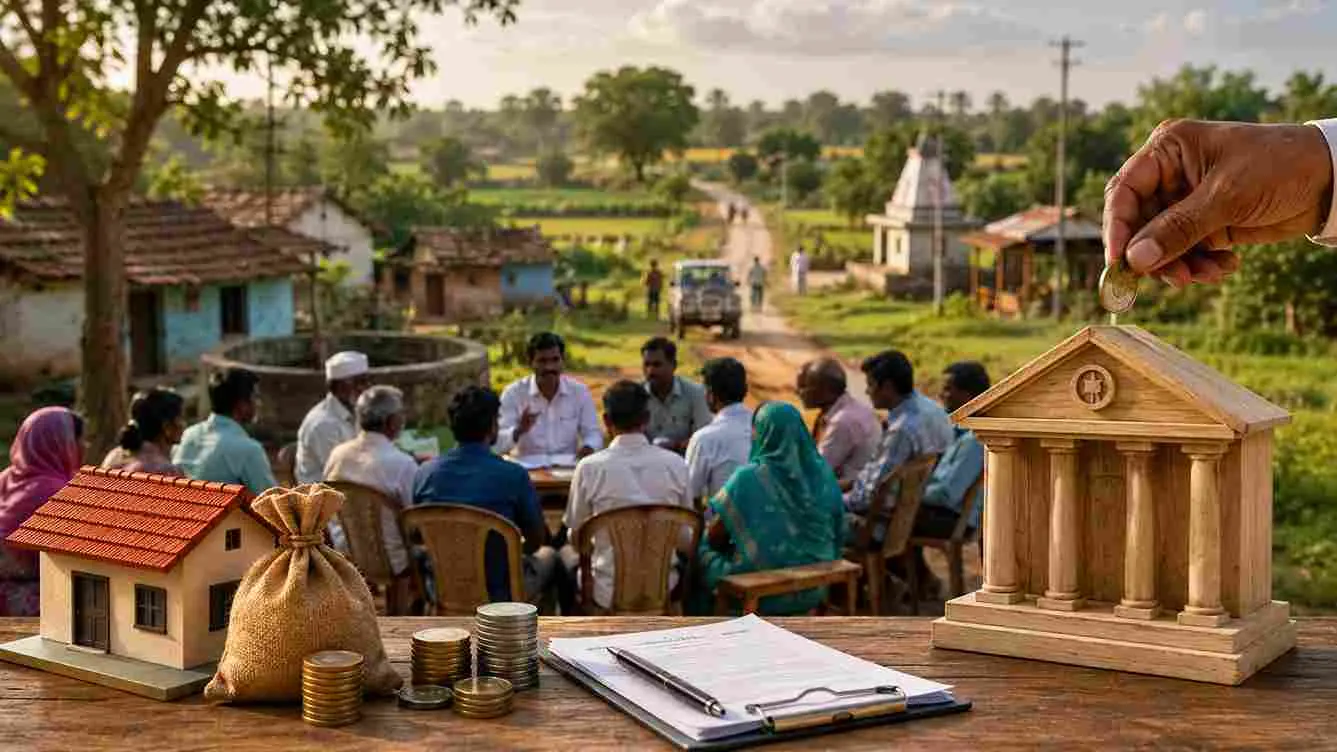
Organic farming often results in lower and more variable yields, higher production costs, and greater risks for farmers. Consequently, organic produce tends to be more expensive, making it less accessible to ordinary consumers.
While organic farming may be suitable for household consumption or niche markets, universal adoption could jeopardize food security and affordability.
The Way Forward: Integration, Not Opposition
The future of Indian agriculture should not be framed as a contest between organic and modern farming.
Instead, the most practical path lies in combining the strengths of both systems. Scientific agriculture must continue to ensure food security, while organic practices should be integrated to improve soil health, sustainability, and environmental resilience.
For a nation of 145 crore people, the challenge is not choosing one model over another. It is finding the right balance between productivity and sustainability.
Why It Matters
India's agricultural success story was built on scientific innovation, improved seed varieties, and modern farming techniques. These achievements cannot be ignored. At the same time, preserving soil health through organic manure, green manuring, composting, and sustainable farming practices is essential for the future.
The answer, therefore, does not lie in abandoning chemical fertilizers altogether or romanticizing traditional agriculture. It lies in adopting a balanced and evidence-based approach that protects both food security and environmental sustainability.
Only by combining the best of modern science and traditional wisdom can India ensure a secure and sustainable agricultural future.
Author Details

Amiya Pranaya Harichandan is a writer,Columnist , content creator, and IT professional with experience at Dell Technologies. He is passionate about sharing knowledge on education, technology, and social issues through writing .
Poll
Do You Think Natural Farming Alone Can Feed India’s 145 Crore Population?
Reader Feedback
Was this article useful?
Stay Connected
Get the next important story before you miss it.
Subscribe to the newsletter for trusted updates, or join our WhatsApp channel for quick top-story alerts from The Eastern Times.
WhatsApp Channel
Prefer instant alerts? Join our WhatsApp channel for top stories and breaking updates.
Join on WhatsApp