
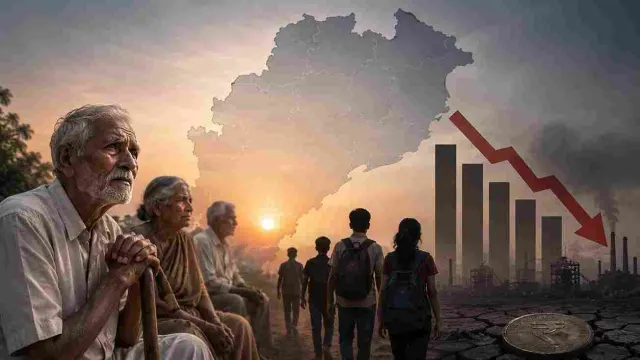
More Old People, Fewer Babies: How Odisha's Declining Youth Population Could Create Economic Challenges
Why Should Odisha take Action immediately?
 The Eastern Times
 Quick Summary
- Birth rates in Odisha have fallen below replacement level, while the elderly population is rising, raising concerns about long-term population decline and workforce shortages.
- A shrinking youth population could slow economic growth, create labour shortages in agriculture and industry, and increase government spending on pensions and healthcare.
- The demographic shift may also reshape society, with more elderly living alone, fewer students in schools, and greater financial and caregiving burdens on younger generations
Odisha is witnessing a sharp decline in the number of children being born. At the same time, the number of elderly people is rising steadily. The state's Total Fertility Rate (TFR) has fallen to around 1.5–1.6, well below the replacement level of 2.1 required to keep the population stable.
This means Odisha may face a shrinking population and a shortage of workers in the coming decades.
Who Released the Report?
The findings come from:
- National Family Health Survey (NFHS-5)
- Sample Registration System (SRS)
- Office of the Registrar General and Census Commissioner of India
These reports track population trends, births, deaths and demographic changes across the country.
SRS Report
- Total TFR: 1.5
- Rural TFR: 1.7
- Urban TFR: 1.2
NFHS-5
- Total TFR: 1.6
- Rural TFR: 1.8
- Urban TFR: 1.4
What Do the Reports Show?
- Odisha's fertility rate has fallen from 2.1 to around 1.5–1.6 within a few years.
- Children below 15 years now make up only 22.2% of the population, down from 24.3%.
- People above 60 years account for 12.1% of the population, up from 11.1%.
- The elderly population increased by nearly 7 lakh within three years.
- Odisha has remained below the replacement fertility level of 2.1 since 2013-14.
How Did This Happen?
The main reason is that families are having fewer children.
Several factors are responsible:
-
Family Planning Success
India launched the world's first national family planning programme in 1952. For decades, governments promoted smaller families through awareness campaigns, contraception and healthcare services. The famous slogan "Hum Do, Hamare Do" encouraged couples to limit family size.
-
Late Marriages
Many people are marrying later than previous generations, reducing the number of children they have.
-
Rising Cost of Living
Education, healthcare, housing and daily expenses have become costlier. Many couples feel they can better support one or two children.
-
Urbanisation and Migration
People moving to cities often prefer smaller families due to limited space and higher living costs.
-
Better Education and Awareness
Increased literacy, especially among women, has led to greater use of family planning methods and more informed reproductive choices.
Also Read: Why Odisha Government Prefers Tata, Mahindra and Maruti EVs for Official Use
Why Do Many People Think This is Good?
At first glance, lower population growth appears beneficial.
People often associate fewer births with:
- Less pressure on resources
- Better education for each child
- Improved healthcare
- Reduced poverty
- Smaller family expenses
- Lower population pressure on cities and villages
These benefits are real and have helped improve living standards in many places.
What Problems Can It Create?
The problem begins when fertility falls too far below replacement level and stays there for many years.
Economic Impacts on Odisha
1. Shortage of Workers
Fewer children today means fewer workers tomorrow.
Factories, farms, construction sites, schools, hospitals and businesses may struggle to find employees.
2. Aging Population
As births decline and life expectancy rises, the share of elderly people increases.
A larger elderly population requires:
- More healthcare facilities
- More pensions
- More social welfare spending
This increases pressure on government finances.
3. Slower Economic Growth
Economic growth depends heavily on a productive workforce.
If the number of working-age people shrinks, production, consumption and tax revenues may decline.
Many economists call this the "demographic challenge."
4. Agriculture May Suffer
Odisha's rural economy depends heavily on labour.
If fewer young people are available for farm work, labour shortages could increase agricultural costs and reduce productivity.
5. Schools May Have Fewer Students
A falling child population can lead to:
- Lower school enrolment
- Closure of some schools
- Reduced demand for teachers
Several countries with declining populations are already facing this issue.
Also Read: Why India Still Struggles to Become an Economic Superpower Despite 35 Years of Reforms
Social Impact on Odisha
A decline in the youth population is not just an economic issue—it can significantly change society. Here are the major social impacts Odisha could face if the trend continues:
1. More Elderly Living Alone
Traditionally, elderly parents in Odisha lived with their children. With fewer children per family and increasing migration for jobs, many senior citizens may end up living alone, leading to loneliness, mental health issues, and a greater need for old-age care services.
2. Changing Family Structure
Large joint families are gradually being replaced by small nuclear families. With only one child or two children, family support networks become weaker. The responsibility of caring for aging parents falls on fewer individuals.
3. Decline in School Enrolment
Fewer children mean fewer students in schools. Rural schools may see declining enrolment, leading to mergers or closures. This trend is already visible in several parts of India.
4. Increased Burden on the Younger Generation
A smaller youth population will have to support a larger elderly population through taxes, caregiving, and social security contributions. This can increase financial and emotional pressure on young families.
5. Rising Demand for Healthcare and Elder Care
As the population ages, demand for hospitals, geriatric care, nursing homes, home-care services, and healthcare workers will rise significantly.
6. Declining Vibrancy in Villages
Many villages already experience youth migration to cities. If fewer children are born, some rural areas may face population decline, school closures, labour shortages, and reduced social activities.
7. Marriage and Demographic Changes
A smaller youth population can eventually reduce the number of marriages and births, further accelerating population aging and decline.
8. Loss of Demographic Dividend
Odisha currently benefits from a large working-age population. If the youth population shrinks, the state could lose this demographic advantage, affecting innovation, entrepreneurship, and social dynamism.
What Can Odisha Learn from Other Countries?
Countries such as Japan and China are facing serious challenges due to low birth rates and aging populations.
Both countries are now encouraging families to have more children through financial incentives and policy changes.
Similarly, the government of Andhra Pradesh has expressed concern over declining fertility and announced incentives for larger families.
Why This Matters
Population decline does not create problems immediately. The real impact is felt 20–30 years later.
Today's low birth rate means:
- Fewer workers in the future
- More elderly dependents
- Higher welfare and healthcare costs
- Slower economic growth
- Increased pressure on public finances
Odisha is currently enjoying a large working-age population. However, if fertility remains below replacement level for many more years, the state could gradually move from a demographic advantage to a demographic burden.
The latest reports serve as an early warning that Odisha's population structure is changing rapidly. Policymakers must now balance the benefits of smaller families with the long-term need for a healthy and sustainable workforce.
Reader Feedback
Was this article useful?
Stay Connected
Get the next important story before you miss it.
Subscribe to the newsletter for trusted updates, or join our WhatsApp channel for quick top-story alerts from The Eastern Times.
WhatsApp Channel
Prefer instant alerts? Join our WhatsApp channel for top stories and breaking updates.
Join on WhatsApp