
Odisha Govt to Develop Model Villages on Smart City Lines
 The Eastern Times
 Quick Summary
- Odisha will transform the main villages of all 6,273 gram panchayats into model villages by 2029. • The villages will get better roads, healthcare, high-speed internet, banking, parks, skill centres and modern waste management facilities.
Bhubaneswar: The Odisha government is planning to transform the main village of every gram panchayat into a modern “Model Village” with improved infrastructure and essential public services.
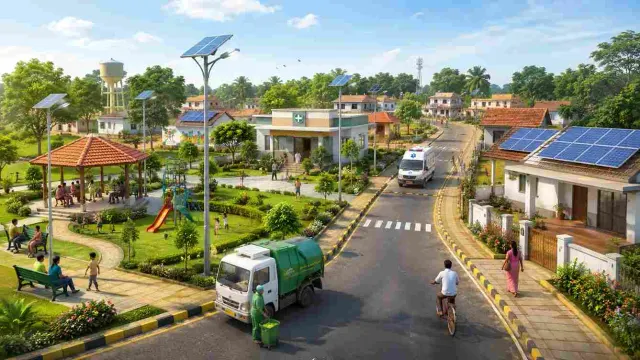
Under the initiative, villages will get parks, community halls, skill development centres, better healthcare facilities, banking services and high-speed internet connectivity.
Roads will also be widened wherever necessary to ensure easy ambulance access. Door-to-door waste collection and scientific waste management systems will be introduced.
The project will go beyond the construction of roads and drains. The government plans to provide essential infrastructure based on the specific needs of each village.
By 2029, the main villages of all 6,273 gram panchayats are expected to be developed as model villages.
The baseline survey has been completed, and the process of preparing project designs has now begun. The Chief Minister is expected to launch the initiative after the necessary funding arrangements are finalised.
Development Based on Village Needs
The baseline survey for the Model Village initiative began on May 25 in the main village of every gram panchayat.
Executive teams led by Additional Block Development Officers visited villages to assess existing infrastructure and identify the services most urgently needed by local communities.
Based on the survey findings, development plans are being prepared for each village.
This means that every village may get different projects depending on its specific requirements.
Also Read: Why Odisha Should Lead the Revival of Indian Football Like It Did Hockey
State-Level Task Force Formed
A state-level task force has been constituted under the chairmanship of the Secretary of the Panchayati Raj Department.
Officials from different government departments have been included as members.
At the district level, the Collector, the Chief Development Officer and Executive Officer of the Zilla Parishad, along with other district-level officials, will be involved in the initiative.
Gram Sabhas to Play a Key Role
The initiative will focus on actual local needs rather than merely undertaking visible infrastructure projects.
Development works will be guided by surveys, social audits and consultations with local communities.
Gram Sabhas will be made mandatory in every village. The Gram Panchayat Development Plan (GPDP) will be prepared through these meetings, and digital records of the plans will be maintained.
Better Roads and Disaster Preparedness
In disaster-prone villages, authorities will assess whether adequate cyclone shelters are available.
Priority will also be given to all-weather roads and routes that allow ambulances to reach villages easily.
The government will assess drinking water supply, water treatment facilities and the safety of electricity lines.
Efforts will also be made to ensure toilets in every household and maintain open-defecation-free villages.



Parks, Playgrounds and Community Halls
The availability of playgrounds and recreational spaces for children will also be assessed.
Existing playgrounds will be maintained and upgraded where required.
Villages will also get parks and community halls based on local needs.
Door-to-Door Waste Collection
Sanitation vehicles will collect waste directly from households.
The collected waste will be segregated and processed using scientific methods.
The initiative will also focus on providing LPG connections to households and expanding access to high-speed internet.
Focus on Skills and Self-Reliance
Skill development centres will be established to provide vocational training to rural residents.
Digital skilling will also be introduced to help people acquire new skills and improve employment opportunities.
The government’s focus will be on helping rural communities become more self-reliant.
Support for Farmers and Livestock
Livestock Aid Centres will be established to support animal healthcare.
In villages with a large number of dairy farmers, dairy cooperative societies will be encouraged.
Village ponds and other water bodies will also be restored. Fish farming will be promoted to create additional livelihood opportunities.
Better Healthcare and Telemedicine
Strengthening rural healthcare will be another major priority.
Primary Health Centres (PHCs) will be established wherever feasible.
Where setting up a PHC is not possible, a health sub-centre or an Ayushman Arogya Mandir will be ensured.
Telemedicine services will also be introduced to improve access to medical consultations.
Digital records will be maintained to track whether children have received the required vaccinations.
Authorities will also check whether eligible residents are receiving benefits under Ayushman Bharat and the Gopabandhu Jan Arogya Yojana.
Focus on Education and Nutrition
Children who have dropped out of school will be identified and encouraged to return to education.
Schools will be provided with essential facilities such as electricity, drinking water and permanent classrooms.
Anganwadi centres will identify malnourished children and ensure that they receive nutritious food and necessary support.
Banking and Employment Opportunities
The government also plans to ensure access to banking services in every model village.
Employment opportunities under rural employment programmes will be strengthened.
Livelihood activities such as dairy farming, livestock development and fisheries will also receive greater support.
The initiative aims to transform the main villages of all 6,273 gram panchayats by 2029, creating rural communities that are cleaner, healthier, better connected and more self-reliant.
Reader Feedback
Was this article useful?
Stay Connected
Get the next important story before you miss it.
Subscribe to the newsletter for trusted updates, or join our WhatsApp channel for quick top-story alerts from The Eastern Times.
WhatsApp Channel
Prefer instant alerts? Join our WhatsApp channel for top stories and breaking updates.
Join on WhatsApp