
What is the New CAPF Bill? Why Opposition Calls It Anti-Federal
 The Eastern Times
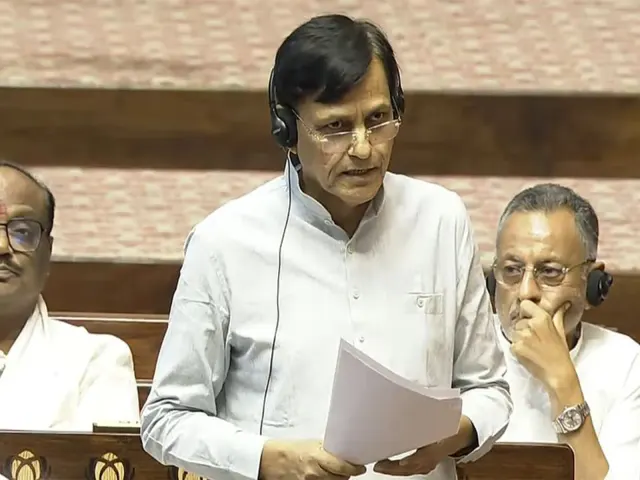
 New Delhi: The proposed CAPF Bill, introduced by Nityanand Rai, was tabled in the Rajya Sabha on March 25, 2026, setting off a fresh political and institutional debate.
The Bill seeks to bring major changes to the functioning and leadership of India’s Central Armed Police Forces (CAPFs), but has already drawn sharp criticism from opposition parties, who allege it goes against the 2025 ruling of the Supreme Court of India and undermines federal principles.
The legislation was earlier scheduled to be introduced on March 23 by Home Minister Amit Shah, but was delayed for unspecified reasons. As Parliament prepares to take up the Bill for discussion, it has become a flashpoint over issues of leadership, service fairness and the future structure of CAPFs, which include forces like CRPF, BSF, CISF, ITBP and SSB, along with Assam Rifles, commanded by the Indian Army.
How the system works now
Under the existing framework, IPS officers are deputed to CAPFs for a limited period and later return to their parent cadre. The current system is governed by the Recruitment Rules of 2010, which define the proportion of deputation at various ranks:
-
DIG (Deputy Inspector General): 20% posts filled through IPS deputation
-
IG (Inspector General): 50% posts filled through IPS deputation
What the new Bill proposes
- 50% of all officer posts through deputation
- 67% of ADG posts through deputation
- Top posts (DG and Special DG) fully through deputation
This means more IPS officers will be in senior CAPF positions.
Why CAPF officers are unhappy
Retired officers of the Central Armed Police Forces (CAPFs) have strongly opposed the new bill.
Main concerns:
- Promotions are very slow (20–30 years)
- Senior posts are already dominated by IPS officers
- Limited career growth for CAPF cadre officers
Supreme Court Case & Order (2025)
CAPF personnel approached the Supreme Court of India over long-standing service issues.
Why the case was filed:
-
Promotions were extremely slow, often taking 20–30 years
-
Senior leadership posts were dominated by IPS officers
-
Limited career growth opportunities for CAPF cadre officers
What the Court observed:
-
Excessive IPS presence in senior roles created a structural imbalance
-
CAPF officers were not getting fair promotion opportunities
What the Court ordered:
-
Recognised CAPF officers as Organised Group A Service (OGAS)
-
Directed that they receive full service benefits
-
Asked the government to reduce IPS deputation in senior ranks
-
Ordered phase-out of IPS officers from top posts within two years
However, the new CAPF Bill proposes to retain IPS officers in key senior positions, leading to fresh controversy.
Following the verdict, the Central Government filed a review petition, which was subsequently rejected by the Supreme Court, reinforcing its earlier ruling.
Government’s Justification
The government says the Bill will create a single, unified system by replacing separate laws for forces like CRPF, BSF, ITBP, SSB and CISF. It will standardise recruitment, promotions, administration and leadership. The proposal also includes filling top posts like DG and Special DG through deputation and increasing deputation at senior levels to ensure better coordination and administrative consistency.
IPS Officers’ Perspective
Many IPS officers support the Bill, saying their experience across different states helps in better coordination. They argue that they are more equipped to handle inter-agency operations and national security challenges. They also believe CAPF personnel may not always have detailed exposure to evolving legal frameworks like the Bharatiya Nyaya Sanhita.


Opposition’s Criticism
Several opposition parties, including the Indian National Congress, All India Trinamool Congress, Aam Aadmi Party and CPI(M), have strongly opposed the Bill in the Rajya Sabha.
They argue that the Bill undermines the 2025 ruling of the Supreme Court of India on reducing IPS deputation. It has been termed “anti-federal” and is seen as potentially demoralising for CAPF personnel. Opposition leaders have also raised concerns over procedural lapses, including lack of proper notice before its introduction.
Who Said What:
-
Tiruchi Siva argued that the Bill attempts to override judicial authority, raising concerns about separation of powers
-
John Brittas highlighted issues of legislative competence
-
Derek O’Brien criticized the Bill as “anti-federal” and objected to the manner of its introduction
Reader Feedback
Was this article useful?
Stay Connected
Get the next important story before you miss it.
Subscribe to the newsletter for trusted updates, or join our WhatsApp channel for quick top-story alerts from The Eastern Times.
WhatsApp Channel
Prefer instant alerts? Join our WhatsApp channel for top stories and breaking updates.
Join on WhatsApp