
Odisha’s New Transfer Rules: What Every OAS/ORS Officer & Aspirant Needs to Know
 The Eastern Times
 Quick Summary
- Odisha has introduced a new transfer policy for OAS & ORS officers with a fixed 2–3 year tenure, strict timelines, and no home district postings.
- The policy aims to increase transparency, reduce political influence, and ensure fair distribution of officers, especially in backward regions like KBK.
- It will lead to more field experience, less favouritism, and a more accountable administration, impacting both current officers and civil service aspirants.
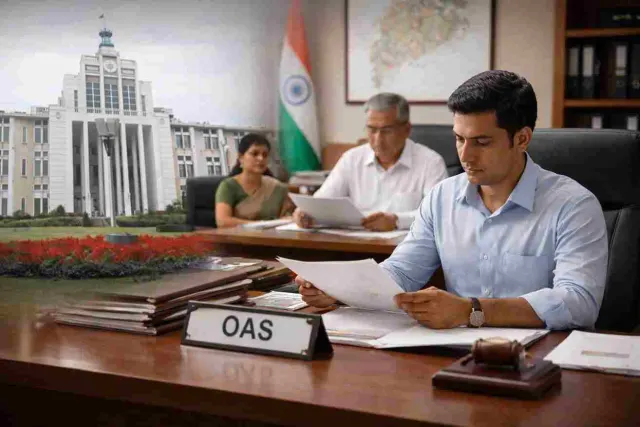
Bhubaneswar: To enhance efficiency, transparency, and accountability in the state administration, the Odisha Government, through its Revenue and Disaster Management Department, Odisha, has introduced a new policy governing the transfer and posting of Odisha Administrative Service (OAS) Group-A (Junior Branch) and Odisha Revenue Service (ORS) officers.
The notification has been formally issued by Dr. Arvind Padhee, Additional Chief Secretary of the department, in line with the state government’s decision.
What the New Rules Say:
- Fixed transfer period: Transfers will mostly happen between April 15 and June 15 every year to avoid random postings.
- Minimum stay required: An officer must work at least 2 years in one place to ensure continuity of work.
- Maximum stay limit: No one can stay in the same post beyond 3 years to prevent over-familiarity or misuse of position.
- District limit rule: Officers cannot remain in one district for more than 6 years continuously or 10 years in total.
- No home district posting: Officers will generally not be posted in their own district to avoid bias or local influence.
- Strict joining timeline: After transfer, officers must join the new post within 7 days.
- Auto-relief system: If not relieved within 6 days, they will be considered automatically relieved after 8 days.
- Field experience mandatory: First 15 years of service must be spent in field-level roles, not desk jobs.
- No recommendations allowed: Using political or personal influence for transfers is strictly banned.
- Focus on KBK region: Officers are encouraged to serve at least 3 years in backward KBK areas for balanced development.
- Special consideration cases: Disabled officers and couples may get preference for suitable or nearby postings.
- Committee-based system: A government committee will review all transfer requests to ensure fairness.
Why Government Took This Decision
- To improve administrative transparency
- To stop political or personal influence in transfers
- To ensure fair distribution of officers
- To strengthen governance in backward regions like KBK
- To build strong field-level experience among officers
Impact on New Officers & Administration
- New officers will gain more ground-level experience
- Reduced chances of favoritism in postings
- Faster and time-bound transfer process
- Better governance in rural and remote areas
- Increased accountability and discipline in administration


States with Similar Transfer Policies
Across India, several states such as Uttar Pradesh, Karnataka, and Haryana follow a similar tenure framework for administrative officers. These states typically mandate a minimum tenure of two years to ensure continuity and stability, along with a maximum tenure of three years to prevent the development of vested interests—closely aligning with Odisha’s newly introduced 2–3 year transfer cycle.
- Uttar Pradesh
Follows a structured transfer policy with a 2–3 year tenure, annual transfer windows, and restrictions on long stays in one district. - Karnataka
Has a minimum assured tenure (usually 2 years) for officers to ensure stability and reduce political interference. - Haryana
Implements fixed tenure norms and limits frequent transfers, especially for key administrative posts. - Maharashtra
Uses a Civil Services Board system to regulate transfers and postings, aiming for transparency and fairness. - Tamil Nadu
Also follows tenure-based postings, though flexibility is sometimes used based on administrative needs.
Why Most States Follow This Model
- Inspired by reforms after the T.S.R. Subramanian vs Union of India case (2013), where the Supreme Court emphasized fixed tenure for civil servants
- To reduce political interference in transfers
- To ensure continuity in governance
- To prevent corruption and local nexus building
What Next?
Odisha’s policy is part of a national trend toward more structured, transparent, and rule-based transfer systems. The 2–3 year tenure model is now considered a standard administrative practice across many states in India.
Poll
Do you think this rule help the OAS/ORS or the governament?
Reader Feedback
Was this article useful?
Stay Connected
Get the next important story before you miss it.
Subscribe to the newsletter for trusted updates, or join our WhatsApp channel for quick top-story alerts from The Eastern Times.
WhatsApp Channel
Prefer instant alerts? Join our WhatsApp channel for top stories and breaking updates.
Join on WhatsApp