
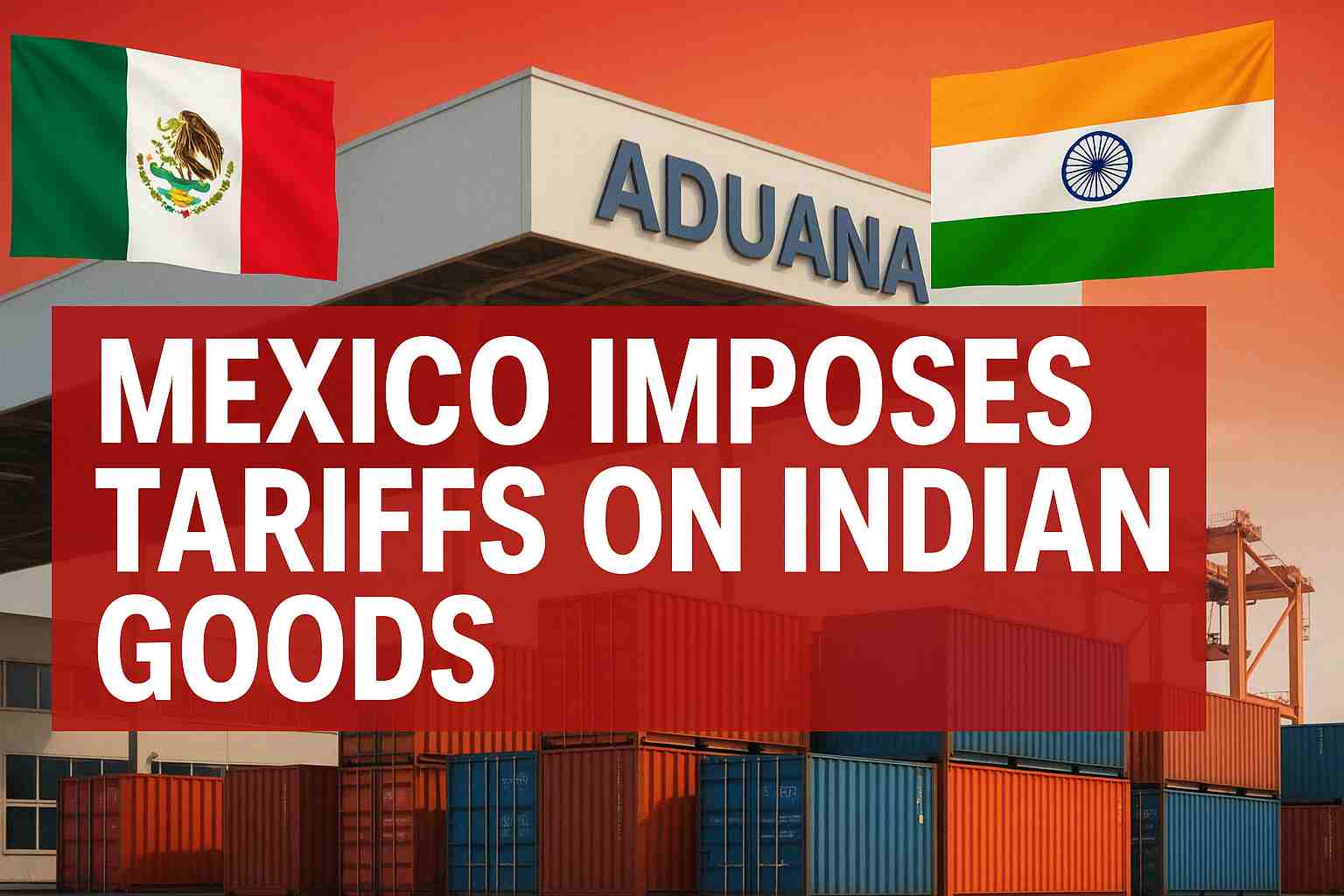
Mexico City: In a major move that could reshape trade flows between Asia and Latin America, Mexico has announced new import tariffs of up to 50% on goods coming from India and several other Asian nations. The revised rates will take effect from January 1, 2026, as part of Mexico’s updated tariff regime aimed at protecting domestic industries.
According to Mexico’s official notification, the tariff increase applies to a wide range of goods, but the auto and auto-components sector is expected to be hit the hardest. India currently exports more than $1 billion worth of vehicles and automotive parts to Mexico annually.
Why the Tariffs Matter
The jump from the current 20% rate to the new 50% ceiling could significantly raise the landed cost of Indian products, making them less competitive in Mexico’s market.
Trade analysts say the decision may be connected to rising global protectionist trends and shifting supply chains.
Impact on India
The auto industry, including major players supplying small cars and components, faces the biggest setback.
Higher duties may force Indian exporters to reconsider pricing or explore alternative markets.
Supply chains built over the past decade could face delays and restructuring.
Industry experts warn that smaller suppliers could experience the sharpest impact, as they often operate with tighter margins.
Broader Global Context
The move comes at a time when several nations are reviewing trade agreements and import protections in response to economic uncertainty. Mexico’s tariff decision follows heightened global trade tensions and policy shifts in the United States and Europe.
Economists believe the tariff hike may influence India–Latin America trade relations and could trigger fresh discussions on potential bilateral agreements.
What’s Next
India is expected to evaluate the impact and may seek further clarification from Mexican authorities. Exporters are awaiting sector-wise tariff details to assess the financial implications.
As the January 2026 implementation date approaches, both markets will watch closely how the policy shapes future trade patterns.
For more updates, visit: theeasterntimes.com
Connect with us through social media
Facebook:
 https://www.facebook.com/profile.php?id=61577015427068
X (Twitter):
 https://x.com/tet_editor
Instagram:
 https://www.instagram.com/the_eastern_times_/?next=%2F&hl=en
Mail (Email):
 contact.theeasterntimes@gmail.com