Why Nepal Opposes India’s Kailash Mansarovar Yatra
 The Eastern Times
 Quick Summary
- Nepal opposes India’s use of Lipulekh Pass, claiming it lies within its territory based on the Treaty of Sugauli and its 2020 revised map.
- India rejects the claim, saying the route has been used since 1954 and remains under its administrative and security control.
- The issue has escalated due to lack of consultation, India–China coordination, and political pressure within Nepal to take a strong stand on sovereignty.
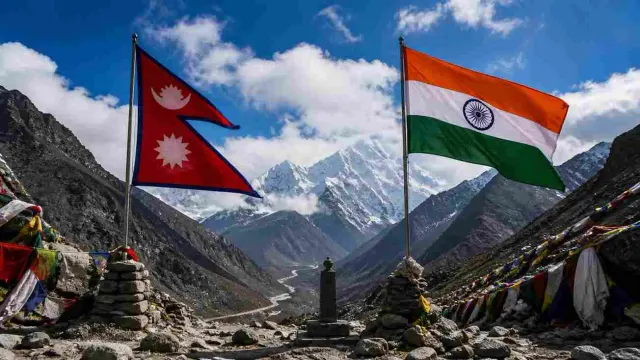
Tensions between India and Nepal have flared up again—this time over a route used for one of the most important Hindu pilgrimages. Nepal has objected to India’s decision to resume the Kailash Mansarovar Yatra through the Lipulekh Pass, turning what seemed like a routine announcement into a fresh diplomatic dispute.
What Triggered the Tension?
On April 30, India announced the 2026 schedule for the Yatra, which will run from June to August. The plan includes around 1,000 pilgrims travelling through two routes—Nathu La Pass and Lipulekh Pass.
Within days, Nepal reacted strongly. On May 3, it sent diplomatic protests to both India and China.
Kathmandu said the use of Lipulekh was a “unilateral decision” and that it had not been consulted, even though it considers the area part of its territory.
What Is the Real Issue?
At the centre of the dispute is a remote Himalayan region—Kalapani, Limpiyadhura, and Lipulekh.
Nepal’s claim is based on the Treaty of Sugauli. It argues that the Kali River defines its western border and that the river begins at Limpiyadhura. If that is accepted, the Lipulekh area falls inside Nepal.
India sees it differently. It says the river originates closer to Kalapani, which places Lipulekh within Indian territory.
This difference may sound technical, but it has kept the dispute alive for decades.
In 2020, Nepal made its position even stronger by updating its official map to include the disputed area, making it a politically sensitive issue at home.
Also Read: Why Voting and Contesting Elections Are Not Fundamental Rights: Supreme Court Explains
India’s Stand
India has taken a firm position and is not backing down.
According to New Delhi, Lipulekh has been used for the Kailash Mansarovar Yatra since 1954. It considers the route well-established and historically valid.
MEA spokesperson Randhir Jaiswal said Nepal’s claim is an “artificial enlargement” and not supported by facts.
India also stresses that it has long maintained administrative and security control over the region, which is important from a strategic point of view.
The China Angle
The issue is not limited to just India and Nepal. China is also involved because the pilgrimage leads to Tibet.
India and China have recently agreed to allow more pilgrims and improve travel arrangements. While this is a positive sign between them, Nepal sees it as being left out of decisions involving disputed land.
Pressure Inside Nepal
Nepal’s strong reaction is also linked to its internal politics.
After the March 2026 elections, the new government is under pressure to show that it is protecting national sovereignty. Taking a tough stand on territorial issues helps it connect with public sentiment.
This makes the situation more sensitive and reduces the chances of quick compromise.
What Happens Now?
India has made it clear that the Yatra will go ahead as planned.
At the same time, it has said it is open to talks to resolve boundary issues. So while tensions are high, communication between the two sides is still possible.


Why This Matters
This is not just about a pilgrimage route.
It shows how old border disputes can quickly turn into modern political tensions. It also highlights how geography, religion, and politics are closely linked in the region.
For India, it is about security and continuity. For Nepal, it is about sovereignty and national identity.
And for the region as a whole, it is a reminder that even small areas on the map can carry big diplomatic consequences.
How both countries handle this issue will decide whether it remains a temporary disagreement—or grows into something bigger.
Reader Feedback
Was this article useful?
Stay Connected
Get the next important story before you miss it.
Subscribe to the newsletter for trusted updates, or join our WhatsApp channel for quick top-story alerts from The Eastern Times.
WhatsApp Channel
Prefer instant alerts? Join our WhatsApp channel for top stories and breaking updates.
Join on WhatsApp