
What is Form 130? New Tax Filing System from FY 2026–27 Replaces Form 16 in India
 The Eastern Times
 India’s tax system is set for a major change from the new financial year. The government will implement the new Income Tax Act, 2025 along with the Income Tax Rules, 2026, bringing a shift in how taxpayers file their Income Tax Returns (ITR).
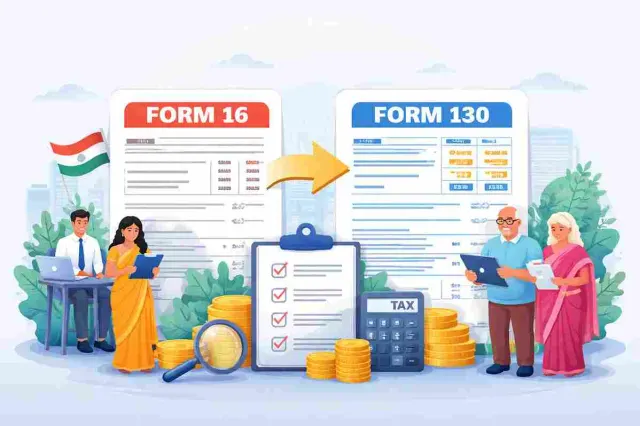
One of the biggest changes is the replacement of the widely used Form 16 with a new document called Form 130. This move aims to make the tax process more transparent, digital, and easier for taxpayers.
What is Form 130?
Form 130 will serve as an annual TDS (Tax Deducted at Source) certificate.
- Salaried employees will receive it from their employers
- Senior citizens will get it from banks for pension or interest income
The form will clearly show:
- Complete salary details
- Exemptions and deductions
- Breakdown of tax deducted
This will help taxpayers easily claim TDS credit while filing returns and reduce errors during the process.
Why is this change important?
Until now, Form 16 was the main document used for salary-based tax filing. With Form 130, the system becomes more structured and digital.
Under the new rules:
- Form 130 will be system-generated via the TRACES portal
- It will improve data matching between employers and the Income Tax Department of India
- It reduces manual errors and increases transparency
When will Form 130 be implemented?
- Form 16 will be used up to FY 2025–26
- From FY 2026–27, Form 130 will replace it
- The first Form 130 is expected to be issued by June 15, 2027
Key differences: Form 16 vs Form 130
| Feature | Old Form 16 | New Form 130 |
|---|---|---|
| Applicability | Up to Financial Year 2025–26 | From Tax Year 2026–27 onwards |
| Scope | Salary income only | Salary, pension, and interest (for senior citizens) |
| Issuance | Could be manually issued by employers | System-generated via TRACES portal |
| Timeline | Issued annually (existing system) | First issued by June 15, 2027 |
| Terminology | Assessment Year & Previous Year | Single concept: Tax Year |



What it means for taxpayers
For most taxpayers, the change is expected to make filing ITR simpler. With more detailed and standardized data in one place, the chances of mismatch and errors will reduce.
The new Form 130 is not just a name change—it reflects a shift towards a more digital and streamlined tax system in India.
Reader Feedback
Was this article useful?
Stay Connected
Get the next important story before you miss it.
Subscribe to the newsletter for trusted updates, or join our WhatsApp channel for quick top-story alerts from The Eastern Times.
WhatsApp Channel
Prefer instant alerts? Join our WhatsApp channel for top stories and breaking updates.
Join on WhatsApp