
US Passes Russia Sanctions Bill: How India and Common Indians Could Be Affected
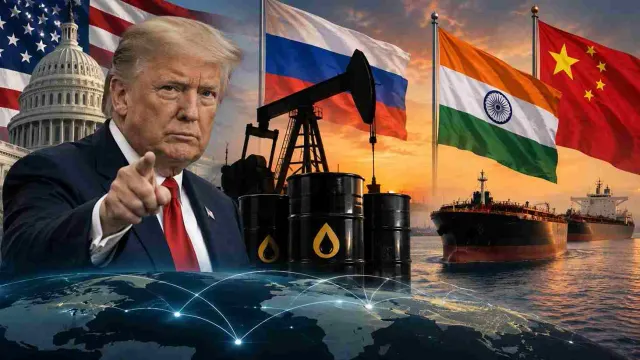 The Eastern Times
 Quick Summary
- US Congress passes a Russia sanctions bill allowing tariffs of up to 100% on countries buying Russian energy.
- India and China could face significant economic pressure because they are major buyers of Russian crude.
- Indian citizens could feel indirect effects through fuel prices, inflation, jobs, exports and the rupee.
The United States Congress has passed a major Russia sanctions bill that could give President Donald Trump the authority to impose tariffs of up to 100% on countries buying Russian oil and natural gas.
The legislation, known as the Lindsey O. Graham Sanctioning Russia and Iran Act of 2026, was approved by the US House of Representatives by 262 votes to 159. The US Senate had already approved the bill by 86–11.
The legislation has now been sent to President Trump for his consideration and signature. Importantly, the bill does not automatically impose a 100% tariff on India or any other country. It gives the US president the authority to impose such tariffs under the provisions of the legislation.
Why Is the US Targeting Russian Oil Buyers?
The main objective is to increase economic pressure on Russia over the war in Ukraine.
The legislation targets Russia's energy and defence sectors and also includes measures against vessels associated with efforts to evade existing sanctions. By putting pressure on countries that purchase Russian energy, Washington is seeking to reduce Russia's ability to generate revenue from oil and gas exports.
India and China are particularly important because they are among the biggest buyers of Russian energy.
The US strategy is therefore broader than simply imposing sanctions on Russia. It also attempts to influence the countries that continue to purchase Russian energy.
India and China Could Face the Biggest Impact
India and China are among the countries most exposed to the new US tariff authority because of their substantial purchases of Russian crude.
For India, the issue is particularly important because Russia has become a major source of crude oil imports. Indian refiners have benefited from Russian supplies and, at various times, discounted prices.
However, the actual impact will depend on whether President Trump uses the new authority, the tariff rate imposed and the conditions attached to any future measures.
A 100% tariff is therefore a potential measure, not a tariff that India is currently paying.
How Could It Affect India?
The consequences could extend beyond India's oil sector.
If the US imposed a high tariff on Indian goods under the new authority, Indian exports to the American market could become more expensive. Exporters could face higher costs and reduced competitiveness in the US.
At the same time, if India reduced its purchases of Russian crude to avoid US penalties, it would need to obtain more oil from other suppliers.
That could increase competition for alternative supplies and potentially contribute to higher international oil prices.
This is particularly significant because India imports around 90% of its crude-oil requirements, making global oil prices an important factor for its economy. Russia has accounted for more than one-third of India's crude purchases in recent months.
Higher crude prices could eventually affect transportation costs, inflation, manufacturing and household expenses.
What Is India's Position?
India has responded by stressing that energy security remains a priority.
The Ministry of External Affairs said India is firmly committed to ensuring energy security for its 1.4 billion people and will continue to source energy through diversified suppliers and according to changing market conditions.
New Delhi also said it had discussed the issue with US officials at high levels in recent months and had clearly communicated its concerns about the potential implications for India-US relations and the international energy market.
India has further stated that it will take all necessary measures to protect its trade and economic interests and will work with domestic industry to deal with the consequences.
How Will the US Russia Sanctions Affect Common Citizens?
The impact on ordinary Indians may not be immediate, but the US sanctions and possible tariffs could affect people through fuel prices, the cost of goods, jobs and the value of the rupee.
1. Jobs and businesses could be affected
If the US puts high tariffs on Indian goods, Indian products could become more expensive in America. This may make it harder for Indian companies to sell there.
Companies that depend heavily on the US market could see lower orders and profits. In some industries, this could affect production, business income and jobs.
2. The rupee could come under pressure
India buys a large amount of oil from other countries. If India has to buy more expensive oil from alternative suppliers, it could have to spend more dollars.
At the same time, if Indian exports to the US fall, India could earn fewer dollars.
This combination could put pressure on the Indian rupee.
If the rupee becomes weaker, imported products—including crude oil—could become more expensive.
3. What does this mean for ordinary Indians?
The possible impact can be understood simply:
US pressure on Russian oil → India may need to change some oil purchases → oil could become more expensive → transport costs could rise → some goods could become more expensive.
There is another possible impact:
Higher US tariffs on Indian goods → Indian exports may become more expensive in America → some companies could receive fewer orders → businesses and jobs in affected industries could come under pressure.
However, these effects are not certain yet. The bill allows tariffs of up to 100%, but the actual tariff, if imposed, will depend on President Trump's decision and the way the law is implemented.
What Happens Next?
The immediate question is whether President Trump will sign the legislation and, if it becomes law, how he chooses to use the authority it provides.
Several possibilities remain open. The administration could impose tariffs on Russian-energy buyers, set a rate below the maximum 100%, establish conditions or exemptions, or negotiate with affected countries.
For India, the issue creates a difficult balance between maintaining access to affordable energy and protecting its large trade relationship with the United States.
For now, the key fact is simple: Congress has approved a law that could allow tariffs of up to 100% on countries buying Russian energy, but India has not been subjected to an automatic 100% tariff.
The next major decision rests with the White House.
Reader Feedback
Was this article useful?
Stay Connected
Get the next important story before you miss it.
Subscribe to the newsletter for trusted updates, or join our WhatsApp channel for quick top-story alerts from The Eastern Times.
WhatsApp Channel
Prefer instant alerts? Join our WhatsApp channel for top stories and breaking updates.
Join on WhatsApp