
Iranian Strike Reportedly Destroys $300 Million U.S. THAAD Radar
 The Eastern Times
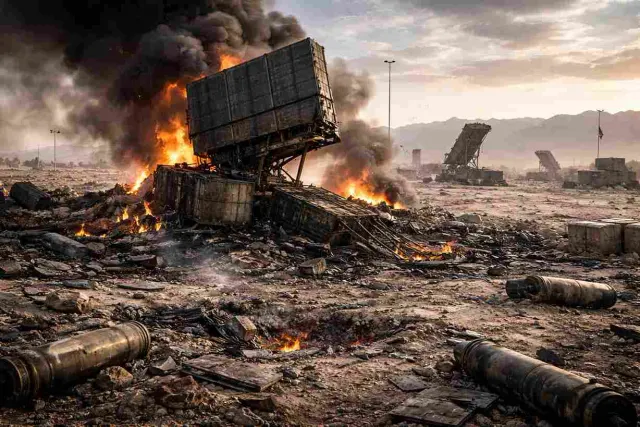
 Tehran: In a major development in the ongoing Middle East conflict, an Iranian attack has reportedly destroyed a U.S. THAAD radar system at the Muwaffaq Salti Air Base in Jordan. The strike took place on Saturday, the eighth day of the conflict, according to reports.
The destroyed system is valued at around $300 million and plays a crucial role in detecting and intercepting enemy missiles and drones.
Defense analysts say this could be Iran’s most significant success in the week-long conflict so far.
What Happened
The target of the strike was Muwaffaq Salti Air Base, a key U.S. military facility in Jordan used for surveillance and defense operations across the Middle East.
The attack reportedly destroyed the AN/TPY-2 radar, a highly advanced component of the THAAD (Terminal High Altitude Area Defense) system.
This radar is designed to track incoming ballistic missiles and guide interceptor systems to destroy them in mid-air.
Although Iran had previously launched missile attacks on the same base on February 28 and March 3, those attempts were successfully intercepted. This latest strike appears to have successfully hit the radar installation.
Why the THAAD System Is Important
The THAAD system is one of the United States’ most advanced missile defense technologies.
Key features include:
- Long-range detection: The radar can track objects up to 1,000 km away.
- High-precision identification: It can distinguish between real warheads and decoys.
- Mobile deployment: The system can be transported by aircraft, ships, or trucks, allowing it to be deployed quickly in conflict zones.
Because of these capabilities, THAAD systems are considered critical components of U.S. missile defense networks worldwide.
Strategic Impact of the Strike
Military experts say the destruction of the radar may create a temporary gap in missile defense coverage in that region.
With the THAAD radar damaged, Patriot missile systems will now have to take on more responsibility for defending the area.
However, analysts say Patriot interceptor missiles are already in limited supply, which could increase pressure on the remaining defense systems.
Another challenge is that THAAD systems are rare and difficult to replace. The United States operates only eight THAAD systems worldwide, including deployments in South Korea and Guam.
Building and deploying a new radar unit could take several years.
Evidence of Multiple Strikes
Satellite imagery from companies such as Airbus and Planet Labs reportedly showed two large craters near the radar site, each about 13 feet wide.
This suggests that multiple precision-guided projectiles may have been used to ensure the system was completely disabled.
A Key Military Base in the Region
The Muwaffaq Salti Air Base is a major hub for U.S. operations in the Middle East.
The base supports surveillance flights, missile defense operations, and regional security missions.
Reports indicate that during the first few days of the conflict alone, the United States may have lost nearly $2 billion worth of military equipment due to targeted strikes.
As tensions in the Middle East continue to rise, this latest strike highlights the growing intensity and technological sophistication of the conflict.
Reader Feedback
Was this article useful?
Stay Connected
Get the next important story before you miss it.
Subscribe to the newsletter for trusted updates, or join our WhatsApp channel for quick top-story alerts from The Eastern Times.
WhatsApp Channel
Prefer instant alerts? Join our WhatsApp channel for top stories and breaking updates.
Join on WhatsApp