
Iran's Economic Crisis: Citizens Selling Body Organs to Survive
 The Eastern Times
Quick Summary
- - More than 600 online advertisements offering body organs and tissues were examined by Iran International. - Financial hardship and mounting debts are reportedly driving some Iranians to advertise organs for sale. - The findings highlight the growing humanitarian concerns surrounding Iran's economic crisis.
The devastating economic consequences of prolonged conflict in the Middle East are taking a disturbing toll on ordinary Iranians. As rising financial pressures, mounting debts and economic uncertainty threaten household survival, some desperate citizens are reportedly turning to an extreme measure—advertising their own body organs and tissues for sale.
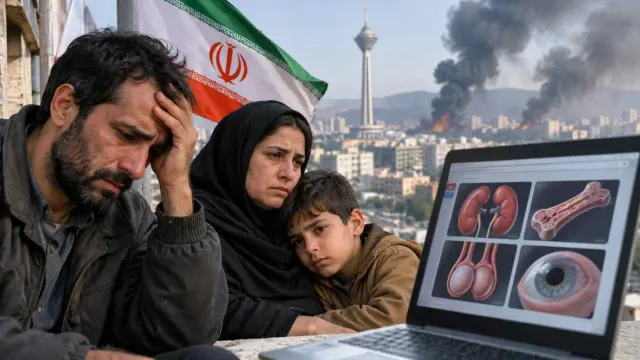
An investigation by Iran International has exposed a disturbing online marketplace where financially struggling Iranians are posting advertisements offering organs and body tissues, including kidneys, bone marrow, testicles and corneas, in exchange for money.
For many, the decision appears to be driven by mounting debt, the struggle to meet basic household expenses and the desire to secure a better financial future for their families. What should be an unthinkable choice is reportedly becoming an option for people who see few alternatives to their worsening financial circumstances.
More Than 600 Advertisements Examined
According to the Iran International investigation, researchers examined more than 600 advertisements posted on a Telegram channel between May and October. The findings revealed that approximately one in every three advertisements offered more than one organ or type of body tissue.
The findings point to the emergence of a disturbing informal online market in which financial desperation is increasingly intersecting with the human body. Although the advertisements do not establish how many transactions were completed, they highlight the extraordinary financial pressures facing some sections of Iranian society.
War and Economic Uncertainty Deepen the Crisis
Iran's economic difficulties have been compounded by prolonged regional conflict, international restrictions and uncertainty surrounding the country's geopolitical future. Disruptions to trade, financial transactions and energy-related economic activity can further intensify pressure on an already vulnerable economy.
The Strait of Hormuz, one of the world's most strategically important maritime routes, is particularly significant to Iran and global energy markets. Any disruption to shipping through the narrow waterway can have consequences extending well beyond the Middle East, potentially affecting oil prices, transportation costs and global trade.
Meanwhile, tensions between Tehran and Washington continue to create uncertainty over the possibility of a lasting resolution. US Secretary of State Marco Rubio has warned that pressure on Iran will continue indefinitely, raising further concerns about the country's economic outlook.
An Alarming Humanitarian Dimension
Beyond military developments and geopolitical calculations, the situation raises a critical question: who ultimately pays the price of a prolonged conflict?
For ordinary families, economic instability is not simply reflected in financial statistics. It can mean difficulty affording food, healthcare, housing and other essential needs. When people begin considering the sale of their own body parts to overcome financial hardship, the crisis takes on a deeply disturbing humanitarian dimension.
The reported advertisements are a reminder that the consequences of war extend far beyond battlefields. While governments focus on military strategies, sanctions and diplomatic pressure, ordinary citizens can be left struggling to protect their livelihoods, health and dignity.
The growing concern is that if economic pressures continue to intensify, the human cost of the conflict could become even more severe.
Reader Feedback
Was this article useful?
Stay Connected
Get the next important story before you miss it.
Subscribe to the newsletter for trusted updates, or join our WhatsApp channel for quick top-story alerts from The Eastern Times.
WhatsApp Channel
Prefer instant alerts? Join our WhatsApp channel for top stories and breaking updates.
Join on WhatsApp