
By The Eastern Times Policy Desk | New Delhi
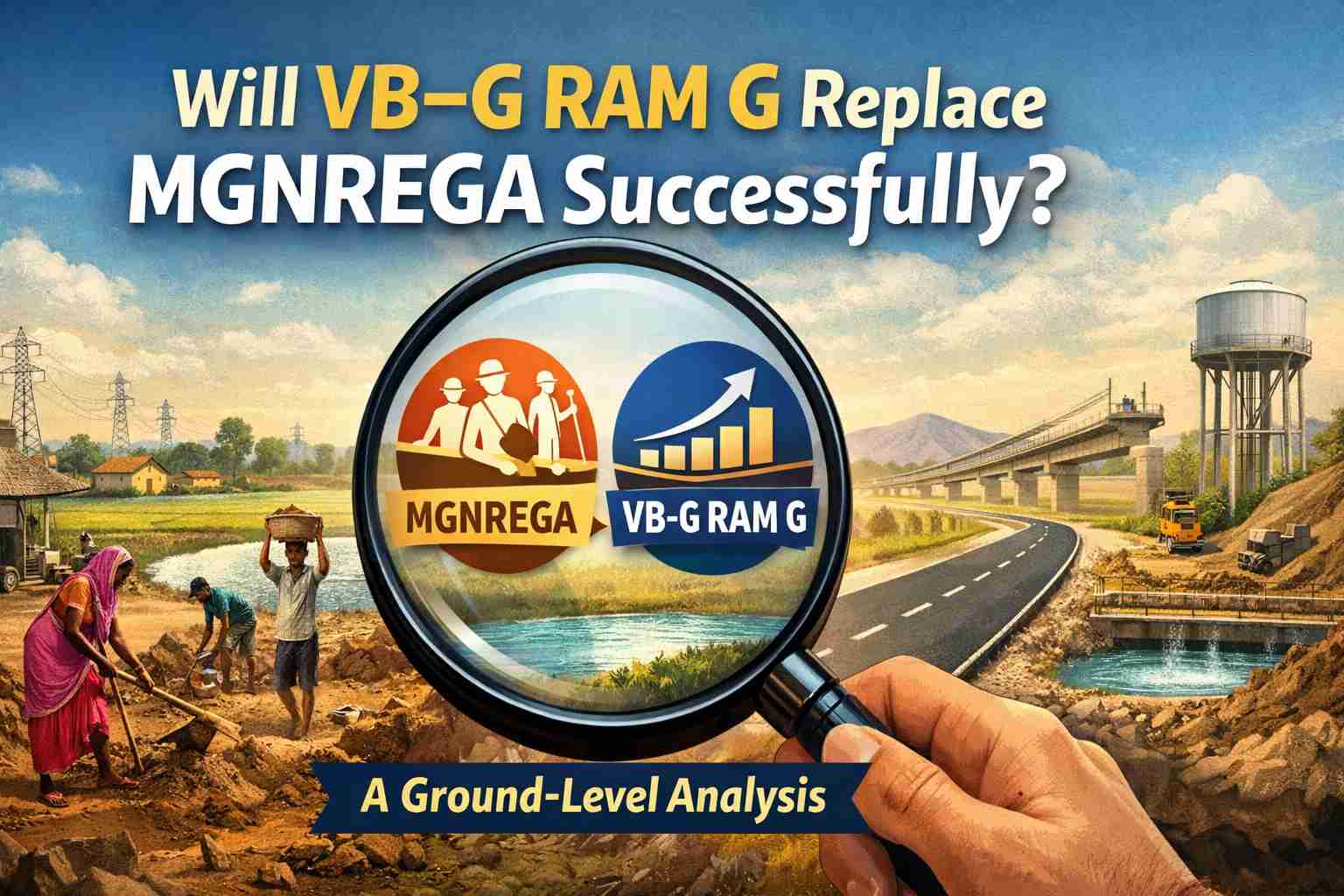
The VB–G RAM G Bill, 2025, which seeks to replace MGNREGA, is being projected as a new blueprint for rural jobs and development. With promises of more workdays, better assets, and tighter monitoring, the government calls it a modern upgrade. But whether it will truly help rural India depends on whose perspective is considered.
From the Rural Worker’s View
Possible gains:

Guaranteed work increases from 100 to 125 days, raising income potential.
Digital payments may reduce delays and leakages.
Durable village assets could bring long-term benefits.
Concerns:
Normative, budget-capped allocations may weaken the right to demand work.
If state funds fall short, jobs may be limited despite legal promises.
A 60-day pause during peak farm seasons may hurt landless workers who rely on public works year-round.
Analysis: The scheme helps workers only if the guarantee remains real in practice, not just in law.
From the Farmer’s Perspective
Possible gains:
Less labour shortage during sowing and harvesting.
Focus on water, roads, and storage can improve farm productivity.
Concerns:
Lower rural wages could hurt labour incomes.
Benefits depend on whether works match local farm needs.
Analysis: Farmers benefit if infrastructure planning truly improves farm resilience.
From the States’ Perspective
Possible gains:
Panchayat-led planning may improve local ownership.
Better monitoring tools can raise efficiency.
Concerns:
60:40 wage sharing shifts heavy costs to states.
Poorer states may struggle, leading to uneven job access.
Analysis: For many states, VB–G RAM G could become a fiscal strain.
From the Centre’s Perspective
Possible gains:
Predictable spending and stronger oversight.
Alignment with national infrastructure goals.
Concerns:
Political risk if rural distress rises.
Criticism of weakening a landmark welfare law.
Analysis: For the Centre, the scheme offers control, but shifts risks downward.
From the Rural Economy’s View mgnrega
Possible gains:
Better assets may lift productivity and markets. mgnrega
Climate-resilient works can reduce future distress. mgnrega
Concerns:
If job access shrinks, rural demand may weaken.
The safety-net role during crises may reduce.
Analysis: Growth will come only if the wage support base is not eroded.
The Eastern Times Perspective
VB–G RAM G marks a move from welfare as a right to development as a mission. Its promise lies in better assets and accountability. Its risk lies in making employment budget-limited and state-dependent.
It will be truly helpful only if central funding stays flexible, poorer states are protected, and workers can still rely on it in times of need. Otherwise, the guarantee may become symbolic.
The real test will be on the ground — in how many days of work people actually get, and whether the poorest are still protected. mgnrega
About the Author
The Eastern Times Policy Desk tracks India’s public policy, economy, and governance. The desk focuses on ground-level impacts of legislation and reforms, offering independent and data-driven analysis for readers.
Connect with us through social media
Facebook:
 https://www.facebook.com/profile.php?id=61577015427068
X (Twitter):
 https://x.com/tet_editor
Instagram:
 https://www.instagram.com/the_eastern_times_/?next=%2F&hl=en
- Youtube : https://www.youtube.com/@TheEasternTimesOfficial
Mail (Email):
 contact.theeasterntimes@gmail.com