
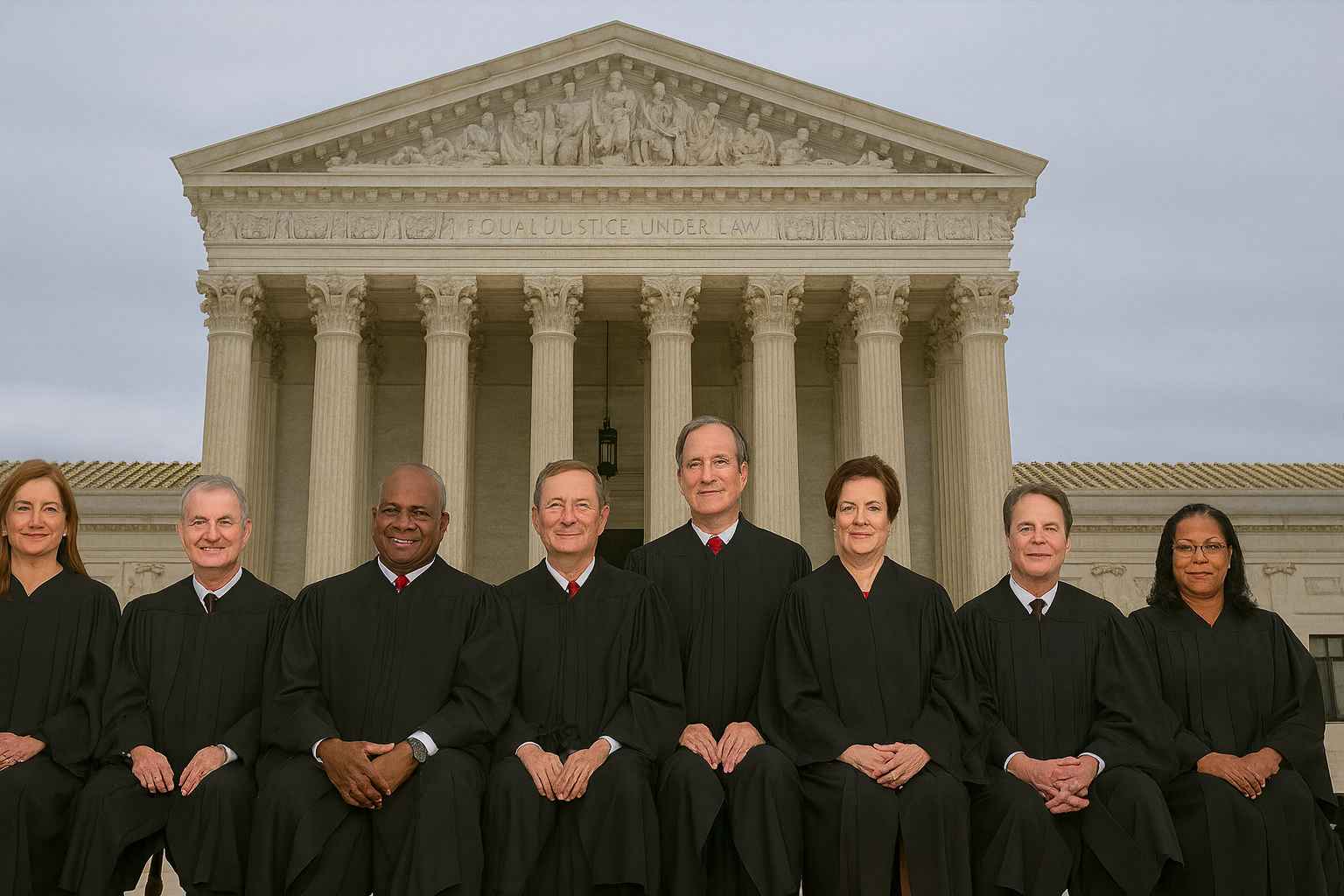
Washington, D.C. — The US Supreme Court has agreed to take up one of the most significant immigration cases in decades, reviewing President Donald Trump’s executive order that seeks to restrict birthright citizenship—the automatic granting of citizenship to almost anyone born on American soil.
The order, signed at the start of Trump’s second term, was immediately blocked nationwide by federal judges, setting up a legal battle now headed to the nation’s highest court.
What Is the News?
The Supreme Court has officially agreed to hear Trump v. Barbara, a case that challenges the constitutionality of Trump’s directive. This ruling will determine whether children born in the US to undocumented immigrants or temporary visa holders can continue to receive citizenship at birth.
Why Judges Blocked the Order US Supreme Court
Multiple federal judges issued injunctions as soon as the order was announced. They argued that:

The policy violates the Fourteenth Amendment
It contradicts more than 125 years of Supreme Court precedent
A president cannot unilaterally rewrite constitutional guarantees
Federal law clearly supports birthright citizenship
Judges described the order as “likely unconstitutional” and warned that allowing it to stand would undo long-settled legal principles.
Why Protests Erupted
Immigrant-rights groups, civil rights organizations, and legal scholars quickly organized protests, raising concerns that:
Thousands of US-born children could become stateless
Families could lose access to essential healthcare and federal support
Hospitals would struggle with citizenship-related care eligibility
The move targets specific communities and creates uncertainty for new parents
Many protesters argue that changing birthright citizenship would fundamentally alter America’s identity as a nation that welcomes immigrants.
What the Constitution Says
The Fourteenth Amendment clearly states:
“All persons born or naturalized in the United States, and subject to the jurisdiction thereof, are citizens of the United States.”
For more than 150 years, courts have interpreted this to mean that anyone born on US soil—regardless of their parents’ immigration status—is a citizen.
An 1898 Supreme Court ruling firmly upheld this interpretation, and no court has seriously challenged it since.
What Is the Case About? – Trump v. Barbara
The case stems from a lawsuit filed in New Hampshire by parents and children who would lose citizenship under the order. Represented by the ACLU, they argue:
The president cannot overturn a constitutional guarantee
The order violates existing federal laws that codify birthright citizenship
Thousands of families face uncertainty and potential loss of rights
The lower court agreed, blocking the directive—leading to this Supreme Court appeal.
Trump’s Argument
The Trump administration argues that: us supreme court
The Fourteenth Amendment was written only to ensure citizenship for formerly enslaved people
It was not intended to cover children of:
undocumented immigrants
temporary visitors
foreign students
foreign workers
The current system encourages “birth tourism” and illegal immigration
Trump’s team is urging the Court to adopt a narrower interpretation that restricts who qualifies for automatic citizenship. us supreme court us supreme court
How This Could Affect People
If the order is upheld:
Tens of thousands of babies born each year would no longer be US citizens
Many families would lose access to healthcare programs like Medicaid
Children could be left without legal status, creating long-term instability
Government agencies would face massive administrative challenges determining newborns’ citizenship
The US would break from a long-standing global practice shared by nations like Canada and Mexico
Hospitals warn that newborns needing intensive care could be unable to receive federal coverage if deemed non-citizens. us supreme court
How This Case Affects Indian Students, H-1B Workers & Global Migrants
Children born to parents on H-1B, L-1, F-1, or temporary visas may lose automatic US citizenship.
Indian tech workers, researchers, and students will face major uncertainty when planning families in the US.
Some children could become stateless if their parents’ home country has strict nationality rules.
Legal migrants may need extra documentation to prove their child’s citizenship status.
Expert Insights
Analysts say this could be the biggest citizenship ruling in decades.
Experts warn the order would require hospitals to check parents’ immigration status at birth — something the US has never done.
Think-tank researchers caution that the change may create long-term legal confusion for families and government agencies.
How This Ruling Could Shape Future US Immigration Policy
If upheld, Congress may be pushed to rewrite citizenship laws.
States might introduce new verification rules before issuing birth certificates.
Immigration processing could become more complex for legal migrants.
If struck down, it would reaffirm the 14th Amendment and block future attempts to alter birthright citizenship.
What Happens Next
The Supreme Court will hear arguments in spring, and a decision is expected by early summer. The ruling could:
Reshape America’s immigration system
Redefine the meaning of citizenship
Set a historic precedent affecting future generations
This is likely to be one of the most closely watched decisions of the term, with major political, legal, and social implications. us supreme court
Also Read: https://theeasterntimes.com/how-to-manage-anxiety-and-stress-in-simple-ways/
https://theeasterntimes.com/how-to-manage-anxiety-and-stress-in-simple-ways/
Connect with us through social media
Facebook:
 https://www.facebook.com/profile.php?id=61577015427068
X (Twitter):
 https://x.com/tet_editor
Instagram:
 https://www.instagram.com/the_eastern_times_/?next=%2F&hl=en
Mail (Email):
 contact.theeasterntimes@gmail.com

https://x.com/tet_editor/status/1997196501093609836?s=20
https://theeasterntimes.com/top-stories/
https://theeasterntimes.com/category/world/
https://theeasterntimes.com/indigo-flight-cancel/
