
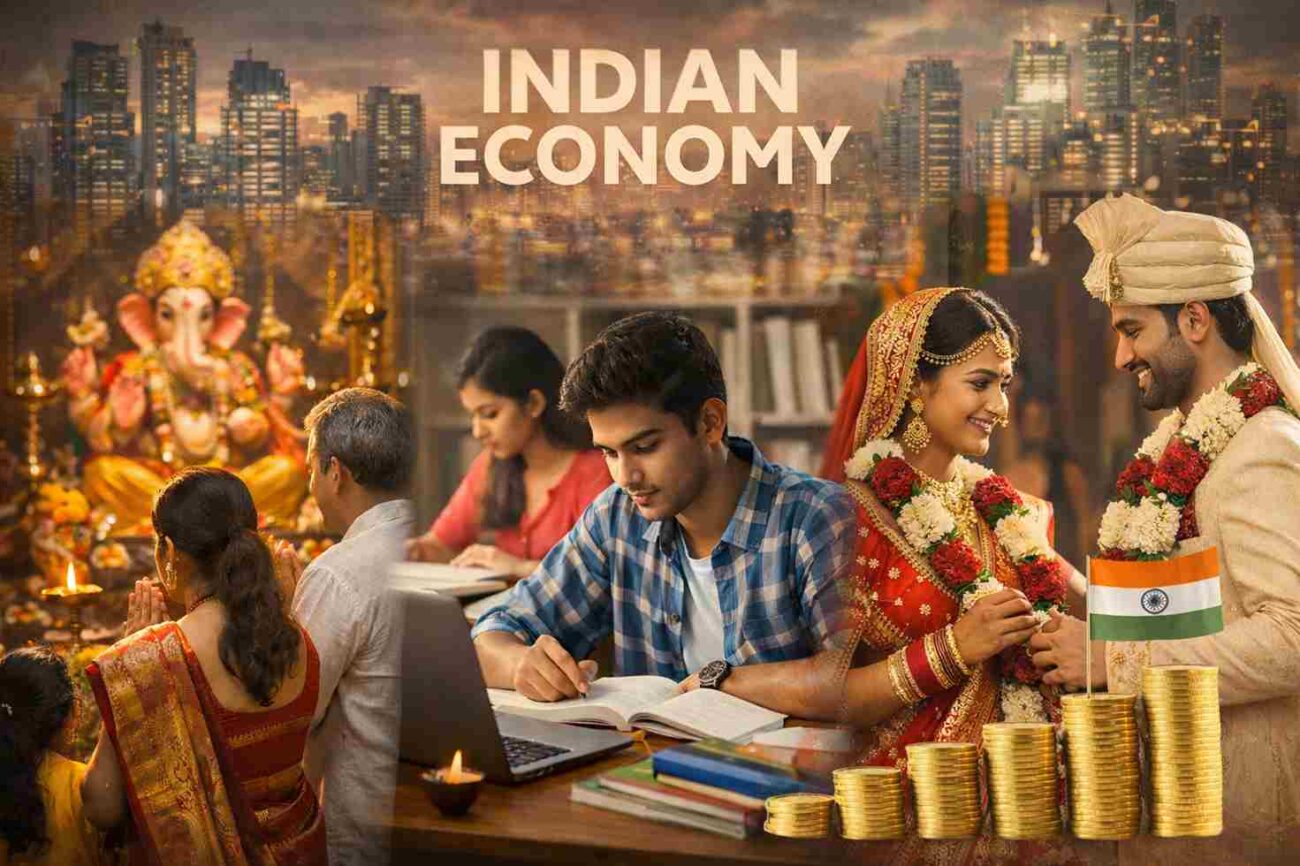
To understand the Indian economy properly, it is not enough to look only at GDP, inflation, or government policies. We must look inside Indian households. The everyday decisions families make—what to save for, when to borrow, and where to spend—tell us a deeper story about how the economy actually works.
If we closely observe household spending in India, three areas clearly stand out: religion, education, and marriage.
In India, religion is not just a matter of personal faith. It is a regular part of family expenses. The National Sample Survey (NSS) shows that Indian households spend a large share of their non-food expenses on religious and ceremonial activities. This includes daily offerings, weekly temple visits, festivals, donations, pilgrimages, and rituals related to birth, marriage, and death.
Each expense may seem small, but together they add up—especially for lower- and middle-income families. In years with many ceremonies, families may use up their savings or even take informal loans. From a simple economic point of view, this may look unnecessary. But in reality, religious spending often works like social security. Temples and festivals bring people together, create support networks, and strengthen community bonds. In this way, religion also supports local jobs—such as priests, flower sellers, transport workers, hotel owners, and small vendors. So, religious spending also contributes to economic activity.

Also Read: Housewife’s Work Has Real Economic Value, Cannot Be Ignored: Delhi High Court
Education is another major priority for Indian families. Most parents believe that education is the best way to improve their children’s future. It is seen as the path to better jobs, higher income, and social respect. Because of this belief, families are willing to spend a large part of their income on schooling.
Today, education costs go beyond school fees. Families also spend on coaching classes, digital devices, online learning, transportation, hostel fees, and professional courses. Many parents even take loans to support higher education, especially for engineering, medical, management, or studies abroad.
Families accept financial pressure today because they expect better returns in the future. Education is treated as an investment in human capital. However, when many educated young people move abroad for work, the country does not fully benefit from this investment. The cost is first carried by families, and later it affects the larger economy.
Marriage is perhaps the most visible and expensive part of India’s social and economic system. India’s wedding industry is worth billions of dollars every year. Millions of marriages take place annually, and the average wedding cost is often much higher than a family’s yearly income.
Also Read: Supreme Court Bans Class 8 NCERT Book Over ‘Judicial Corruption’ Chapter
Families save for years, buy gold, or take loans to arrange weddings. From a purely economic view, this may seem excessive. But in India, marriage is not just a personal event—it is a social statement. It shows family status and social position.
At the same time, weddings create large economic activity. Jewelers, caterers, decorators, musicians, photographers, transport workers, and many small businesses depend on wedding seasons for income. So, wedding spending supports many livelihoods.
When we look at religion, education, and marriage together, we see a clear pattern. These expenses are not random. They reflect India’s values, social structure, and long-term thinking. This also explains why household consumption forms the backbone of India’s GDP around 60%, contributing more than half of total economic output.
Cultural spending in India is not just tradition—it is part of economic life. Religion provides social support, education builds future security, and marriage strengthens social ties.
To truly understand the Indian economy, we must understand Indian families. Behind every economic number, there is a story of belief, hope, responsibility, and social connection.
Original Author: Dr. Antarjeeta Nayak
Original Language: Odia
Translated and edited by: The Eastern Times Editorial Team
About the Author
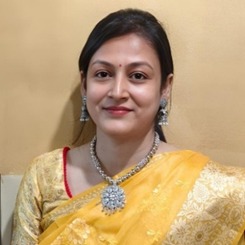
Dr. Antarjeeta Nayak is a Researcher and Columnist with a Ph.D. in Economics from NIT Rourkela and a recipient of ICSSR Doctoral and Post-Doctoral Fellowships. Her work focuses on poverty and tribal development. She is the author of TribaNomics and Poverty: By Chance or By Choice, and Odia books including Mana Katha, Parikhyar Parikhya, Mun Bada Hele Adivasi Hebi, and the novel Kusum: Byabasthar Abyabastha re Adibasi. She received the ISSBD Grant (2022) and the Laadli Media Award (2025) and is the Founder Director of Abhibyakti Research and Development Foundation (ARDF).

click on icons to connect with us through official social media channels






You May Be Bathing the Wrong Way: Know the Correct Ayurvedic Way
