
Why Odisha Remains Poor Despite Its Vast Natural Resources
Odisha's Great Paradox: Rich in Nature, Poor in Development.
Quick Summary
- Odisha possesses immense natural advantages, including rich mineral reserves, a long coastline, vibrant tourism potential, and a talented workforce, yet continues to face poverty, unemployment, and regional inequality.
- The article argues that resources alone cannot ensure prosperity, emphasizing the need for visionary leadership, transparent governance, value-added industries, quality education, and stronger institutions.
- It calls for a long-term development strategy that combines manufacturing, maritime commerce, tourism, innovation, and community participation to transform Odisha's natural wealth into inclusive and sustainable growth.
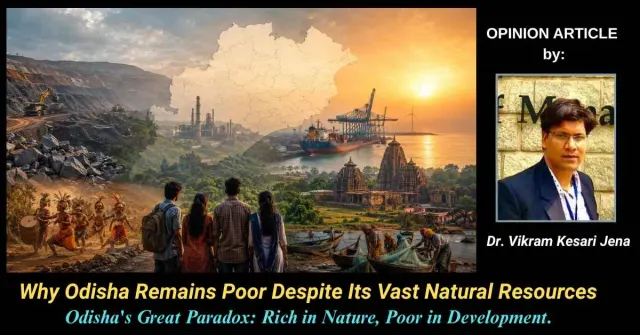
Odisha presents one of the greatest development paradoxes in modern India. It is a land blessed with abundant mineral wealth, fertile river systems, dense forests, a long coastline, extraordinary biodiversity, and a rich civilizational heritage.
Iron ore, coal, bauxite, chromite, manganese, limestone, and several other valuable minerals have made the state one of India's most resource-rich regions. Odisha also has India's second-longest mainland coastline, offering immense opportunities for ports, maritime trade, fisheries, the blue economy, and coastal tourism.
The temples of Bhubaneswar, Konark, and Puri, the forests of Similipal, the wetlands of Chilika, and the waterfalls and mountains of the tribal belt together create a landscape that few places in the world can match.
Yet millions of people continue to struggle with poverty, unemployment, migration, and uneven development. This contradiction deserves serious reflection rather than political slogans.
Why History Cannot Be the Only Excuse
History alone cannot explain this paradox. Colonial extraction certainly weakened Odisha's economy, and decades of neglect left deep institutional scars.
However, more than seven decades after Independence, responsibility also rests with successive governments, political leadership, bureaucratic institutions, and policy priorities.
Natural resources alone never create prosperity. They become engines of development only when guided by visionary leadership, transparent governance, accountable institutions, and long-term planning.
Countries with far fewer natural resources have transformed themselves into global economic powers through education, innovation, entrepreneurship, and institutional excellence.
Despite possessing immense natural advantages, Odisha has often remained trapped in a model where raw materials leave the state while much of the value addition takes place elsewhere.
The Mining Wealth Dilemma
The mining sector illustrates this challenge most clearly. Odisha contributes significantly to India's production of iron ore, chromite, coal, and several strategic minerals. The revenue generated from these resources is enormous.
Yet many mining-affected districts continue to face inadequate healthcare, poor educational outcomes, environmental degradation, and insufficient infrastructure.
Development should not be measured merely by extraction figures or royalty collections. It should also be measured by the quality of schools, hospitals, drinking water, roads, digital connectivity, environmental restoration, and livelihood opportunities available to local communities.
When mineral-rich districts continue to experience developmental deficits, fundamental questions naturally arise about governance, planning, and the equitable distribution of wealth.
Also Read: Why Odisha Should Lead the Revival of Indian Football Like It Did Hockey
Unlocking the Coastal Economy
Odisha's extraordinary coastline remains another underutilized asset.
With hundreds of kilometres of coastline, the state has the potential to become a leading maritime economy. Modern ports, logistics hubs, seafood processing industries, coastal tourism, renewable offshore energy, marine research, shipbuilding, and international trade corridors could collectively transform Odisha's economy.
Rather than relying predominantly on mining revenues, Odisha can diversify into sectors that generate sustainable employment and long-term prosperity.
The coastline is not merely a geographical feature. It is an economic gateway connecting Odisha to the Indian Ocean and global markets.
Tourism: An Untapped Economic Engine
Tourism represents another missed opportunity.
Few regions combine spiritual heritage, wildlife, beaches, tribal culture, Buddhist sites, festivals, handicrafts, classical dance, and culinary diversity as naturally as Odisha.
Yet tourism infrastructure, global branding, visitor experiences, and private investment remain far below their potential.
Tourism is among the few industries capable of generating employment across villages, small towns, and cities simultaneously.
Every tourist creates demand for hotels, transport, handicrafts, restaurants, local guides, artists, photographers, and countless small businesses.
A comprehensive tourism strategy could become one of Odisha's strongest engines of inclusive economic development while preserving its unique cultural identity.
Odisha's Greatest Strength: Its People
Perhaps Odisha's greatest resource is neither its minerals nor its coastline. It is its people.
The state has produced distinguished scholars, scientists, administrators, artists, entrepreneurs, sportspersons, and public intellectuals who have earned recognition across India and the world.
Every year, thousands of talented young Odias excel in competitive examinations, research institutions, corporate leadership, technology, medicine, and academia.
Unfortunately, many are compelled to migrate because opportunities within the state remain limited.
The challenge is not a lack of talent but the inability to create an ecosystem where talent can flourish through innovation, research, manufacturing, start-ups, and knowledge-based industries.
Building a Long-Term Vision
Visionary leadership means looking beyond electoral cycles.
It requires imagining Odisha not merely as a supplier of raw materials but as a global centre for manufacturing, education, maritime commerce, clean energy, cultural diplomacy, artificial intelligence, biotechnology, and sustainable development.
Such transformation requires sustained investment in universities, research laboratories, industrial clusters, modern logistics, digital infrastructure, environmental protection, and institutional reforms.
Equally important is the cultivation of ethical governance, where public resources are managed with transparency and accountability.
Development must become citizen-centred rather than project-centred.
Also Read: Organic Farming vs Modern Agriculture: Can India Feed 145 Crore People Without Chemical Fertilizers?
Empowering Communities
The future also depends on empowering local communities, particularly tribal societies, women, farmers, fishermen, artisans, and young entrepreneurs.
Development imposed from above rarely succeeds unless local people become equal partners in planning and implementation.
Mineral wealth should improve the lives of those living closest to the mines.
Coastal development should strengthen fishing communities.
Tourism should benefit local artisans, cultural practitioners, and small entrepreneurs.
Economic growth must also be accompanied by environmental conservation because forests, rivers, mountains, and coastlines are not merely resources for extraction but living ecosystems that sustain future generations.
A Defining Moment for Odisha
Odisha today stands at a historic crossroads.
The global economy is changing rapidly through technological innovation, green transitions, resilient supply chains, and knowledge-driven industries. These shifts present unprecedented opportunities.
If Odisha can integrate its mineral strength with manufacturing, combine its coastline with maritime commerce, connect its cultural heritage with global tourism, and invest in human capital through education and innovation, it can emerge as one of India's leading states in the coming decades.
The foundations already exist. What remains is the courage to pursue a long-term vision with consistency and integrity.
Turning Natural Wealth into Human Prosperity
The true wealth of a society is not measured by the minerals beneath its soil but by the dignity, prosperity, creativity, and confidence of its people.
Odisha has received extraordinary gifts from nature and history.
The responsibility now rests with its institutions, leaders, intellectuals, entrepreneurs, and citizens to transform these blessings into inclusive and sustainable progress.
Future generations should inherit not merely a land rich in resources but a society rich in opportunity, justice, knowledge, and hope.
That is the Odisha its people deserve—and that is the challenge that cannot be postponed any longer.
Author Details
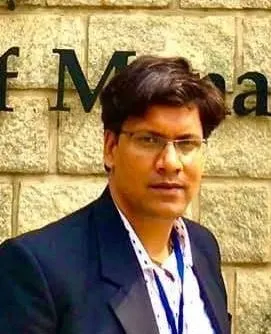
Dr. Vikram Keshari Jena is an academic, researcher, and public intellectual from Odisha. His work focuses on media, politics, development, public policy, and Indian knowledge traditions, with an emphasis on critical inquiry, social transformation, and interdisciplinary dialogue. He has authored numerous academic books and currently serves as the Founding Director of the Centre for Adivasi Research and Development (CARD), Odisha.
Reader Feedback
Was this article useful?
Stay Connected
Get the next important story before you miss it.
Subscribe to the newsletter for trusted updates, or join our WhatsApp channel for quick top-story alerts from The Eastern Times.
WhatsApp Channel
Prefer instant alerts? Join our WhatsApp channel for top stories and breaking updates.
Join on WhatsApp