
Why Does the USA Attack Iran? The Real Reasons Behind the Conflict
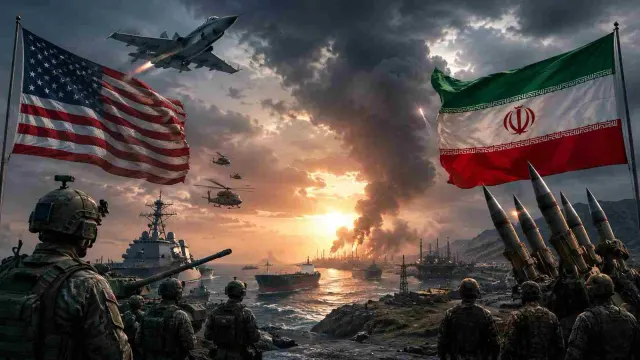
Quick Summary
- Explains the key strategic reasons behind U.S. actions against Iran.
- Examines the role of oil, nuclear concerns, and Middle East geopolitics.
- Shows how the conflict affects global inflation, trade, and everyday life.
Since last February, the U.S.–Iran conflict has dominated international headlines. What initially appeared to be another regional crisis has gradually evolved into a conflict with global consequences. Every escalation between the two countries has affected international oil markets, disrupted shipping routes, increased transportation costs, and contributed to rising inflation across the world.
For ordinary people, the impact is visible in everyday life. Fuel has become more expensive. Transportation costs have risen sharply. As a result, the prices of food, household goods, and many daily necessities have increased. Businesses are paying more to move goods across countries, and consumers ultimately bear the burden.
This naturally raises an important question:
Why is this happening? What is the real reason behind the U.S.–Iran conflict?
A Conflict Decades in the Making
The current confrontation is not a sudden war. It is the result of decades of political rivalry, strategic competition, and deep mutual distrust between the United States and Iran.
While recent military strikes and attacks have intensified the conflict, the underlying issues have existed for many years.
What Does the United States Want?
The United States says its actions are aimed at protecting its national security and maintaining stability in the Middle East.
- Prevent Iran from obtaining a nuclear weapon.
- The U.S. believes a nuclear-armed Iran could threaten regional and global security.
- Protect U.S. troops and citizens.
- The U.S. has military personnel and bases across the Middle East and says it responds to attacks on them.
- Protect allies.
- This includes countries such as Israel, Saudi Arabia, and other Gulf states that the U.S. considers important security partners.
- Ensure freedom of navigation.
- The U.S. wants commercial ships, especially oil tankers, to move safely through the Strait of Hormuz, one of the world's busiest oil shipping routes.
- Reduce Iran's military influence.
- The U.S. seeks to limit Iran's support for armed groups that it says threaten regional stability.
Does the United States Want to Take Over Iran?
Officially, the answer is no.
The U.S. government has consistently stated that it does not seek to occupy or annex Iran. Instead, it says its objective is to change Iran's policies regarding its nuclear program, regional military activities, and support for armed groups.
Iran strongly rejects this explanation. Tehran argues that American sanctions, military pressure, and support for Iran's regional rivals are attempts to weaken the Iranian government and limit its influence.
Also Read: When Schools Become Factories: The Commercialisation of Education
Why Is the Middle East So Important to the United States?
The Middle East occupies a unique strategic position in global politics.
The United States is interested in the Middle East because the region is strategically important. The main reasons are:
- Oil and Energy
- The Middle East has some of the world's largest oil and natural gas reserves.
- Even though the U.S. produces a lot of its own oil today, global oil prices still depend heavily on stability in the region.
- Strategic Trade Routes
- The region includes the Strait of Hormuz, through which about one-fifth of the world's oil passes.
- Disruptions there can affect the global economy.
- Security of Allies
- The U.S. has close partnerships with countries such as Israel, Saudi Arabia, Qatar, and the UAE.
- It seeks to help protect these allies from regional threats.
- Counterterrorism
- Since the 9/11 attacks, the U.S. has worked to prevent terrorist groups such as Al-Qaeda and ISIS from operating in the region.
- Regional Influence
- The Middle East is a crossroads linking Asia, Europe, and Africa.
- The U.S. wants to maintain influence there and prevent rival powers such as Russia and China from becoming dominant.
Why Does the Conflict Affect the Entire World?
Even countries far from the Middle East feel the impact of the conflict.
Whenever tensions escalate:
- Oil prices rise.
- Shipping costs increase.
- Transportation becomes more expensive.
- Inflation accelerates.
- Food and consumer goods become costlier.
This happens because modern economies are deeply interconnected. A disruption in one major energy-producing region quickly spreads through global supply chains.
Also Read: Who Decides Indian Citizenship? Supreme Court Settles the Debate
The Bigger Picture
The U.S.–Iran conflict is not simply a dispute between two countries. It is a complex geopolitical rivalry involving energy security, military strategy, regional influence, international trade, and global diplomacy.
The United States argues that its objective is to maintain security, protect its allies, prevent nuclear proliferation, and ensure free navigation through vital shipping routes.
Iran, on the other hand, argues that it is defending its sovereignty against foreign pressure and resisting what it sees as attempts to weaken its regional influence.
As long as these competing strategic interests remain unresolved, tensions are likely to continue, with consequences extending far beyond the Middle East and affecting economies and ordinary citizens across the world.
Author Details

Editor, writer, and columnist focused on social, economic, and key national issues, delivering insightful analysis, informed perspectives, and impactful commentary that informs public discourse and engages a wide audience.
Reader Feedback
Was this article useful?
Stay Connected
Get the next important story before you miss it.
Subscribe to the newsletter for trusted updates, or join our WhatsApp channel for quick top-story alerts from The Eastern Times.
WhatsApp Channel
Prefer instant alerts? Join our WhatsApp channel for top stories and breaking updates.
Join on WhatsApp