
India Educates the World, But Why Can’t It Retain Its Best Minds?
Quick Summary
- India produces world-class talent but often struggles to retain it.
- Weak research ecosystems, bureaucracy and limited opportunities fuel talent migration.
- India must build institutions where ambition, innovation and national development can thrive together.
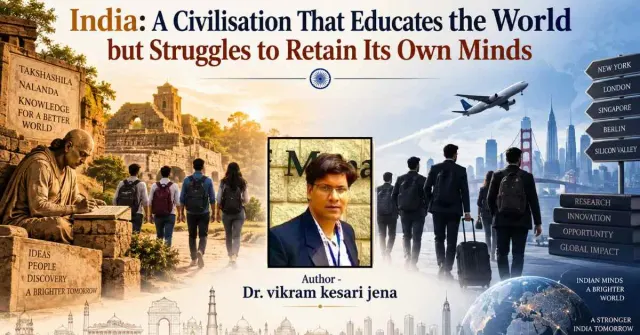
India has never suffered from a shortage of intelligence. It has suffered from a shortage of institutions capable of converting intelligence into enduring national power. This distinction explains one of the greatest paradoxes of modern India. Every year, thousands of graduates from the Indian Institutes of Technology, National Institutes of Technology, Indian Institutes of Science Education and Research, Indian Institutes of Management, and leading medical institutions become innovators, entrepreneurs, scientists and executives across the world.
Their achievements are celebrated internationally, yet they also raise an uncomfortable question: Why does a nation that produces some of the world’s finest minds still struggle to become the foremost destination where those minds choose to build their futures?
India’s Unintended Export of Intellectual Capital
For decades, India has unintentionally become one of the world’s largest exporters of intellectual capital. Taxpayers finance public education through enormous subsidies. Families invest their lifetime savings in education. Society nurtures exceptional talent from childhood. Yet a significant share of this investment eventually strengthens research laboratories, technology companies, defence industries and innovation ecosystems in other countries.
The United States, parts of Europe, Singapore and, increasingly, China have transformed this migration into a strategic advantage. Silicon Valley is not merely an American success story. It is also a testimony to the extraordinary capabilities of Indian engineers, scientists and entrepreneurs who found greater opportunities abroad than at home.
The issue, therefore, is not whether Indians should work abroad. In a globalised economy, mobility is natural and often beneficial. The deeper question is why India's institutions have not consistently created enough opportunities for its most capable citizens to build world-class careers within the country.
Brain Drain Is No Longer Just an Economic Issue
Brain drain is not a recent phenomenon. It has been discussed since the decades following Independence. The difference today is its scale and strategic implications. In an age where artificial intelligence, quantum computing, biotechnology, semiconductor manufacturing and advanced materials increasingly determine geopolitical influence, talent has become one of the world’s most valuable resources.
Nations are no longer competing only for oil, minerals or territory. They are increasingly competing for human intelligence. Countries that retain knowledge and talent accumulate technological power, while countries that merely produce knowledge workers for others risk remaining dependent despite their demographic advantages.
This makes brain drain more than a question of individual migration. It is increasingly a question of national capability. When a scientist, engineer, doctor, entrepreneur or researcher leaves, the country does not simply lose a worker. It can also lose years of education, accumulated expertise, networks, intellectual capital and the potential to create institutions and enterprises that generate opportunities for others.
An Education System Built for Global Competitiveness
Independent India’s higher education system inherited considerable intellectual influence from the Western academic model. Institutions were consciously designed by drawing inspiration from globally respected universities, particularly those in the United States. This decision helped create internationally competitive graduates and contributed significantly to India’s emergence as a major source of skilled professionals.
However, it also produced an unintended consequence. Educational excellence increasingly became disconnected from India’s own developmental priorities. Students were trained according to global industrial standards but often lacked institutional incentives to solve India’s unique challenges in agriculture, public health, water management, affordable housing, climate resilience, indigenous technologies and rural innovation.
This is not an argument against global education. Scientific knowledge is universal, and collaboration across borders enriches humanity. The concern is different: education policy must also serve national priorities.
A country cannot indefinitely finance world-class education only to watch the benefits accrue primarily to foreign economies. National development requires institutions that encourage graduates to see India not merely as their birthplace, but as an attractive place to innovate, build companies, conduct research and realise their ambitions.
Patriotism Cannot Substitute for Opportunity
Political leadership across ideological lines shares responsibility for this structural weakness. Successive governments have celebrated the achievements of the Indian diaspora while paying comparatively less attention to the institutional reasons that compel many talented individuals to leave.
Public speeches often glorify India’s demographic dividend, yet demographic strength alone creates no prosperity. Young people require research infrastructure, transparent institutions, competitive funding, merit-based recruitment, intellectual freedom and long-term policy stability. Patriotism alone cannot substitute for professional opportunity.
A talented young researcher may feel deeply connected to India while still choosing to work abroad if the foreign institution offers better laboratories, greater autonomy, stronger funding and clearer career progression. The choice should therefore not be framed as patriotism versus migration. The real challenge is to build an India where professional ambition and national contribution are not competing choices.
When Scientists Leave, the System Must Ask Why
Recent reports of scientists associated with India’s space programme leaving for opportunities abroad should not be dismissed as isolated career decisions. Individual choices are personal and deserve respect. Yet when highly trained researchers repeatedly seek environments that offer greater research autonomy, advanced laboratories, stronger funding ecosystems and clearer career pathways, policymakers should ask whether the institutional ecosystem is adequately supporting scientific ambition.
The issue is not the patriotism of scientists. The issue is whether the system consistently enables them to realise their fullest potential.
This distinction matters because scientific progress depends on more than individual brilliance. A brilliant researcher requires equipment, laboratories, colleagues, funding, institutional autonomy, access to global research networks and the freedom to pursue ideas that may not produce immediate results. Without that ecosystem, even exceptional talent can struggle to translate into exceptional outcomes.
The Deeper Problem Goes Beyond Salaries
The deeper crisis extends beyond compensation. Talented researchers rarely migrate solely because of higher income. They migrate because innovation flourishes where bureaucracy is minimal, merit is rewarded consistently, interdisciplinary collaboration is encouraged and failure is accepted as part of scientific discovery.
Excessive administrative procedures, prolonged recruitment delays, political interference in academic governance and uneven research funding weaken institutional confidence. Innovation cannot flourish where institutional uncertainty becomes routine.
A scientist may tolerate a lower salary for the opportunity to conduct meaningful research. What becomes difficult to tolerate is a system in which years of work can be constrained by bureaucracy, inadequate infrastructure or uncertain career progression. Similarly, an entrepreneur may accept the risks of building a company in India, but repeated regulatory uncertainty or limited access to capital can eventually make another ecosystem more attractive.
The challenge, therefore, is not simply to increase salaries. It is to build institutions in which talented people can do ambitious work with confidence that the system will support rather than obstruct them.
From Startup Momentum to a Deeper Innovation Ecosystem
India’s Startup India and Stand Up India initiatives have generated important entrepreneurial momentum. Thousands of startups have emerged, and several have achieved global recognition. These accomplishments deserve acknowledgment and demonstrate that Indian entrepreneurial ambition is not lacking.
Yet policy announcements alone cannot transform the innovation landscape. Many early-stage entrepreneurs continue to struggle with regulatory complexity, inconsistent access to funding, limited university-industry collaboration and insufficient research commercialisation.
A startup ecosystem cannot mature fully if universities remain detached from industrial innovation or if fundamental scientific research receives inadequate long-term support. India needs an ecosystem in which ideas can move more efficiently from academic research to prototypes, commercial applications and globally competitive enterprises.
This requires stronger links between universities, research institutions, industry, investors and government. It also requires patience. Breakthrough technologies often take years of experimentation before they become commercially viable. A system focused only on immediate returns will struggle to produce the technologies that define the next generation of economic power.
Nalanda, Takshashila and the Culture of Inquiry
Ancient India demonstrated that knowledge flourishes when civilisation values curiosity above conformity. The universities of Takshashila and Nalanda attracted scholars from across Asia because intellectual inquiry enjoyed institutional respect. Mathematical innovation, philosophical debate, astronomy, metallurgy, medicine and linguistic scholarship emerged from environments where questioning was encouraged rather than feared.
Modern India often celebrates this heritage symbolically while underinvesting in the institutional conditions that originally made such achievements possible.
A civilisation does not become great because it remembers its glorious past. It becomes great because it transforms inherited wisdom into future capability.
Pride without preparation becomes nostalgia. Heritage without innovation becomes a museum. Civilisations survive not by preserving memories alone, but by continuously producing new knowledge.
The lesson from India’s intellectual history is therefore not simply that Indians were once capable of extraordinary discoveries. It is that intellectual achievement requires institutions and cultures that give curiosity the space to flourish.
The Bigger Question: What Is Education For?
The challenge before India is therefore philosophical as much as economic. What is the purpose of education? Is it merely to maximise individual income, or should it also strengthen national capability?
These objectives need not conflict. A mature nation creates conditions where personal ambition and national development reinforce one another. Citizens should never be compelled to choose between professional excellence and serving their homeland.
If India wants its brightest students to remain, it must make staying in India an economically rational, professionally rewarding and intellectually exciting choice. The answer is not to restrict mobility or discourage Indians from seeking global opportunities. The answer is to make India competitive enough that many of those opportunities can also be created at home.
That would benefit not only scientists and engineers, but the broader economy. When highly skilled people remain and build companies, laboratories and institutions, they create employment, mentor younger generations, attract investment and generate knowledge that can spread throughout the economy.
Building Institutions Worth Staying For
India’s future depends less on producing more graduates than on building institutions worthy of retaining them. Excellence requires academic freedom, world-class laboratories, predictable research funding, globally competitive faculty recruitment, transparent governance, innovation-driven industries and public policies that reward originality rather than conformity.
Universities should become engines of discovery, not merely examination centres. Scientific institutions should become laboratories of national transformation rather than stepping stones to overseas employment. Industry and academia should interact more closely, allowing research to move from laboratories into products and services that address both Indian and global markets.
The objective should not be to prevent Indians from going abroad. Mobility is a natural part of a global knowledge economy. The objective should be to ensure that leaving India is a choice, not a necessity.
That is the institutional transformation India needs: not a system that asks its citizens to stay out of obligation, but one that makes them want to stay because the country offers them the freedom and opportunity to pursue ambitious goals.
From Supplier of Talent to Creator of Knowledge
The world’s leading economies increasingly compete through knowledge rather than population. India already possesses one of the greatest reservoirs of human talent on Earth. The real question is whether the Republic possesses the political imagination and institutional courage to convert that talent into national strength.
India does not need to choose between being globally connected and being nationally self-reliant. It can educate students who compete anywhere in the world while simultaneously creating institutions that make India one of the places where the world’s most ambitious research, companies and technologies are built.
History will not remember India simply because it educated some of the world’s brightest minds. History will judge whether India created a civilisation where those minds believed their greatest dreams could also be realised at home.
When that day arrives, India will cease to be known merely as the supplier of global talent. It will become one of the world’s foremost creators of knowledge, innovation and civilisational leadership.
Author Details
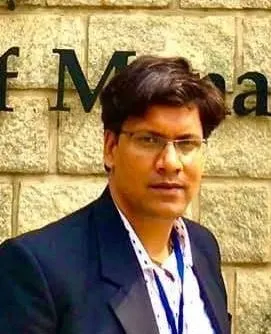
Dr. Vikram Keshari Jena is an academic, researcher, and public intellectual from Odisha. His work focuses on media, politics, development, public policy, and Indian knowledge traditions, with an emphasis on critical inquiry, social transformation, and interdisciplinary dialogue. He has authored numerous academic books and currently serves as the Founding Director of the Centre for Adivasi Research and Development (CARD), Odisha.
Reader Feedback
Was this article useful?
Stay Connected
Get the next important story before you miss it.
Subscribe to the newsletter for trusted updates, or join our WhatsApp channel for quick top-story alerts from The Eastern Times.
WhatsApp Channel
Prefer instant alerts? Join our WhatsApp channel for top stories and breaking updates.
Join on WhatsApp