
Odisha's Unfinished Destiny: Why a Land Blessed by Nature Still Waits for Visionary Development
Quick Summary
- Odisha’s vast natural resources, coastline, tourism potential and human talent offer enormous opportunities for growth.
- Long-term vision, stronger institutions and people-centred development are essential to turn this potential into lasting prosperity.
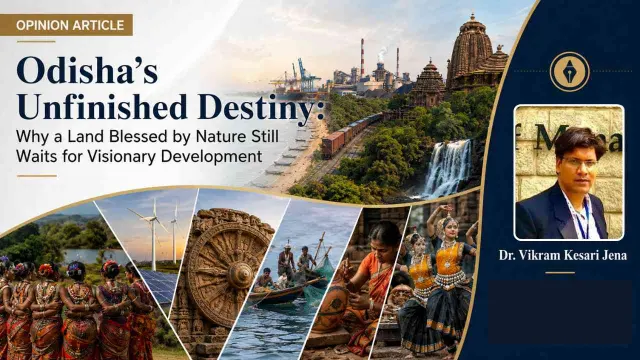
There are few places in India that possess as many natural blessings as Odisha. The state is endowed with vast reserves of iron ore, coal, chromite, bauxite, and manganese; fertile river valleys; forests rich in biodiversity; an extensive coastline along the Bay of Bengal; and globally significant heritage sites.
The spiritual legacy of Jagannath, the architectural brilliance of Konark, the ecological wealth of Chilika, and the tribal wisdom preserved across its hills together form an extraordinary civilizational landscape.
Nature has been exceptionally generous to Odisha. Yet the most important question remains unanswered: Why has such abundance not translated into widespread prosperity for its people?
The answer does not lie in the absence of resources. It lies in the absence of a long-term developmental vision that consistently places people above politics.
Throughout history, prosperous societies have not been built merely by extracting wealth from the earth. They have been built by investing in human capability, institutions, innovation, education, and accountable governance.
A state may possess mountains of minerals, but if its schools remain weak, its hospitals inadequate, its industries limited, and its young people compelled to migrate, then resource wealth becomes a symbol of missed opportunity rather than collective progress.
Rich in Resources, But Where Is the Prosperity?
Odisha has played a vital role in India's industrial growth. It is among the country's leading producers of iron ore, chromite, coal, and several other strategic minerals.
Steel plants, power projects, and mining operations have transformed parts of the state's economy and generated significant public revenue.
Yet many mineral-bearing districts continue to struggle with poverty, inadequate healthcare, environmental degradation, and limited employment opportunities beyond extraction.
Development cannot be judged solely by production figures or investment announcements. It must be measured by whether ordinary citizens experience better education, dignified livelihoods, quality healthcare, clean drinking water, and equal access to opportunity.
A Coastline Full of Possibilities
The coastline of Odisha represents another remarkable but underutilized advantage. Stretching for nearly five hundred kilometres along the Bay of Bengal, it offers enormous potential for ports, logistics, fisheries, seafood processing, renewable energy, maritime trade, coastal tourism, and the broader blue economy.
Around the world, coastal regions have become engines of commerce and innovation. Odisha possesses every geographical advantage to become a major maritime hub in South Asia.
Such a transformation, however, demands integrated planning, world-class infrastructure, environmental stewardship, and sustained investment rather than fragmented policy initiatives.
Tourism: An Opportunity Waiting to Be Unlocked
Tourism remains perhaps the state's greatest unrealized economic opportunity. Odisha possesses sacred temples, Buddhist heritage, beaches, wildlife sanctuaries, waterfalls, forests, tribal cultures, classical dance, exquisite handicrafts, and diverse cuisine.
Few destinations can offer such a rich combination of spirituality, history, ecology, and culture.
Tourism is not merely about attracting visitors. It generates employment for local communities, artisans, transport operators, hospitality workers, guides, and entrepreneurs.
Every successful tourism economy demonstrates that cultural heritage can become a powerful engine of inclusive development when supported by quality infrastructure, effective branding, and professional management.
Also read: Why India Cannot Become a Superpower Before 2047: The Crisis of National Vision
Our Greatest Strength Is Our People
Equally important is the question of human capital. Odisha has produced exceptional civil servants, scientists, scholars, artists, entrepreneurs, sportspersons, and professionals who have excelled across India and the world.
This proves that the state's greatest resource is not buried beneath its soil but lives within its people.
Yet thousands of talented young Odias continue to leave in search of better education, research opportunities, and employment elsewhere.
Migration is not merely an economic issue. It reflects the inability of a state to create sufficient opportunities for its own youth.
A truly visionary government would regard every talented young person who leaves as a reminder that much more remains to be done.
What Visionary Leadership Should Look Like
Leadership is ultimately judged not by speeches but by the institutions it leaves behind. Visionary leadership anticipates the needs of future generations.
It invests in universities that shape global scholarship, research institutions that generate innovation, industries that create skilled employment, and transparent governance that earns public trust.
It understands that the wealth of minerals is finite, but the wealth of knowledge, creativity, and entrepreneurship can grow without limit.
The states and nations that dominate the twenty-first century will be those that transform ideas into industries and education into economic power.
Development Must Include Everyone
Development must also be rooted in justice. The communities that have protected Odisha's forests, rivers, mountains, and mineral-rich lands for generations deserve to be equal partners in development rather than passive spectators.
Tribal communities, farmers, fishermen, artisans, women, and young entrepreneurs should not merely receive compensation after projects begin. They should participate meaningfully in planning, implementation, and benefit-sharing.
Sustainable development requires balancing industrial growth with ecological conservation and social equity.
Prosperity that excludes those who bear the greatest costs cannot be called genuine progress.
Odisha Cannot Afford to Miss the Future
Odisha today stands at a decisive historical moment. The world is entering an era defined by artificial intelligence, advanced manufacturing, green energy, maritime logistics, biotechnology, digital commerce, and knowledge-based economies.
The state already possesses the geographical advantages, natural resources, strategic location, and talented population required to participate in this transformation.
What it now requires is the courage to think beyond electoral cycles and the wisdom to pursue policies that will bear fruit over decades rather than months.
The greatest challenge before Odisha is therefore not scarcity of resources but scarcity of long-term imagination.
The Responsibility Is Now Ours
The destiny of Odisha should never be limited to supplying raw materials while others create wealth from them.
Its future should be to produce ideas, technologies, industries, research, entrepreneurs, and globally competitive institutions that reflect the aspirations of its people.
A land blessed by nature deserves leadership blessed with vision. History has already given Odisha extraordinary opportunities.
The question that remains is whether this generation of leaders, administrators, intellectuals, businesses, and citizens will possess the courage to convert those opportunities into lasting prosperity.
Nature has fulfilled its responsibility. The responsibility now belongs to us.
Author Details
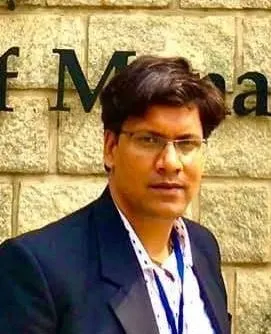
Dr. Vikram Keshari Jena is an academic, researcher, and public intellectual from Odisha. His work focuses on media, politics, development, public policy, and Indian knowledge traditions, with an emphasis on critical inquiry, social transformation, and interdisciplinary dialogue. He has authored numerous academic books and currently serves as the Founding Director of the Centre for Adivasi Research and Development (CARD), Odisha.
Reader Feedback
Was this article useful?
Stay Connected
Get the next important story before you miss it.
Subscribe to the newsletter for trusted updates, or join our WhatsApp channel for quick top-story alerts from The Eastern Times.
WhatsApp Channel
Prefer instant alerts? Join our WhatsApp channel for top stories and breaking updates.
Join on WhatsApp