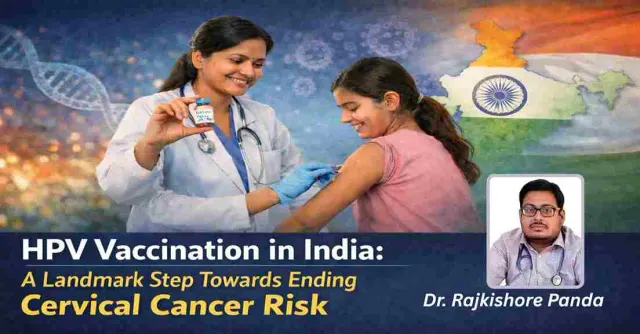
HPV Vaccination in India: A Landmark Step Towards Ending Cervical Cancer Risk
Quick Summary
- HPV vaccine reduces cancer risk.
- Major public health milestone.
- Awareness is key.
After years of debate and deliberation, vaccination against the Human Papillomavirus (HPV) has finally been approved in India. This decision marks a major milestone in the country’s public health landscape.
With this move, the Government of India has clearly brought adolescence into focus within preventive healthcare. Notably, HPV vaccination is the first in India’s universal immunization program designed specifically for this age group.
Until now, vaccination efforts largely targeted newborns, children, and pregnant women. This shift highlights an important reality — disease prevention must extend across every stage of life, not just childhood.
Understanding HPV
To fully grasp the importance of this step, it is essential to understand HPV.
HPV is a virus classified based on its genetic material. Viruses are broadly divided into DNA and RNA types, and HPV belongs to the DNA category. It is part of the Papillomaviridae family, with around 200 identified types.
Most HPV infections do not produce symptoms and resolve naturally. However, some types are particularly dangerous.
HPV types 16 and 18 are responsible for nearly 70% of cervical cancer cases. Type 16 alone is linked to about 90% of oral and throat cancers. Additionally, types 6 and 11 can cause various skin infections, especially around the anal region.
Also Read: The Joy We Took Away Without Knowing- Marks, Ranks, and Mental Health
The Cervical Cancer Burden in India
Cervical cancer remains a serious public health concern in India. It is the second most common cancer among women in the country.
Each year, approximately 80,000 new cases are reported, while nearly 42,000 women lose their lives to the disease.
Persistent infection with HPV types 16 and 18 is the primary cause, making preventive vaccination critically important.
The Vaccine and Its Impact
The HPV vaccine approved for use in India is “Gardasil,” which primarily protects against the high-risk types 16 and 18.
Vaccines are generally developed using either live or inactivated microorganisms. Gardasil is made from inactivated components, meaning it cannot cause infection.
Its effectiveness ranges from about 93% to nearly 100%, making it highly dependable.
According to the World Health Organization’s 2022 recommendations, girls aged 9 to 14 should receive a single dose.
Globally, the goal is to achieve 90% vaccination coverage to eliminate cervical cancer.
India’s Journey So Far
The HPV vaccine was first approved globally in 2006 and became available in India in early 2008.
A pilot program was conducted during 2008–09 in collaboration with the international NGO PATH and the Indian Council of Medical Research. It was implemented in parts of Gujarat and Andhra Pradesh.
The initiative targeted girls aged 10–14 in districts such as Khammam and Vadodara, aiming to assess acceptability, effectiveness, and cost.
However, reports of deaths among some vaccinated girls led to widespread concern and controversy. Although investigations confirmed no link between the vaccine and these deaths, public trust was significantly affected.
The issue reached Parliament, and in 2010, the central government halted the program.
This resulted in a prolonged period of uncertainty. Despite consistent recommendations from expert committees, the lack of awareness, trust, and clear communication prevented implementation at the grassroots level.
Global Progress and India’s Timing
Countries such as Australia and the United Kingdom are now close to eliminating cervical cancer as a major public health issue.
In this context, India’s decision to approve the vaccine is both timely and commendable, even though it took nearly 15 years to reach this stage.

Lessons for the Future
This long journey offers valuable lessons for future health initiatives.
First, clear and effective communication is essential. People must understand why the vaccine is needed, what it prevents, and how potential side effects are managed.
In cases of serious adverse events, prompt treatment and transparent, unbiased investigation are crucial responsibilities of the government.
Second, ethical transparency is vital. Since the program targets adolescent girls and vulnerable groups, building trust must be a priority.
Without public confidence, even the most well-intentioned programs cannot succeed.
Also Read: From Sea Voyages to Science: How Scurvy Shaped Human History
Free Access and Broader Benefits
The government has made provisions to provide the HPV vaccine free of cost.
This step is expected to contribute not only to improved public health but also to broader social and economic development.
However, vaccination alone is not sufficient. Screening remains equally important.
Women who have not been vaccinated should undergo screening through Pap smear tests.
At the same time, India must expand its immunization strategy to include adolescence and adulthood alongside childhood.
A Step Towards Elimination
India’s approval of the HPV vaccine is a forward-looking and progressive decision.
With strong public participation and trust, this program has the potential to succeed.
Just as India successfully eliminated polio, cervical cancer too can be eradicated from the country.
If achieved, this would stand as one of the most meaningful contributions to women’s health — a truly fitting gift, especially in the spirit of International Women’s Day.
Author Details

Dr. Raj Kishore Panda (MBBS, PGPN) is a medical professional and commentator who writes on socio-economic affairs, geopolitics, environmental challenges, and public health issues.
Reader Feedback
Was this article useful?
Stay Connected
Get the next important story before you miss it.
Subscribe to the newsletter for trusted updates, or join our WhatsApp channel for quick top-story alerts from The Eastern Times.
WhatsApp Channel
Prefer instant alerts? Join our WhatsApp channel for top stories and breaking updates.
Join on WhatsApp