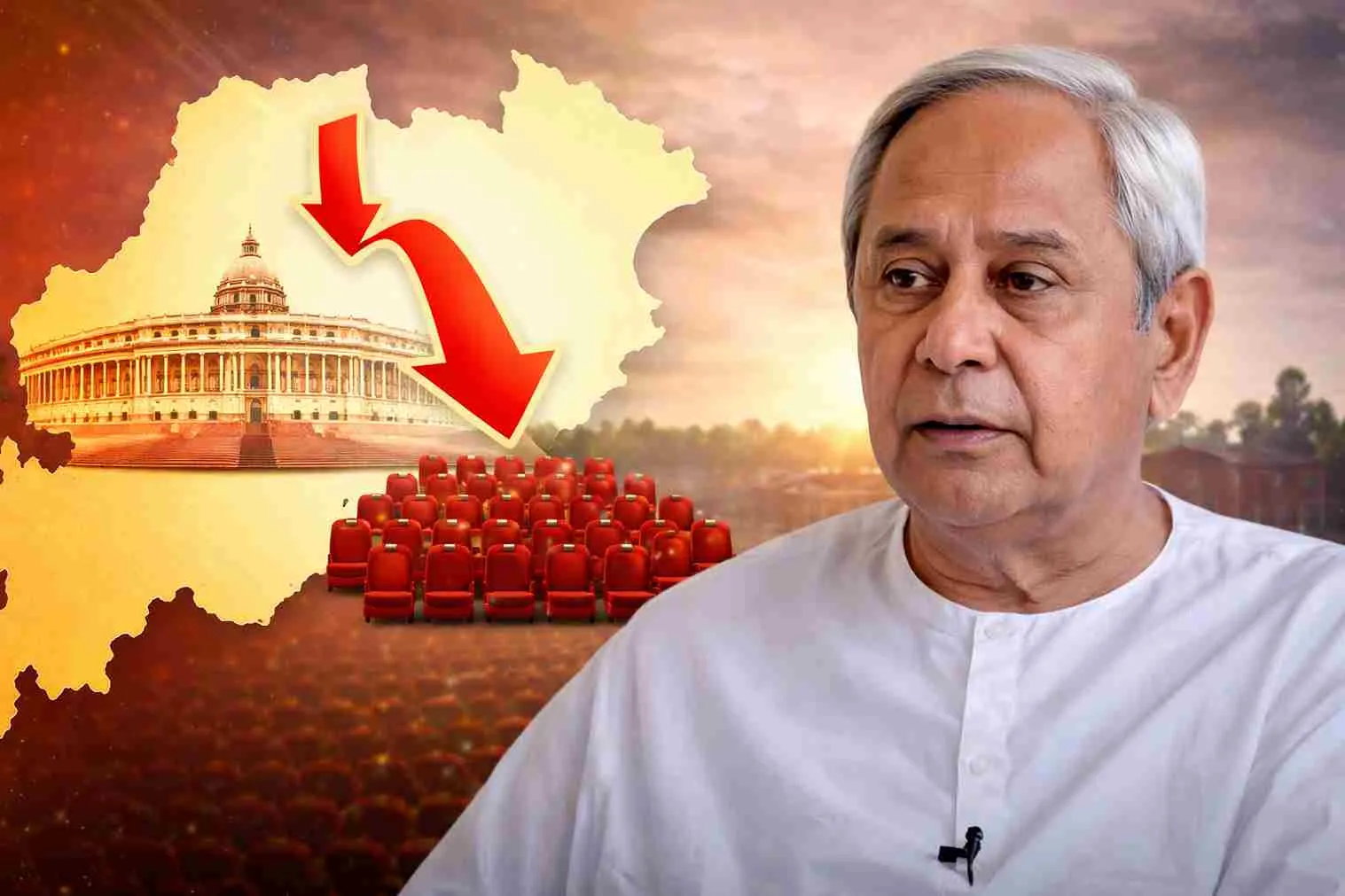
Odisha Gets More MPs… So Why Is Naveen Patnaik Opposing It?
 The Eastern Times
 Quick Summary
- Odisha’s Lok Sabha seats may rise from 21 to 29, but its share will drop from 3.9% to 3.4%, reducing overall influence.
- Naveen Patnaik argues the state should get around 33 MPs, warning of unfair representation and weaker voice at the Centre.
- The issue arises because Odisha controlled population growth, while states with higher population gain more seats under delimitation.
Bhubaneswar: The proposed Delimitation Bill, 2026 aims to increase Lok Sabha seats from 543 to 850. Odisha’s seats are expected to rise from 21 to 29. However, former Chief Minister Naveen Patnaik has raised concerns that despite this increase, the state’s overall share and influence in Parliament may decline.
Why Naveen Patnaik Opposes This
- Currently, Odisha has 21 MPs, which is 3.9% of 543 Lok Sabha seats
- Under the new plan, Odisha will have 29 MPs out of 850 seats, which is about 3.4%
- This shows that even after getting more seats, Odisha’s overall share will decrease
- Increase in seats does not mean increase in actual political influence
- It could weaken Odisha’s voice at the Centre
- Raises concerns about imbalance in the federal structure
What Should Be Odisha’s MP Number?
- As per the current population ratio, Odisha should ideally have around 33 MPs
- Under the proposed plan, it may get only 29 MPs
- This leads to a shortfall of about 4 MPs
Why This Is Happening
- Odisha has been successful in controlling population growth
- States with higher population growth are likely to get more seats
- As a result, Odisha’s proportional share decreases, even if seats increase
More Seats, Less Power?
Naveen Patnaik has warned that this change could directly impact cooperative federalism and weaken Odisha’s voice at the national level. He stressed that reducing the state’s proportional share in Parliament may undermine the interests of the Odia people.
He also urged Chief Minister Mohan Majhi to raise the issue strongly and ensure that Odisha’s voice is not diminished in the new system.
what is Delimitation Amendment Bill 2026?
The Delimitation Bill, 2026 and the 131st Constitution Amendment Bill aim to reshape India’s electoral map, marking the biggest reform in 50 years. The proposal increases Lok Sabha seats from 543 to 850 and ends the 1976 freeze based on the 1971 Census, allowing redistribution using updated population data. It also enables faster implementation of 33% women’s reservation without waiting for a new Census. A Delimitation Commission will redraw constituencies. However, the move has sparked debate, as southern states fear losing political influence due to better population control, raising concerns over fairness and federal balance.
The bill has triggered a heated federal debate. Southern states (like Tamil Nadu and Telangana) argue that because they have been more successful in population control, they will lose relative political power to Northern states whose populations have surged. Political leaders in the South have already called for a united front to protest the "penalization of responsible governance."
Reader Feedback
Was this article useful?
Stay Connected
Get the next important story before you miss it.
Subscribe to the newsletter for trusted updates, or join our WhatsApp channel for quick top-story alerts from The Eastern Times.
WhatsApp Channel
Prefer instant alerts? Join our WhatsApp channel for top stories and breaking updates.
Join on WhatsApp