
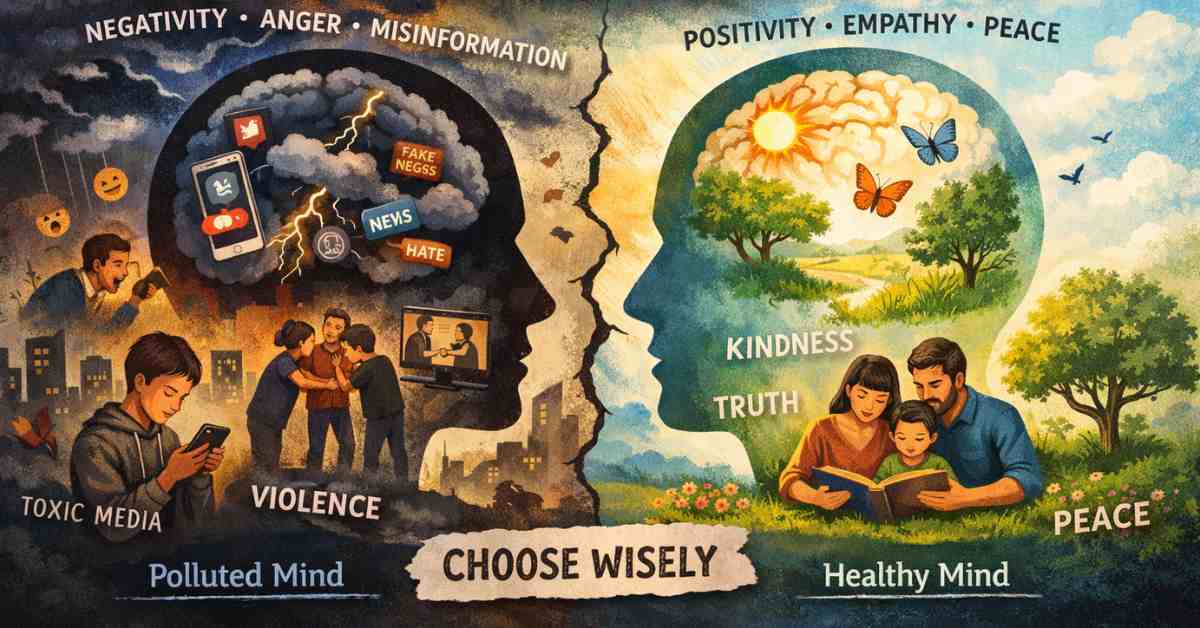

When we hear the word pollution, we think about dirty air, plastic-filled rivers, or polluted soil.
We measure it, talk about it, and try to control it. Many organizations are working hard to protect the environment.

But there is another kind of pollution that is more dangerous and mostly ignored. It is mental pollution.
Mental pollution cannot be seen like smoke or dirty water. But it affects our thinking, behavior, and values. It reduces kindness, increases anger, and weakens the moral strength of society.
Today, our minds are constantly filled with misinformation, negative news, anger, and unnecessary noise. Young people especially spend too much time on mobile phones and social media. These platforms were meant to connect people, but now they often create comparison, jealousy, and division.
Many news platforms focus more on creating excitement than sharing truth. Advertisements not only sell products, but they also create unrealistic desires and encourage greed. Slowly, the mind becomes restless and unhappy.
Just as polluted air harms our lungs, polluted thoughts harm our character. When greed replaces gratitude and anger replaces compassion, society begins to suffer. When lies spread faster than truth, trust is broken.
Mental pollution spreads from one person to another. A mind filled with hatred and violence can influence others. Many crimes do not happen suddenly. They grow slowly in minds that are constantly exposed to negativity and aggression. Over time, people start to justify wrong actions.
Also Read: US Sends 50 Fighter Jets Near Iran, Tensions Rise in Middle East
Children are the most affected. A child’s mind is soft and pure. It absorbs everything it sees and hears. Earlier, children learned values from parents, teachers, and society. Today, screens play a bigger role in shaping their thoughts.
If we care about giving clean water and fresh air to future generations, we must also care about giving them clean thoughts.
The good news is that mental pollution can be reduced. The human mind has the power to change and heal. The first step is awareness. We must learn to choose what we watch, read, and listen to. Not every message deserves our attention.
Also Read: The Wisdom of Age: Embracing Life’s Journey with Purpose and Resilience
Education should teach kindness, honesty, and responsibility — not just facts and skills. Media should act responsibly. Families should spend more time talking and sharing values. Each person should practice self-reflection, read good books, spend time in nature, and develop positive thinking.
Silence is powerful. In a noisy world, a few quiet moments can calm the mind. Thinking before reacting can prevent many problems. Compassion can stop cruelty. Truth, even if spoken softly, can defeat loud lies.
A society may survive with polluted rivers, but it cannot grow with polluted minds.
If we truly want a better world, we must first clean our thoughts, words, and intentions. When the mind becomes pure, the world around us also becomes better.
Author Bio:
Pradyumna Kishor Mishra, Indigo H.S. School of Science and Commerce, Cuttack. He writes on social issues, education, ethics, and contemporary challenges affecting society, with a focus on values and character development.

click on icons to connect with us through official social media channels






Russia Completely Bans WhatsApp Over Law Violations
You May Be Bathing the Wrong Way: Know the Correct Ayurvedic Way
