

New Delhi | The Eastern Times
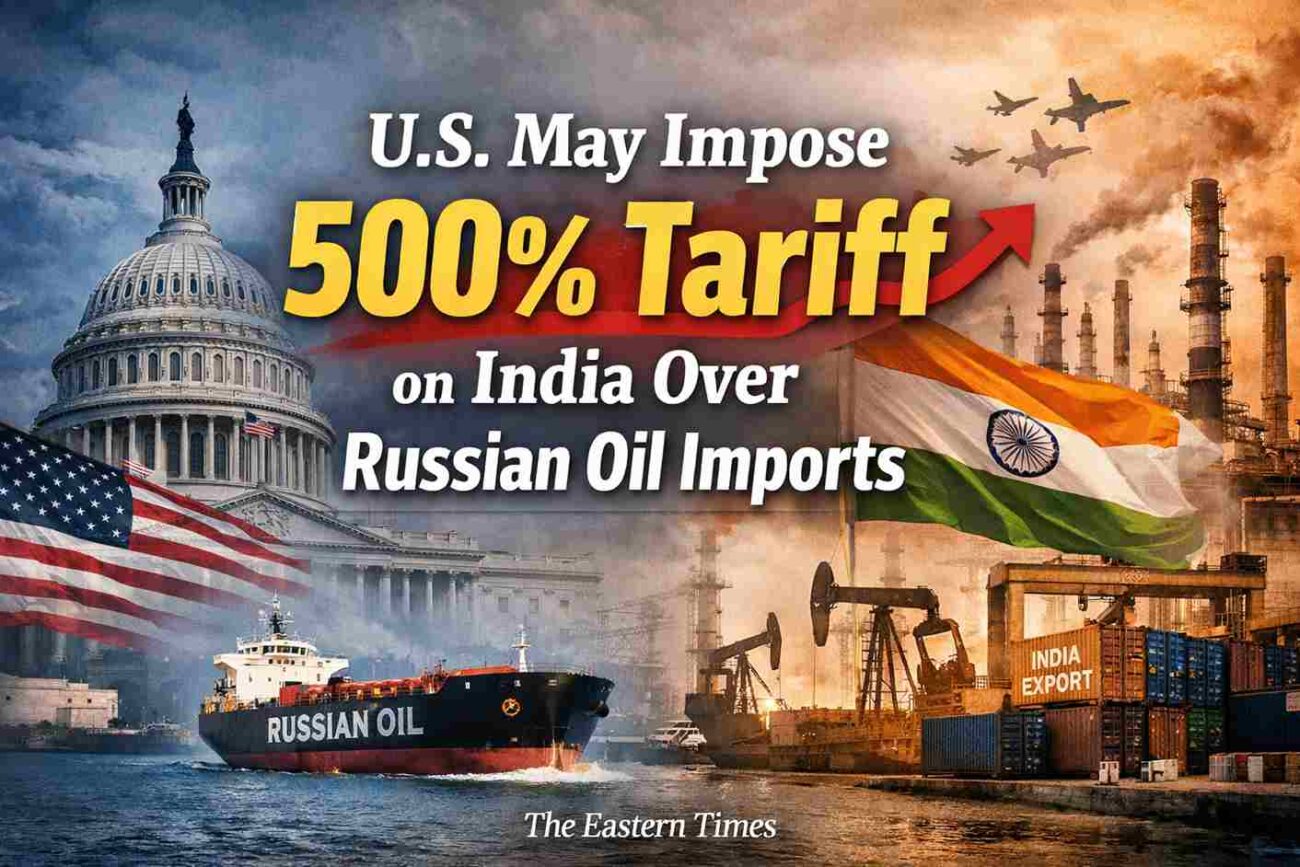
The United States is considering a tough new trade move that could sharply hit Indian exports, as lawmakers debate a proposal to impose tariffs of up to 500% on countries that continue buying Russian oil. The development has raised fresh concerns about India–US trade ties and its possible impact on global markets.
The proposed step is part of a broader sanctions push aimed at increasing economic pressure on Russia over the ongoing Ukraine war.
Why is India under pressure?
Since 2022, India has emerged as one of the largest buyers of Russian crude oil, taking advantage of discounted prices. These imports helped India keep fuel costs under control and protect its economy during a period of global inflation.
However, US lawmakers argue that continued oil purchases provide Russia with vital revenue and weaken Western sanctions. To counter this, the new proposal allows the US government to penalise countries buying Russian energy through extremely high import tariffs.
What are the current US tariffs on India?
Even before the proposed 500% tariff, Indian goods are already facing heavy duties in the US market:
Several Indian products are currently subject to additional tariffs of up to 25%, imposed in 2025.
When combined with earlier duties, total tariffs on some Indian exports reach around 50%.
Sectors such as gems and jewellery, textiles, and engineering goods have already felt the impact.
A 500% tariff would effectively make Indian products unviable in the US market, trade experts warn.
What about China?
China, another major buyer of Russian oil, is also in focus:
Chinese exports to the US have faced very high tariffs for years due to the ongoing trade dispute.
On many products, effective US tariffs range between 30% and 45%, depending on the sector.
Like India, China could face even steeper penalties if the new proposal becomes law.
Is the 500% tariff confirmed?
No.
The proposal is still under discussion in the US Congress. It must be approved by lawmakers and signed into law before it can be enforced. Analysts believe the tariff threat is being used mainly as a pressure tool, and may not be applied broadly.
Market reaction and concerns
News of the proposal has already unsettled investors. A steep tariff hike could:
Hurt Indian exports to the US
Increase uncertainty for businesses
Push companies to look for alternative markets
Economists warn that such extreme measures could also trigger retaliatory action and deepen global trade tensions.
India’s stand
Indian officials have maintained that oil imports are guided by national interest and energy security. They have also pointed out that India is not violating any UN-mandated sanctions and is gradually diversifying its oil sources.
Recent trends suggest that Indian refiners are becoming more cautious about fresh Russian oil purchases amid growing global pressure.
What lies ahead?
The coming weeks will be crucial as the US debates the bill. Whether or not the 500% tariff is enforced, the message from Washington is clear: energy trade is now closely tied to geopolitics, and countries like India may face tougher choices ahead.

click on icons to connect with us through social media






Also read:
Russia Sends Navy Near Venezuela After US Tries to Stop Oil Tanker