
Why Did the Supreme Court of India Declare the Right to Walk on Footpaths a Fundamental Right? Behind the Story of the Landmark Judgment
 The Eastern Times
 Quick Summary
- Supreme Court's Landmark Ruling: The Supreme Court of India has recognized the right to walk safely and without obstruction on footpaths as part of the fundamental right to freedom of movement and life under the Constitution.
- Why the Judgment Matters: The ruling was prompted by a case involving the death of a five-year-old child in a road accident and highlights India's growing pedestrian safety crisis, where over 35,000 pedestrians die on roads every year.
- Impact on Urban Planning: The judgment calls on governments and city planners to prioritize footpaths, pedestrian crossings, and people-friendly infrastructure, bringing India closer to pedestrian-focused practices followed in developed countries.
India's Supreme Court has taken a landmark step by recognizing the right of pedestrians to walk safely and without obstruction as part of the fundamental right to move freely. The decision could reshape urban planning and road safety policies across the country.
What Happened?
The Supreme Court ruled that walking safely on designated pathways is protected under Article 19(1)(d) of the Constitution, which guarantees freedom of movement. The Court stated that the right to walk is closely linked to the right to life and personal liberty under Article 21.
The judgment came while hearing a case involving the death of a five-year-old boy who was killed in a road accident while walking to school with his father.
Why Did the Court Make This Observation?
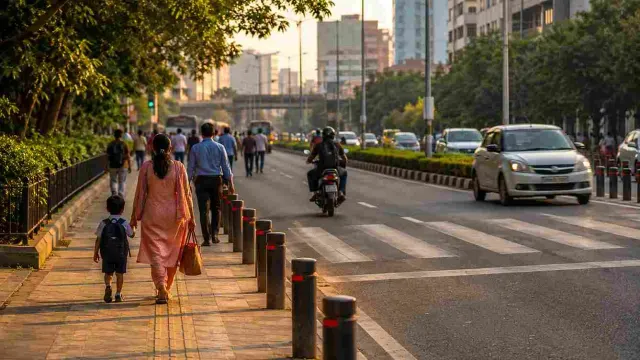
The Court noted that Indian roads and cities are largely designed for vehicles rather than people. In many urban areas, footpaths are missing, damaged, encroached upon, or unsafe for pedestrians.
As a result, millions of people who depend on walking for daily travel face serious risks. The Court emphasized that freedom of movement has little meaning if citizens cannot walk safely in public spaces.
The Scale of the Problem
Road safety data presents a worrying picture.
-
More than 35,000 pedestrians die on Indian roads every year.
-
Nearly 100 pedestrians lose their lives every day.
-
Many accidents occur due to poor pedestrian infrastructure, lack of footpaths, unsafe crossings, and reckless driving.
These figures highlight that pedestrian safety is not merely a traffic issue but a major public safety concern.
Why Does It Matter?
The ruling recognizes that roads are meant for everyone, not just vehicle owners.
For decades, transport policies have focused on cars, motorcycles, and other vehicles. Pedestrians, despite being among the most vulnerable road users, have received limited attention in planning and policymaking.
By elevating pedestrian safety to a constitutional concern, the Court has shifted the focus from vehicles to people.
Also Read: Organic Farming vs Modern Agriculture: Can India Feed 145 Crore People Without Chemical Fertilizers?
How Do Developed Countries Protect Pedestrians?
India's decision brings it closer to practices followed in many developed nations.
Nordic Countries
Countries such as Norway, Sweden, and Finland recognize the principle of "Freedom to Roam," which allows people to move freely through public spaces and natural areas. Urban planning in these countries prioritizes safe walking routes, wide sidewalks, and pedestrian-friendly neighborhoods.
Netherlands
The Netherlands is considered one of the world's most pedestrian-friendly countries. Cities are designed around people rather than cars. Dedicated walking paths, traffic-calming measures, and safe crossings make walking a preferred mode of transport.
Japan
Japanese cities provide clean sidewalks, organized crossings, and strict enforcement of traffic rules. Children often walk to school independently because pedestrian safety is deeply integrated into city planning.
United Kingdom
The UK has extensive pedestrian infrastructure, including zebra crossings, pedestrian zones, and accessibility features for elderly and disabled citizens. Local governments are legally required to consider pedestrian safety in transportation planning.
United States
While policies vary by state, many American cities have adopted "Complete Streets" principles, ensuring roads are designed for pedestrians, cyclists, public transport users, and motorists alike.
Impact on Urban Planning
The judgment is expected to influence future road and city development projects.
Authorities may now be required to:
-
Build and maintain proper footpaths.
-
Create safer pedestrian crossings.
-
Remove encroachments from walking spaces.
-
Improve accessibility for children, elderly citizens, and persons with disabilities.
-
Consider pedestrian needs while designing new roads and urban infrastructure.
The ruling also encourages governments to prioritize public transport and reduce excessive dependence on private vehicles.
Also Read: G7 Summit 2026 Highlights: Key Outcomes and Why It Matters for India
A Wake-Up Call for Policymakers
The Supreme Court's observation is a reminder that economic growth must be accompanied by safe and inclusive infrastructure.
India is now one of the world's largest economies. The challenge is no longer a lack of resources but ensuring that development benefits all citizens, including those who travel on foot.
The Eastern Times View
A developed nation is not measured only by the number of highways it builds or the vehicles it sells. It is also measured by how safely a child can walk to school, an elderly person can cross a road, or a citizen can move freely without fear.
The Supreme Court's ruling is a welcome step toward making Indian cities safer, more humane, and more inclusive. The next challenge is turning this legal principle into reality on the ground.
Reader Feedback
Was this article useful?
Stay Connected
Get the next important story before you miss it.
Subscribe to the newsletter for trusted updates, or join our WhatsApp channel for quick top-story alerts from The Eastern Times.
WhatsApp Channel
Prefer instant alerts? Join our WhatsApp channel for top stories and breaking updates.
Join on WhatsApp