
Sabarimala Case: Why Supreme Court Says Temple Restrictions Can Divide Society
 The Eastern Times
 Quick Summary
- Supreme Court of India said stopping certain people from entering temples can divide society.
- Justice BV Nagarathna said religion becomes stronger when more people are allowed.
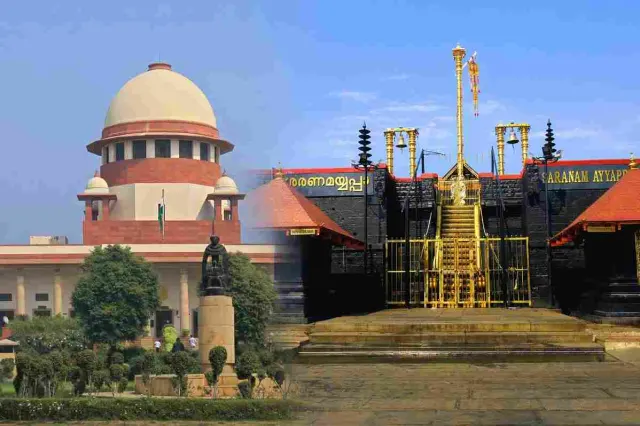
The Supreme Court of India heard the ongoing case on women’s entry into the Sabarimala Temple.
A 9-judge bench led by Chief Justice Surya Kant is hearing the matter.
What the Court Said
Justice B. V. Nagarathna said:
“Preventing any specific class of people from entering a temple would lead to a division in society. This is not at all appropriate for the Hindu religion.”
She also questioned:
“Suppose it is said that only Goud Saraswat people will go to a specific temple and no one else, or people of the Kanchi Mutt will go to Kanchi but not to other Mutts like Sringeri—would that be right?”
She added that:
“The more people visit different Mutts or temples, the stronger the religion will become.”
Government’s Argument
Senior Advocate Vaidyanathan, representing the Centre, said religious matters are sensitive and courts usually do not interfere.
He argued:
If a temple is only for a specific community, it should not take donations from others.
If people are not allowed darshan, accepting their money is not fair.
He also said temple practices, like serving vegetarian food, cannot be changed based on individual demands.
Background
The Sabarimala case challenges the centuries-old ban on women aged 10–50 entering the Lord Ayyappa temple. In 2018, the Supreme Court lifted the ban, citing gender equality. However, following massive protests, a nine-judge bench is currently conducting final hearings in "April 2026" to balance religious autonomy with constitutional rights.
1. The Origin: Ayyappa Tradition
The Sabarimala temple is dedicated to Lord Ayyappa. According to legend, the deity is a Naishtika Brahmachari (a perpetual celibate). For centuries, custom dictated that women of "menstruating age" (10 to 50 years) should not make the arduous trek to the temple to preserve the deity’s celibate form and the austerity of the 41-day pilgrimage.
2. 1950s: The First Legal Rules
Until the mid-20th century, the ban was a custom rather than a codified law. In 1955, the Travancore Devaswom Board (which manages the temple) formally prohibited women from entering during the main festival seasons.
3. 1991: The Kerala High Court Ruling
The legal battle truly began in 1990 when a devotee, S. Mahendran, challenged the entry of certain women. In 1991, the Kerala High Court upheld the ban. It ruled that the restriction was "in accordance with usage prevalent from time immemorial" and did not violate the Constitution. For the next 15 years, this ruling kept the ban firmly in place.
4. 2006: The Supreme Court Challenge
The modern conflict started in 2006 when the Indian Young Lawyers Association filed a petition in the Supreme Court. They argued that the ban violated Articles 14 (Equality) and 25 (Freedom of Religion) of the Constitution. They claimed that menstruation is a biological process and cannot be used to justify discrimination.
5. 2018 to 2026: The Review Phase
2018: The Supreme Court struck down the ban, calling it "constitutional masochism."
2019–Present: Massive protests and review petitions led the Court to refer the case to a 9-judge bench.
April 2026: This bench is currently deciding if "Constitutional Morality" (modern rights) should always prevail over "Essential Religious Practices" (ancient traditions).
This journey marks a transition from a local custom to a national debate on whether the State has the right to reform religion.
Quick Take:
The court stressed inclusivity, while the government highlighted respect for traditional practices.
Reader Feedback
Was this article useful?
Stay Connected
Get the next important story before you miss it.
Subscribe to the newsletter for trusted updates, or join our WhatsApp channel for quick top-story alerts from The Eastern Times.
WhatsApp Channel
Prefer instant alerts? Join our WhatsApp channel for top stories and breaking updates.
Join on WhatsApp