
When the Right to Privacy Does Not Apply in India - What the Court's latest ruling said
 The Eastern Times
 Quick Summary
- Privacy is a fundamental right, but not absolute: The Supreme Court has clarified that the right to privacy under Article 21 can be limited when required by law and in the interest of justice.
- Privacy cannot hide evidence in court: In divorce cases involving allegations of adultery, courts can order the production of call records, hotel records, or other relevant evidence if needed to decide the case fairly.
- Restrictions must follow the law: Privacy may also be limited in criminal investigations, national security, tax inquiries, child protection, and other legal proceedings, but only when the action is lawful, necessary, and proportionate.
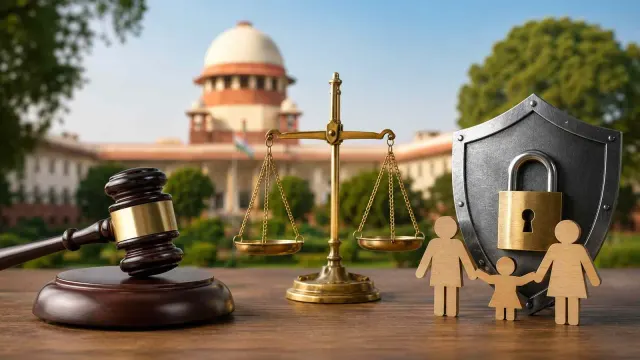
The right to privacy is a fundamental right under Article 21 of the Indian Constitution. In the landmark Justice K. S. Puttaswamy v. Union of India (2017) case, the Supreme Court said that every person has the right to privacy as part of the right to life and personal liberty.
However, the Court also made it clear that this right is not absolute. In some situations, privacy can be limited if the law allows it and if it is necessary to protect justice, public safety, or other important interests.
Supreme Court's Latest Ruling
The Supreme Court recently ruled that a person cannot use the right to privacy to hide evidence in a divorce case involving allegations of adultery.
The case was heard by Justices Manmohan and K. Vinod Chandran, who upheld the earlier decision of the Delhi High Court.
The husband argued that asking for his mobile call records and hotel stay details violated his right to privacy. The Court rejected this argument.
It said that if call records or hotel records are needed to help the court find the truth, they can be produced as evidence.
What Was the Case About?
The couple got married in 1998 and had a daughter in 2000.
The wife claimed that her husband had an affair with another woman and had stayed with her in a hotel in Jaipur. She filed for divorce and asked the Family Court to order the husband to produce his hotel booking records and mobile call records.
The Family Court allowed the request.
The Delhi High Court agreed with the decision, and now the Supreme Court has also upheld it.
Also Read: Why Odisha Remains Poor Despite Its Vast Natural Resources
Why Did the Court Reject the Privacy Claim?
The Supreme Court said that the right to privacy cannot be used to hide important evidence from the court.
If documents like hotel records or call detail records are necessary to decide a case fairly, the court can ask for them.
The judges also said that the right to privacy should not stop the court from finding the truth.
When Can the Right to Privacy Be Limited?
Indian law allows privacy to be limited in certain situations, such as:
-
Criminal investigations – Police can collect call records, CCTV footage, or other evidence when allowed by law.
-
National security – The government may carry out lawful surveillance to protect the country.
-
Court cases – Courts can order people to produce documents or electronic records that are important for a case.
-
Divorce and family disputes – Call records or hotel records may be used as evidence if they are relevant.
-
Income tax investigations – Tax authorities can examine bank accounts and financial records during legal investigations.
-
Anti-corruption cases – Investigators may check financial transactions and property details.
-
Public health emergencies – Governments may collect information during disease outbreaks or quarantine.
-
Child protection – Authorities may access information to protect children from harm.
-
Search and seizure – Police can search property and seize evidence according to the law.
-
Regulatory compliance – Banks, telecom companies, and financial institutions may share information when required by law or a court order.
When Privacy Cannot Be Violated
The government or any private person cannot invade someone's privacy without a legal reason.
Privacy cannot be breached simply because someone wants information or is curious. There must be a valid law and a genuine need for the information.
According to the Supreme Court, any restriction on privacy must meet three conditions:
-
It must be allowed by law.
-
It must serve a legitimate purpose, such as protecting justice or public safety.
-
It must go only as far as necessary and not be excessive.
What Does This Judgment Mean?
The Supreme Court has not removed the right to privacy.
Instead, it has made it clear that privacy cannot be used to stop the court from getting important evidence. If evidence is necessary to decide a case fairly, the court can order it to be produced.
The judgment tries to balance two important things—protecting people's privacy and ensuring justice is done.
What You Should Know
The right to privacy remains one of the most important rights in India. But it is not unlimited.
When there is a legal need, such as in criminal investigations, divorce cases, national security, or other lawful proceedings, privacy may be limited. The recent Supreme Court ruling makes it clear that the right to privacy cannot be used to hide evidence that is important for delivering justice.
Reader Feedback
Was this article useful?
Stay Connected
Get the next important story before you miss it.
Subscribe to the newsletter for trusted updates, or join our WhatsApp channel for quick top-story alerts from The Eastern Times.
WhatsApp Channel
Prefer instant alerts? Join our WhatsApp channel for top stories and breaking updates.
Join on WhatsApp