
India Has Up to 190 Nuclear Warheads: What the New FAS Report Reveals
 The Eastern Times
 Quick Summary
- FAS estimates India may have assembled up to 190 nuclear warheads and is continuing to modernise its nuclear arsenal.
- New missiles, submarine-based systems and nuclear infrastructure could further expand India’s strategic capabilities.
India may have assembled up to 190 nuclear warheads, according to a new assessment by the Federation of American Scientists (FAS). The figure is an estimate rather than an officially confirmed number, as the Indian government does not publicly disclose the size of its nuclear arsenal.
The assessment, published in the September 2026 issue of the Bulletin of the Atomic Scientists as part of its Nuclear Notebook, is based on analysis of open-source information, government-originating data, media and industry reports, and commercial satellite imagery.
FAS estimates that India currently operates nine nuclear-capable systems—two aircraft-based systems, six land-based ballistic missile systems and one sea-based ballistic missile system. At least two additional systems are under development and nearing completion and could enter service within the next one or few years.
How Many Nuclear Weapons Does India Have?
FAS estimates that India's operational nuclear-capable delivery systems can carry more than 160 nuclear warheads, with additional warheads produced for missiles currently in production. Taken together, FAS estimates India's total nuclear inventory at up to 190 warheads.
India has continued to modernise its nuclear arsenal in recent years. Several new systems have entered service, while other systems are being developed to complement or eventually replace existing nuclear-capable aircraft, land-based missiles and sea-based delivery systems.
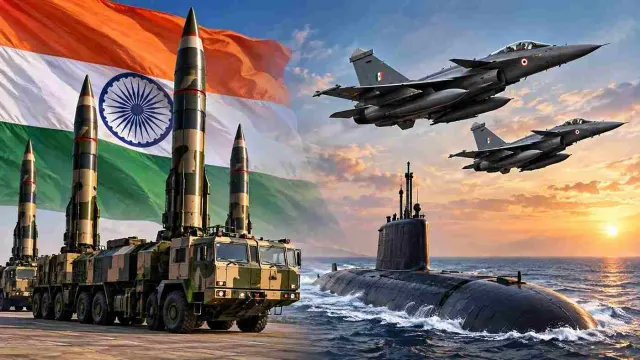
FAS says the expansion is also linked to India's growing nuclear triad, which includes aircraft, land-based missiles and submarine-launched ballistic missiles.
What Does the FAS Report Say About Plutonium?
The report estimates that India may have produced enough military plutonium for approximately 140 to 225 nuclear warheads. However, this does not mean that India has actually assembled that many weapons.
According to the assessment, India may have assembled up to 190 warheads, while some of its plutonium could remain in reserve. FAS estimates that India possessed approximately 730 kilograms, plus or minus 170 kilograms, of weapons-grade plutonium at the beginning of 2026.
The report stresses that estimating the number of possible warheads from plutonium stocks involves considerable uncertainty. The amount of plutonium required depends partly on the design and type of nuclear warhead.
FAS also expects India's available nuclear-material stockpile to potentially increase because its new 500-megawatt Prototype Fast Breeder Reactor (PFBR) at Kalpakkam reached first criticality in April 2026. If operated at the assumed efficiency, the reactor could theoretically produce significant quantities of weapons-grade plutonium.
Why Does the Number of Missiles Matter?
The size of a country's nuclear stockpile is not determined solely by the amount of fissile material it possesses. It also depends on the number and types of delivery systems capable of carrying nuclear warheads.
FAS therefore considers India's missile and aircraft inventory, submarine fleet and nuclear strategy when estimating the size of its arsenal.
The organisation estimates that India's current nuclear-capable delivery force can accommodate more than 160 warheads, while additional warheads have been produced for missiles that are still entering production. This contributes to the estimate of up to 190 nuclear warheads.
India’s Nuclear Triad Is Expanding
India is continuing to develop all three components of a nuclear triad.
The country's air-based nuclear capability includes fighter aircraft assigned nuclear missions. Its land-based component includes a growing family of Agni ballistic missiles, while its sea-based deterrent is being developed around nuclear-powered ballistic missile submarines (SSBNs).
FAS notes that India's third indigenously developed SSBN, INS Aridhaman, was reportedly commissioned in April 2026. India is also developing additional and more advanced SSBNs, indicating a continued expansion of its sea-based nuclear deterrent.
The development of longer-range missiles also suggests that India's strategic planning is increasingly taking China into consideration alongside its longstanding focus on Pakistan.
What Is India’s Nuclear Doctrine?
India officially maintains a policy of credible minimum deterrence and No First Use (NFU) of nuclear weapons.
The Indian government has stated that, under its nuclear doctrine, India remains committed to credible minimum deterrence with a posture of no-first-use. It has also reaffirmed its commitment to the eventual goal of universal, non-discriminatory and verifiable nuclear disarmament.
The FAS assessment, however, focuses on India's capabilities rather than making a judgement on the country's declared nuclear doctrine.
India Vs Other Nuclear Powers
The 190-warhead estimate comes from FAS's India-specific 2026 Nuclear Notebook. Separately, FAS's global assessment estimates that the world's nine nuclear-armed states collectively possessed approximately 12,187 nuclear warheads at the beginning of 2026.
| Country | Estimated Total Nuclear Inventory |
|---|---|
| Russia | 5,420 |
| United States | 5,042 |
| China | 620 |
| France | 370 |
| United Kingdom | 225 |
| India | 190 |
| Pakistan | 170 |
| Israel | 90 |
| North Korea | 60 |
| World Total | ~12,187 |
Russia and the United States together account for approximately 86% of the world's total nuclear inventory, according to FAS. India ranks sixth among the nine nuclear-armed states in total estimated inventory, ahead of Pakistan, Israel and North Korea.
An Estimate, Not an Official Figure
The most important point is that 190 is an independent expert estimate, not an official figure released by the Indian government.
FAS itself acknowledges that India does not publish the size of its nuclear stockpile and that considerable uncertainty exists because of the limited availability of official information. Its estimate is therefore constructed by cross-checking open-source information, government data, satellite imagery and other evidence.
The assessment nevertheless indicates that India's nuclear programme is continuing to evolve, with new missiles, a growing submarine-based deterrent and additional nuclear infrastructure potentially increasing the country's nuclear capabilities in the coming years.
Reader Feedback
Was this article useful?
Stay Connected
Get the next important story before you miss it.
Subscribe to the newsletter for trusted updates, or join our WhatsApp channel for quick top-story alerts from The Eastern Times.
WhatsApp Channel
Prefer instant alerts? Join our WhatsApp channel for top stories and breaking updates.
Join on WhatsApp