
Government Clarifies in Parliament: Pure Petrol Will No Longer Be Available
 The Eastern Times
 Quick Summary
- Government confirms there is no plan to bring back ethanol-free (E0) or E10 petrol.
- India has achieved its 20% ethanol blending target five years ahead of schedule.
- Officials say E20 is safe for vehicles, though some older models may see a slight drop in mileage.
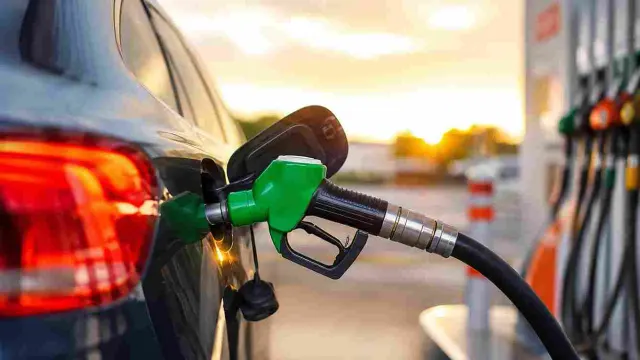
The Central Government has ruled out any possibility of bringing back ethanol-free petrol, reaffirming that E20 petrol—fuel blended with 20% ethanol—will remain the national standard after India achieved its ethanol blending target five years ahead of schedule.
Replying to questions in Parliament, Minister of State for Petroleum and Natural Gas Suresh Gopi said the government has no proposal to revert to E0 (pure petrol) or E10 fuel. He described E20 as a cleaner, safer, and technologically advanced fuel that supports India's long-term energy security and environmental goals.
The minister said the government's priority is to promote modern and sustainable fuel technologies rather than return to conventional petrol. India has already met its 20% ethanol blending target for 2025–26, significantly ahead of the original timeline.
Ethanol Blending Reaches Historic Milestone
Data tabled in Parliament shows steady progress in ethanol blending over the past few years:
- 2022–23: 12%
- 2023–24: 14.6%
- 2024–25: Around 19.2%
- 2025–26 (November–June): 20%
The government clarified that no decision has yet been taken to increase ethanol blending beyond the current 20% level.
It also noted that E85 fuel, containing 85% ethanol, is intended only for certified flex-fuel vehicles and is not part of the regular petrol supply network.
Also READ:Changing Governments Is Not Enough: India Needs Better Governance
Government Rejects Claims of Engine Damage
Responding to reports circulating on social media and in some sections of the media regarding engine failures or damage caused by E20 fuel, the government said that extensive laboratory testing, field trials, and real-world usage data have confirmed that E20 fuel does not cause any abnormal damage to vehicle engines.
The government cited data from one of India's leading passenger vehicle manufacturers, which serviced 18.4 million vehicles during FY 2024–25, including around 15 million older vehicles that were not originally certified for E20 fuel. The company reportedly did not receive any complaints of engine damage caused by ethanol-blended petrol.
Mileage May Reduce Slightly in Older Vehicles
On concerns regarding fuel efficiency, the government explained that mileage depends on several factors, including:
- Driving habits
- Vehicle maintenance
- Road conditions
However, older vehicles designed for E10 fuel may experience a slight reduction in mileage of around 3–5% when using E20 petrol.
At the same time, E20 fuel has a higher octane rating, which improves:
- Vehicle acceleration (pick-up)
- Driving smoothness
- Overall engine performance
Complaint Redressal Mechanism
Public sector oil marketing companies have established a robust grievance redressal system for complaints and suggestions related to E20 fuel.
Consumers can register complaints through:
- Complaint registers available at petrol pumps
- Toll-free customer helplines
- Company websites
- Mobile applications
- Social media platforms
- The CPGRAMS grievance portal
The government said that complaints received through these channels are resolved within the prescribed time frame.
Expert Review: Industry experts say E20 petrol is a step towards cleaner energy and reduced oil imports. While older vehicles may see a slight drop in mileage, regular maintenance and manufacturer guidelines can help ensure smooth performance.
Also Read: When Schools Become Factories: The Commercialisation of Education
Why It Matters
The nationwide adoption of E20 petrol is a key pillar of India's strategy to reduce dependence on imported crude oil, cut carbon emissions, and boost domestic ethanol production from agricultural feedstock. While owners of older vehicles may notice a slight reduction in mileage, the government maintains that the environmental and energy security benefits of ethanol blending outweigh these concerns.
Reader Feedback
Was this article useful?
Stay Connected
Get the next important story before you miss it.
Subscribe to the newsletter for trusted updates, or join our WhatsApp channel for quick top-story alerts from The Eastern Times.
WhatsApp Channel
Prefer instant alerts? Join our WhatsApp channel for top stories and breaking updates.
Join on WhatsApp