
Business First, Friendship Next: Russia Charges India $4–$5 More Per Barrel Than Global Oil Benchmark
 The Eastern Times
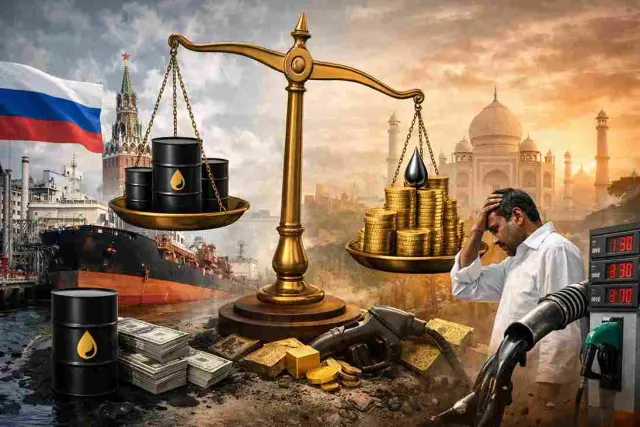
 New Delhi: India’s once highly beneficial oil deal with Russia appears to be changing rapidly. Recent reports in March 2026 show that Russian Urals crude, which India had been buying at heavy discounts since 2022, is now being sold at a premium of $4–$5 per barrel over Brent crude.
This marks a dramatic shift in the energy trade relationship between the two countries.
From Discount to Premium
After the Russia-Ukraine war began in 2022, India significantly increased its purchases of Russian oil because it was being sold at deep discounts compared to global benchmarks.
For several years, this helped India save billions of dollars on its import bill.
However, by early 2026 the situation has reversed. Instead of discounts, Russia is now charging more than the Brent benchmark for April deliveries of Urals crude to India.
Why the Price Is Rising
Several global and geopolitical factors are pushing prices higher.
1. End of Discount Policy
Russia has reportedly stopped offering heavy discounts and is now selling oil on full commercial terms.
2. Global Market Volatility
Conflicts in the Middle East and rising demand have tightened global oil supply, pushing prices upward.
3. Logistical Costs
Shipping Russian oil to Asia has become more expensive and less transparent. Russia’s so-called “shadow fleet” tankers are charging higher transport rates.
US Pressure on India
The situation has also been influenced by growing pressure from Washington.
Reports suggest the Trump administration has urged India to reduce its purchases of Russian oil, accusing the country of acting as a “laundromat” for Russian energy exports.
Despite this pressure, India has continued to import Russian crude because of its economic advantages.
Impact on India’s Economy
The change in pricing could increase India’s oil import bill significantly.
Since India imports more than 85% of its crude oil, any increase in global prices directly affects:
- Fuel prices
- Inflation
- Government subsidies
- Trade deficit
The earlier discounts helped India manage inflation during volatile global markets. With the discounts disappearing, the financial pressure may rise again.
Business First, Friendship Next?
Energy analysts say the shift highlights a hard reality of global geopolitics: business often comes before diplomatic friendship.
Russia initially offered discounts to secure buyers when Western sanctions limited its market access. Now that demand has stabilized and global supply pressures have increased, Moscow appears to be prioritizing revenue over preferential pricing.
Questions on India’s Diplomacy
The development is also raising questions among policy observers.
Some analysts argue that India’s diplomatic leverage may not have translated into long-term economic advantages, especially when a strategic partner abruptly changes pricing terms.
For critics, the situation underscores a broader lesson in global energy politics: commercial interests often outweigh strategic partnerships.
Reader Feedback
Was this article useful?
Stay Connected
Get the next important story before you miss it.
Subscribe to the newsletter for trusted updates, or join our WhatsApp channel for quick top-story alerts from The Eastern Times.
WhatsApp Channel
Prefer instant alerts? Join our WhatsApp channel for top stories and breaking updates.
Join on WhatsApp