Washington | December 4, 2025
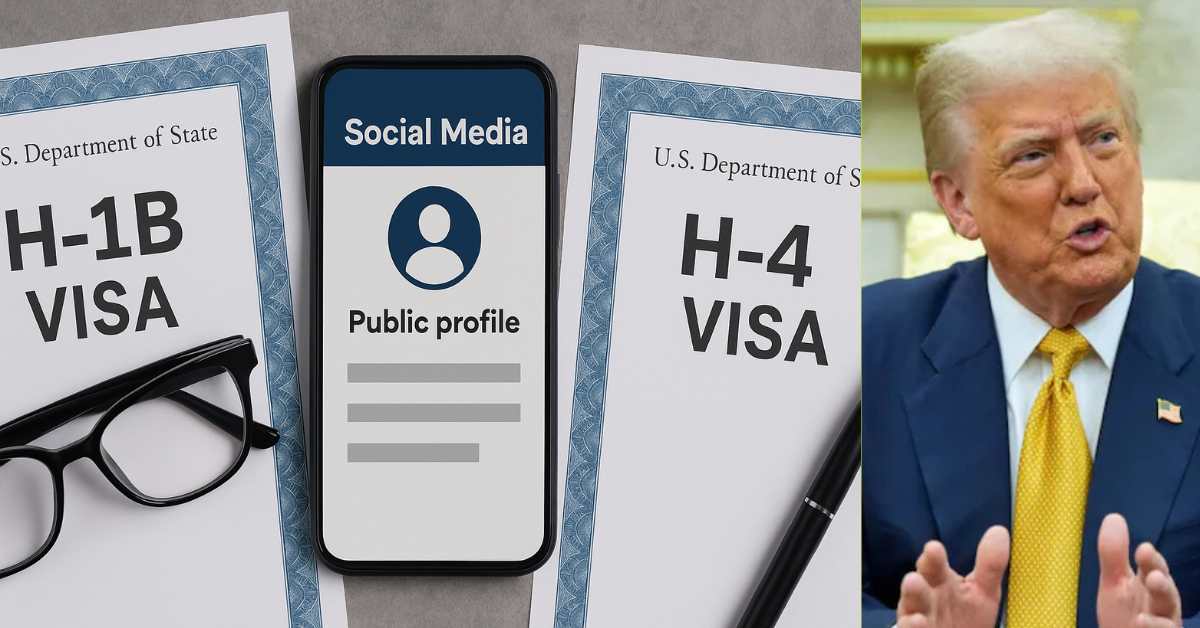
The United States has announced a major overhaul of its visa-screening process for H-1B skilled-worker applicants and their dependents under the H-4 category. Under the updated procedure, all applicants must ensure their social-media accounts are set to “public” during the visa application and review period, allowing immigration officials to examine their online activity.
According to the latest guidance from the U.S. Department of Homeland Security, the expanded checks are part of a broader effort to tighten background-verification standards. The new requirement effectively removes previous privacy protections, enabling officers to review publicly accessible posts, shared content, profile details and interactions across major social-media platforms.
A DHS official said the policy aims to provide consular teams with a clearer understanding of an applicant’s background, affiliations and potential security risks. “This is intended to support thorough vetting and ensure that those entering the United States meet established security expectations,” the official noted.

Privacy concerns and criticism
The move has triggered strong reactions from civil-rights groups, who argue that compelling applicants to publicise their accounts — even temporarily — creates significant privacy and free-speech challenges. Advocacy organisations warn that sensitive personal data and private conversations could become vulnerable to misinterpretation or misuse.
“This represents a worrying step away from respecting individual privacy,” said a spokesperson for an immigrant-rights organisation, adding that the lack of clarity on what constitutes a ‘red flag’ could lead to inconsistent or arbitrary assessments.
Indian applicants express unease
In India, where a large share of H-1B visa applicants originate, many prospective workers have voiced concern about the impact of the new rule. Several applicants say they worry that personal posts or political opinions shared years earlier may be taken out of context during review.
“I’m uncomfortable with the idea of exposing all my private posts. It feels intrusive,” said one applicant preparing for a visa interview. Others fear that harmless commentary about social or workplace issues could be misread.
Guidance for applicants
The policy will apply to all new H-1B and H-4 applications filed from early next year, while existing visa-holders are not currently required to make changes unless applying for a new stamping.
Immigration lawyers advise applicants to conduct a careful audit of their digital presence well before their interview. This includes removing or archiving sensitive posts, ensuring professional information matches official visa documents, and verifying that content cannot be misconstrued during background checks.
A wider shift in global migration policy
The expansion of online screening reflects a broader global shift towards stricter immigration vetting in the post-pandemic era. As more governments rely on digital footprints to assess risk, the debate over privacy, state oversight and the rights of migrants is expected to intensify.
For now, H-1B and H-4 applicants face a new reality: their social-media history will play a visible role in their path to entering the United States.
Connect with us through social media
Facebook:
 https://www.facebook.com/profile.php?id=61577015427068
X (Twitter):
 https://x.com/tet_editor
Instagram:
 https://www.instagram.com/the_eastern_times_/?next=%2F&hl=en
Mail (Email):
 contact.theeasterntimes@gmail.comH-1b