
Is UPI Draining Your Wallet? How Digital Payments Are Making Indians Spend More
 The Eastern Times
 Quick Summary
- UPI convenience may encourage frequent and impulse spending.
- Small digital payments can add up and strain monthly budgets.
- Experts recommend spending limits, tracking expenses and avoiding unnecessary credit.
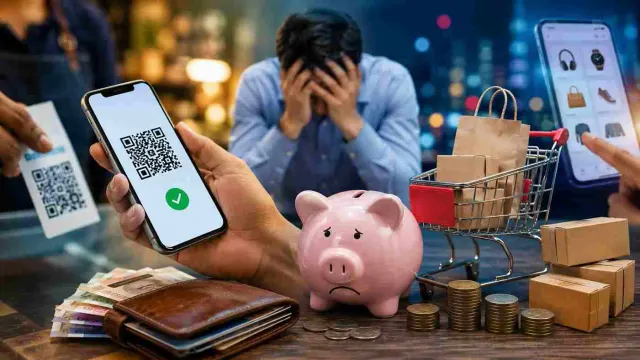
The Unified Payments Interface (UPI) has transformed India’s digital economy, making everyday payments faster and easier than ever. From roadside vendors and autorickshaws to supermarkets and shopping malls, consumers can now make payments within seconds without carrying cash.
But this convenience may have an unintended consequence: people could be spending more without realising it.
Financial experts warn that frictionless digital payments, impulse purchases, cashback offers and easy access to credit could be weakening financial discipline, particularly among middle-class households.
Digital Payments Make Spending Easier
A study published in the International Journal of Engineering and Management Research examined how digital payment platforms such as UPI, Paytm and Apple Pay influence consumer spending behaviour.
The study suggests that consumers tend to spend more freely when using digital payments compared with cash. QR-code payments and one-click transactions reduce the effort involved in making a purchase, potentially encouraging impulse spending.
According to the survey, around 43% of users make impulse purchases occasionally, while more than 31% do so regularly. Around 70% reportedly make unplanned purchases.
The impact can be particularly significant because of frequent small transactions.
A ₹50 payment for tea or snacks, ₹100 for transport and ₹200 for food or shopping may appear insignificant individually. But several such transactions every day can add up to a substantial amount by the end of the month.
The study cited in the report suggests digital-payment users may spend 40% to 45% more than cash users, while impulse purchasing among digital-wallet users has increased by as much as 40%.
UPI Reaches Deep Into Indian Households
UPI is no longer limited to metropolitan cities or affluent consumers.
A Home Credit report states that around 80% of lower-middle-income consumers use UPI, while 50% prefer online loan applications. This means roughly four out of every five consumers in this segment now use UPI, highlighting the rapid expansion of digital payments.
The system has also become deeply embedded in Tier-2 and Tier-3 cities and rural markets, where consumers increasingly use UPI for local shopping, mobile recharges, utility bills and money transfers.
According to NPCI data cited in the report, UPI transactions worth approximately ₹19.88 lakh crore were recorded in July.
The Psychology of Cash vs Digital Payments
Paying with physical cash creates an immediate sense of money leaving one’s wallet. Consumers can see their available cash declining after every purchase.
Digital payments make that experience less visible.
A quick scan of a QR code or a few taps on a smartphone completes a transaction almost instantly. This convenience can make it easier to overlook small purchases.
Food delivery, online shopping, entertainment subscriptions and other digital services further increase the frequency of such transactions.
Individually, these expenses may appear manageable. Collectively, however, they can significantly increase monthly household expenditure and reduce savings.
Cashback, BNPL and Easy Loans Add to Spending
The digital-payment ecosystem has also introduced consumers to cashback offers, discounts, Buy Now Pay Later (BNPL) services and quick digital loans.
While these services can be useful when managed responsibly, they can also encourage consumers to purchase products or services they may not otherwise have bought.
Young professionals and middle-class households may be particularly vulnerable to accumulating multiple small financial commitments that eventually put pressure on their monthly budgets.
Over time, excessive dependence on easy credit can also increase household debt.
Cyber Fraud Adds Another Risk
Overspending is not the only concern associated with the rapid expansion of digital payments.
Cyber fraud has emerged as a serious challenge, with criminals increasingly using fake QR codes, phishing links and fraudulent calls to target digital-payment users.
Limited digital literacy and careless handling of payment requests can make consumers more vulnerable to such scams.
As digital transactions expand deeper into smaller cities and rural areas, improving awareness about online financial security will be as important as expanding access to digital payments.
Financial Discipline Is Key
The problem is not UPI itself. Digital payments have made financial transactions faster, more transparent and accessible to millions of Indians.
The challenge lies in ensuring that convenience does not translate into uncontrolled spending.
Anand Kumar Bajaj, founder of PayNearby, has advised families to set monthly spending limits, regularly review bank statements and avoid unnecessary loans and Buy Now Pay Later commitments.
Consumers can also periodically review their UPI transaction history to understand how much they are spending on food, shopping, subscriptions and other discretionary expenses.
UPI has undoubtedly revolutionised the way India pays. But as digital payments become an inseparable part of everyday life, financial awareness must grow alongside technological convenience.
Ultimately, technology delivers its greatest benefit when convenience is accompanied by responsible spending and financial discipline.
Reader Feedback
Was this article useful?
Stay Connected
Get the next important story before you miss it.
Subscribe to the newsletter for trusted updates, or join our WhatsApp channel for quick top-story alerts from The Eastern Times.
WhatsApp Channel
Prefer instant alerts? Join our WhatsApp channel for top stories and breaking updates.
Join on WhatsApp