
LPG Shortage in India: Millions of Food Delivery Workers’ Jobs at Risk as Restaurants Shut
 The Eastern Times
 A severe shortage of commercial LPG (cooking gas) has disrupted restaurants and food businesses across India, creating a major livelihood crisis for millions of gig workers. The supply disruption is being linked to the ongoing conflict in the Middle East, which has affected key global energy shipping routes.
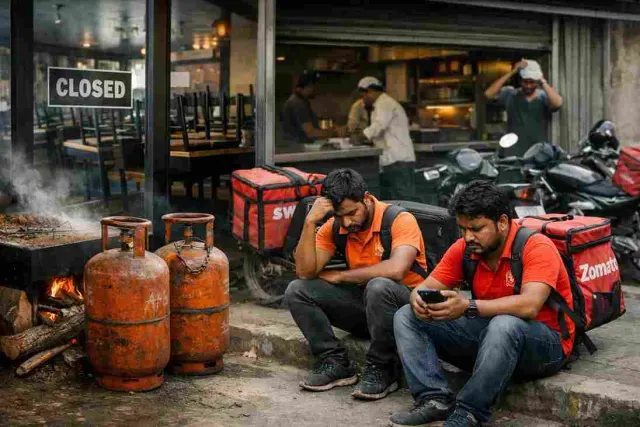
The shortage has forced many hotels, restaurants and cloud kitchens to reduce operations or shut temporarily, leading to a sharp fall in food delivery orders on platforms like Swiggy and Zomato.
Conflict in Middle East Behind Supply Disruption
The LPG shortage is reportedly connected to tensions in the Middle East after the closure of the Strait of Hormuz, a key global oil and gas shipping route. The disruption followed escalating retaliatory strikes involving the United States, Israel and Iran.
India depends heavily on LPG imports. Nearly 62 percent of the country’s LPG supply is imported, and about 90 percent of those imports come from Middle Eastern countries such as Qatar and Saudi Arabia.
To manage the sudden drop in supply, the Ministry of Petroleum and Natural Gas has reportedly prioritized LPG distribution for households and transport, leaving the commercial sector with limited availability.
Restaurants Forced to Cut Operations
The crisis has severely affected India’s hospitality industry. According to the National Restaurant Association of India, the shortage poses a serious threat to the country’s $335-billion food service sector.
In major cities such as Mumbai, Chennai and Bengaluru, many restaurants have reduced their operations or shut temporarily due to lack of cooking gas.
Some restaurants have reportedly cut their menus by up to 80 percent, focusing only on dishes that require minimal gas. Others have started using firewood or induction cooktops as temporary alternatives, which has led to a sudden rise in demand for electric cooking appliances.
Delivery Workers Among the Worst Affected
The slowdown in restaurant operations has hit the gig economy particularly hard. Food delivery platforms have seen a 50–60 percent drop in orders, leaving thousands of delivery agents without regular work.
Many delivery workers who previously handled 25 to 30 orders per day are now struggling to get even five orders daily. With earnings dropping sharply, several families dependent on delivery income are facing financial stress.
Cloud kitchens, which rely completely on online orders, have also suspended operations in many areas. This has resulted in job losses for both kitchen staff and delivery riders.
Gig Workers Demand Financial Support
The Gig and Platform Services Workers’ Union has described the situation as a “war-induced disaster” for workers dependent on the food delivery ecosystem.
The union has demanded immediate relief measures, including:
- ₹10,000 financial assistance for each affected worker
- A three-month moratorium on account deactivations for delivery workers
- Minimum daily incentives to support incomes during the crisis
- Recognition of food delivery as an essential service so restaurants can receive priority LPG supply
Market Reaction and Government Measures
The crisis has also affected investor sentiment. On March 12, shares of major food delivery companies reportedly fell by more than 4 percent amid concerns about declining orders.
The government has invoked the Essential Commodities Act to regulate supply and production of LPG during the crisis. Officials have also urged citizens not to engage in panic buying, assuring that domestic LPG supplies remain sufficient.
However, industry groups and worker unions say urgent steps are needed to restore commercial LPG supply and prevent a deeper crisis in the hospitality and gig economy sectors.
Reader Feedback
Was this article useful?
Stay Connected
Get the next important story before you miss it.
Subscribe to the newsletter for trusted updates, or join our WhatsApp channel for quick top-story alerts from The Eastern Times.
WhatsApp Channel
Prefer instant alerts? Join our WhatsApp channel for top stories and breaking updates.
Join on WhatsApp