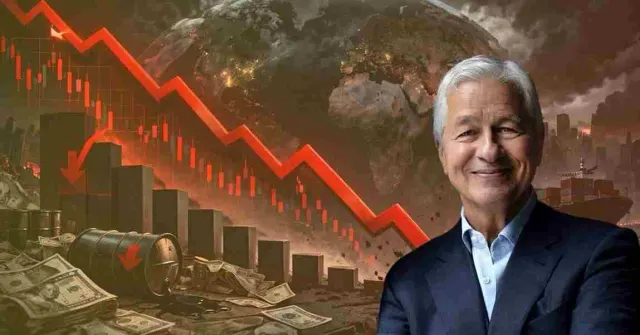
JPMorgan CEO Jamie Dimon Warns Iran War May Push Global Economy Toward Recession
Quick Summary
- Jamie Dimon warned that the escalating conflict involving Iran could disrupt global markets and push the economy toward a slowdown.
- Rising oil prices—historically linked to recessions—may fuel inflation, increase interest rates, and create volatility in financial markets.
- Experts like Matt Gertken say sustained high energy costs could reduce consumer demand and raise the risk of a global economic downturn.
Jamie Dimon, CEO of JPMorgan Chase, has warned that escalating tensions involving Iran, Israel, and the United States could soon push the global economy into a recession.
In his annual letter to shareholders published on April 6, 2026, Dimon highlighted that rising geopolitical tensions and missile strikes across the Persian Gulf region are already impacting global markets.
Oil Price Surge Raises Alarm
Dimon pointed out that sharp increases in oil prices have historically led to severe economic downturns. He referenced past crises in the 1970s and 1980s, where energy shocks triggered widespread recessions.
With crude oil prices climbing rapidly due to ongoing conflict, he warned that a similar situation could unfold in 2026.
Inflation and Interest Rate Risks
According to Dimon, the geopolitical instability could:
- Drive inflation higher
- Push central banks to raise interest rates
- Weaken financial markets
He cautioned that sustained commodity price shocks could deepen economic stress globally.


Conflict Impact and Global Concerns
Dimon also stressed the broader geopolitical risks tied to the ongoing conflict, which began escalating in late February 2026 with strikes on Iranian military infrastructure.
He emphasized the need for resolution, warning that prolonged instability could worsen economic conditions worldwide.
Experts Echo Similar Warnings
Matt Gertken, a geopolitical strategist at BCA Research, supported Dimon’s concerns.
Speaking on Barron's Live, Gertken noted that oil shocks have historically preceded recessions. He highlighted:
- Oil prices doubled before recessions in 1973 and 1979
- Prices surged nearly 80% during the 1990 Gulf War
- Recent prices jumped from ~$60 to nearly $120 per barrel
What This Means for Consumers
Experts warn that if oil prices remain elevated:
- Inflation will rise further
- Household incomes will shrink in real terms
- Consumer demand will weaken
This could result in higher fuel and food prices globally, putting pressure on everyday expenses.
Economic Outlook Remains Uncertain
Analysts say the trajectory of oil prices and the duration of geopolitical tensions will be key factors shaping the global economy in the coming months.
While risks to growth are increasing, the overall impact will depend on how markets, policymakers, and energy supply dynamics evolve.
Reader Feedback
Was this article useful?
Stay Connected
Get the next important story before you miss it.
Subscribe to the newsletter for trusted updates, or join our WhatsApp channel for quick top-story alerts from The Eastern Times.
WhatsApp Channel
Prefer instant alerts? Join our WhatsApp channel for top stories and breaking updates.
Join on WhatsApp