
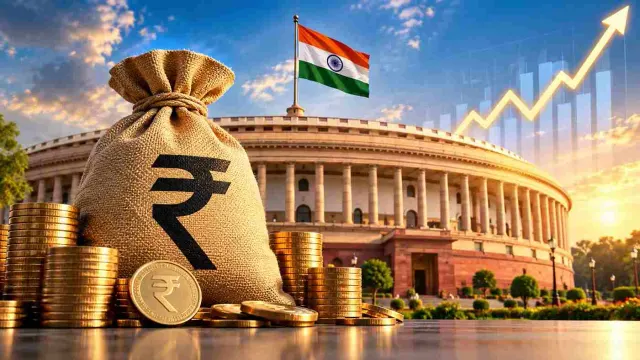
Centre to Borrow ₹7.86 Lakh Crore: Where Will the Money Go?
 The Eastern Times
 Quick Summary
- The Centre will borrow ₹7.86 lakh crore between October 2026 and March 2027 through government securities.
- The borrowing will include green bonds and will help finance government spending and manage its financial needs.
- The article explains where the money will come from, why the government needs to borrow and what the borrowing means for citizens.
The Central Government will borrow ₹7.86 lakh crore between October 2026 and March 2027 to meet its financial needs. For the full financial year 2026-27, the Centre plans to borrow around ₹15.99 lakh crore through market borrowing.
How will the government borrow?
The government will mainly sell government bonds and securities to investors such as banks, insurance companies, mutual funds and other financial institutions. The Centre will conduct 23 weekly auctions to raise the ₹7.86 lakh crore.
It will also raise ₹15,000 crore through Sovereign Green Bonds for eligible green projects.
The government also uses other short-term and debt-management instruments:
- Government bonds: For long-term borrowing.
- Treasury Bills: For short-term borrowing, usually for less than one year.
- Green Bonds: For eligible environment-friendly projects.
- Debt switching/buybacks: To manage existing government debt and repayment schedules.
- Ways and Means Advances: Short-term funds from the RBI when there is a temporary gap between government income and expenditure.
How much will the government borrow through each medium?
1. Long-term government securities — ₹7.86 lakh crore
This is the main borrowing planned for October 2026–March 2027. It will be raised through 23 weekly auctions.
The ₹7.86 lakh crore will be spread across different maturity periods:
| Government security | Share | Approx. amount |
|---|---|---|
| 3-year | 6.9% | ₹54,234 crore |
| 5-year | 12.1% | ₹95,106 crore |
| 7-year | 9.1% | ₹71,526 crore |
| 10-year | 26.3% | ₹2,06,718 crore |
| 15-year | 17.6% | ₹1,38,336 crore |
| 30-year | 9.2% | ₹72,312 crore |
| 40-year | 8.9% | ₹69,954 crore |
| 50-year | 9.9% | ₹77,814 crore |
| Total | 100% | ₹7,86,000 crore |
These percentages and the ₹7.86 lakh crore total are from the government's H2 borrowing plan.
2. Sovereign Green Bonds — ₹15,000 crore
Within the ₹7.86 lakh crore programme, ₹15,000 crore will be raised through Sovereign Green Bonds. So this ₹15,000 crore should not be added on top of ₹7.86 lakh crore. The green bonds will be issued as part of the dated-securities programme.
3. Treasury Bills — ₹2.99 lakh crore in Q3
Separately, the government plans to raise ₹2.99 lakh crore through Treasury Bills during October–December 2026.
These are short-term borrowings:
- 91-day T-Bills
- 182-day T-Bills
- 364-day T-Bills
This is separate from the ₹7.86 lakh crore dated-securities borrowing.
4. Ways and Means Advances — ₹50,000 crore limit
The RBI has set a ₹50,000 crore WMA limit for H2 FY27. This is not a planned ₹50,000 crore borrowing. It is a short-term facility that the government can use if there is a temporary mismatch between its receipts and payments.
In very simple terms
Long-term borrowing: ₹7.86 lakh crore
Short-term T-Bill borrowing in Q3: ₹2.99 lakh crore
Emergency/temporary cash facility from RBI: up to ₹50,000 crore
Green bonds: ₹15,000 crore included within the ₹7.86 lakh crore
Why does the government need to borrow?
The government collects money mainly through taxes and other revenues. But its expenses can be higher than its income. It needs to spend on roads, railways, defence, healthcare, education, welfare schemes, salaries, infrastructure and interest payments on existing debt.
Borrowing helps the government meet this gap and continue its planned spending.
Is this borrowing higher than the Budget estimate?
No. The original Budget estimate for FY27 was ₹17.20 lakh crore of gross market borrowing.
The current full-year borrowing plan of around ₹15.99 lakh crore is about ₹1.20 lakh crore lower than the original estimate.
What does it mean for citizens?
Government borrowing is ultimately a future financial obligation. The borrowed money has to be repaid with interest.
Therefore, the important question is not only how much the government borrows, but also where the money goes and what citizens get from it.
If borrowing creates useful infrastructure, better public services and economic activity, it can provide long-term benefits. But higher borrowing also means future governments will have to manage the interest and repayment burden.
Reader Feedback
Was this article useful?
Stay Connected
Get the next important story before you miss it.
Subscribe to the newsletter for trusted updates, or join our WhatsApp channel for quick top-story alerts from The Eastern Times.
WhatsApp Channel
Prefer instant alerts? Join our WhatsApp channel for top stories and breaking updates.
Join on WhatsApp