
By The Eastern Times Europe Desk | Brussels
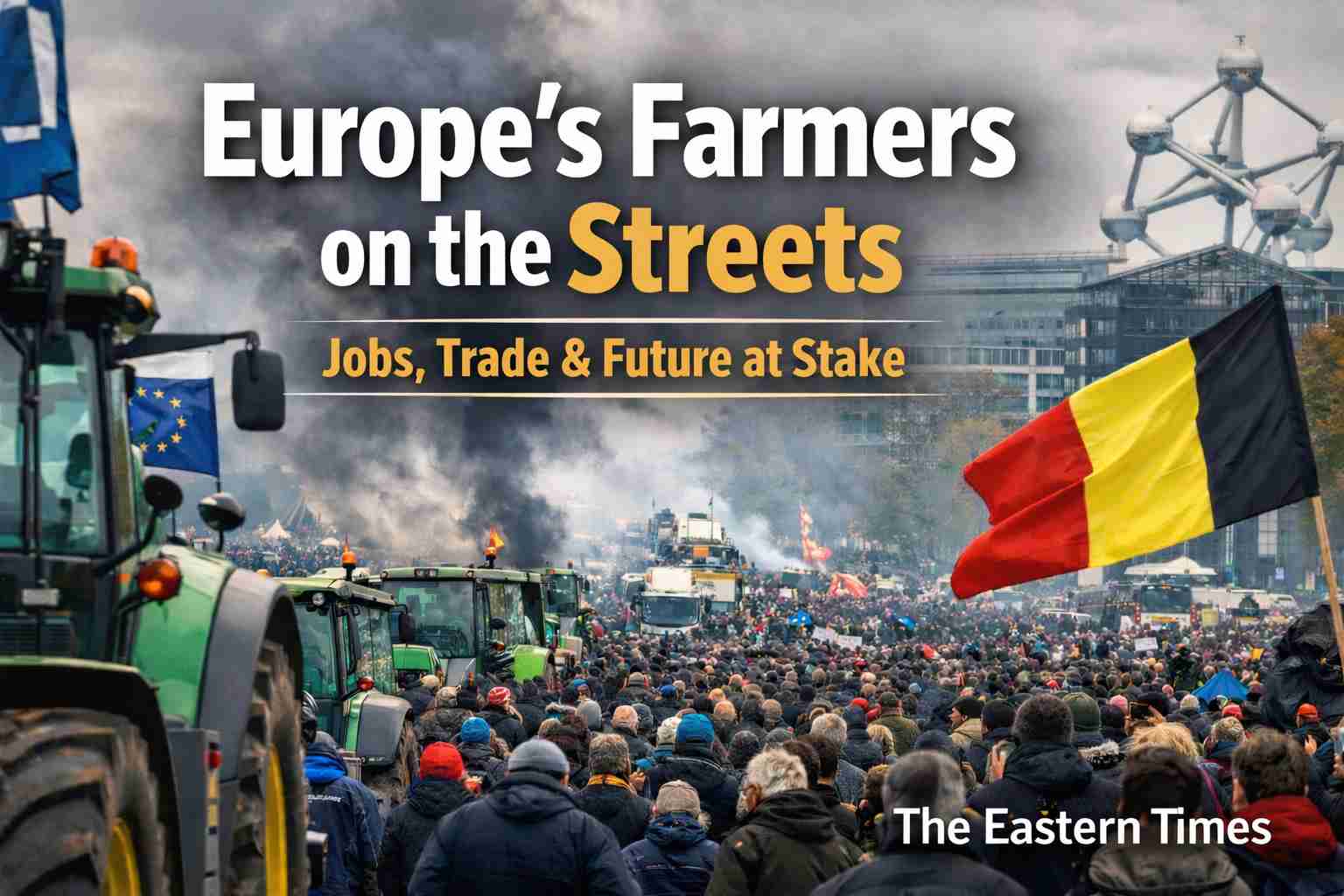
Thousands of farmers from across the European Union have taken to the streets of Brussels, turning tractors into symbols of resistance against what they see as policies that threaten their survival. The protest is not just about farming — it reflects deeper economic stress and political discontent within Europe.
Who Are the Protesters?
The farmers have come from several EU countries, mainly France, Belgium, Italy, Poland, Spain, Ireland, and Germany, along with others from Central and Eastern Europe. Though they speak different languages, they share a common concern: farming in Europe is becoming less profitable and more uncertain.
Why They Are Protesting
The anger is driven by both economic pressures and political decisions.

Economic reasons:
Fear of cheap imports: Farmers oppose the proposed EU–Mercosur trade deal with South American nations like Brazil and Argentina. They worry that cheaper beef, sugar, poultry, and soy will flood European markets and push prices down.
Rising costs: Fuel, fertilisers, animal feed and machinery have become more expensive, while farm incomes have not kept pace.
Strict EU rules: European farmers follow tough environmental and animal welfare standards, which raise costs and make competition harder against imports produced under looser rules.
Uncertain subsidies: Many depend on EU farm support under the Common Agricultural Policy (CAP) and fear future cuts.
Political reasons:
Feeling ignored: Farmers believe decisions are made in Brussels without listening to rural communities.
Trade over livelihoods: They feel EU leaders prioritise global trade deals over protecting local food producers.
Divisions inside the EU: Countries like Germany and Spain back the deal for economic growth, while France and Italy resist it under farmer pressure, showing political cracks within Europe.
What Are Their Demands?
Farmers are calling for:
Delay or rejection of the EU–Mercosur deal unless strong protections are added.
Fair competition, meaning imports must meet the same standards as EU products.
Stronger financial support and stable farm incomes.
Less bureaucracy and more practical rules for farming.
Economic Impact on Europe
If the deal goes ahead, Europe’s industrial exporters may benefit from better access to South American markets. But farmers fear the agricultural sector will suffer, leading to falling rural incomes and possible job losses. Protests also disrupt transport and business in Brussels, highlighting how deeply agriculture is linked to Europe’s wider economy.
Global Impact of the Protests
The unrest has already slowed progress on one of the world’s largest trade agreements, sending signals to global markets and trade partners. A delay or collapse of the deal could reshape trade ties between Europe and South America and encourage other countries to rethink their own negotiations with the EU.
The Eastern Times Perspective
The Brussels protests underline a growing tension in Europe: global ambition versus local survival. While free trade promises growth, it risks leaving farmers behind if safeguards are weak. The farmers’ tractors in Brussels are not just blocking roads — they are blocking a path that many rural Europeans believe leads to economic loss and political neglect.
For EU leaders, the challenge is clear: balance global trade goals with the need to protect the people who feed Europe. Without that balance, protests like these may only grow louder.
About the Author
The Eastern Times Europe Desk covers European politics, economy, and social movements. Our reporters bring verified ground insights and independent analysis on how EU policies shape lives across the continent.
Facebook:
 https://www.facebook.com/profile.php?id=61577015427068
X (Twitter):
 https://x.com/tet_editor
Instagram:
 https://www.instagram.com/the_eastern_times_/?next=%2F&hl=en
- Youtube : https://www.youtube.com/@TheEasternTimesOfficial
Mail (Email):
 contact.theeasterntimes@gmail.com