
Greenland has recently become an important topic in global politics. A few years ago, U.S. President Donald Trump expressed interest in buying Greenland. This statement surprised many countries and started international discussions. Denmark, which governs Greenland, and other global powers reacted carefully. Russia also warned that any military activity there could create tension.
But Greenland is not important only because of politics. Its real importance lies in geography, climate, and science.
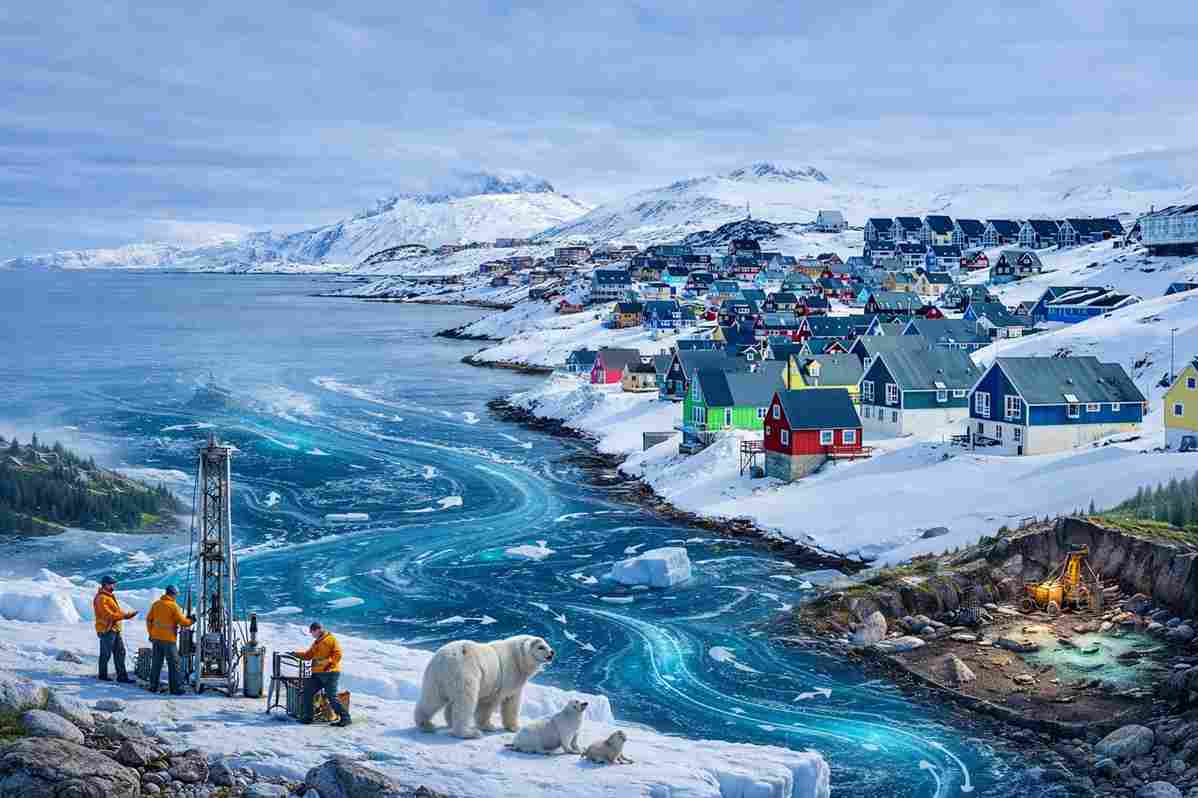
Greenland is located between the North Atlantic Ocean and the Arctic Ocean. It is the largest island in the world, covering about 2.1 million square kilometers. This is nearly two-thirds the size of India. However, only about 58,000 people live there. Because the population is very small and human activity is limited, Greenland has become an ideal place for scientific research.
Almost 80 percent of Greenland is covered by ice. The ice sheet is about two kilometers thick on average. Scientists say that if all the ice in Greenland melts, global sea levels could rise by around seven meters. This would seriously affect coastal cities and island nations around the world.

Every year, Greenland is losing a huge amount of ice. Since the 1990s, about 300 billion tons of ice have been melting annually. In 2019, around 500 billion tons melted — the highest recorded so far. This melting is one of the main reasons for rising sea levels and climate change concerns.
Greenland is also very important for climate research. Scientists use a method called “ice core drilling.” They drill deep into the ice and collect samples. These ice samples contain tiny air bubbles that have been trapped for thousands of years. By studying them, scientists can learn about past temperatures and levels of gases like carbon dioxide and methane. Some ice cores are more than 120,000 years old. In this way, Greenland helps us understand Earth’s climate history.
The island is also rich in minerals. It is believed to have rare earth elements, which are used in electric vehicles, renewable energy technology, and electronics. Minerals like uranium, zinc, nickel, and copper are also found there. However, mining is difficult because of heavy ice cover, extreme weather, high costs, and environmental risks.
Greenland also affects ocean currents. When its ice melts, fresh water flows into the Atlantic Ocean. This affects a system called thermohaline circulation, which controls the movement of ocean water based on temperature and salt levels. This system helps maintain the climate of Europe and North America. Scientists warn that if ice melting continues at the current speed, this ocean system could weaken in the future.
Greenland is home to Arctic wildlife such as polar bears, seals, and walruses. Rising temperatures and melting ice are affecting their habitats and food chains.
The Inuit people have lived in Greenland for centuries. They understand the land, sea, and ice very well. Today, their traditional knowledge helps scientists study climate change more effectively.
In conclusion, Greenland is much more than a distant icy island. It plays an important role in global climate, scientific research, natural resources, and international politics. It can truly be called a “laboratory of the Earth.” Protecting Greenland is important not just for one country, but for the entire world.
Author Bio:

Dr. Raj Kishore Panda (MBBS, PGPN) is a medical professional and commentator who writes on socio-economic affairs, geopolitics, environmental challenges, and public health issues.

click on icons to connect with us through official social media channels






Russia Completely Bans WhatsApp Over Law Violations
You May Be Bathing the Wrong Way: Know the Correct Ayurvedic Way
