
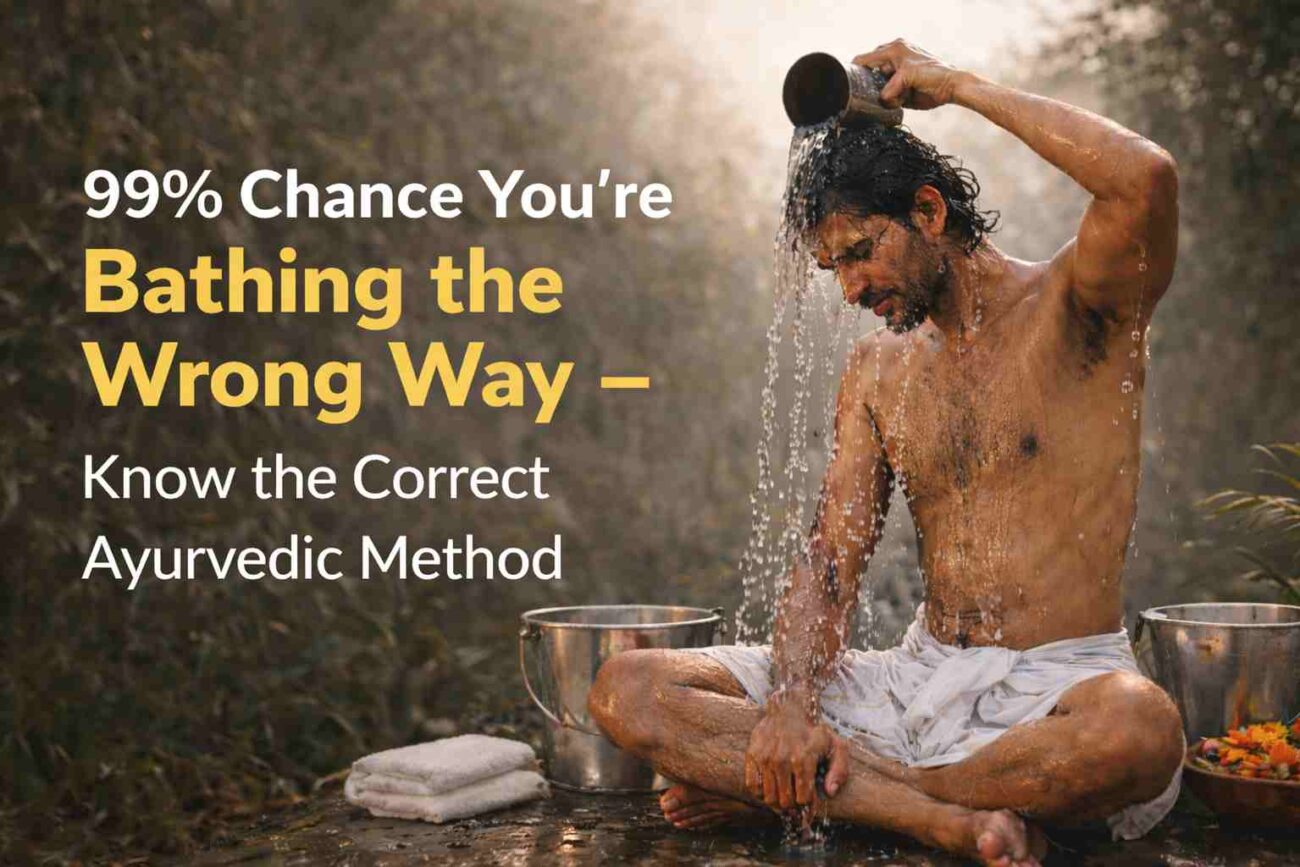
You may be astonished to know that nearly 95% of people do not follow the correct way of bathing. Do you? Most of us consider bathing just a daily routine, but according to Ayurveda, bathing is a powerful health practice.
Bathing keeps the body healthy, helps regulate blood pressure, reduces anxiety and stress, and keeps the skin youthful even in old age. In Ayurvedic philosophy, water itself is considered medicine. Water is believed to be the natural enemy of disease and has a special power to promote health and vitality.

Ayurvedic scriptures state that bathing removes burning sensations, fatigue, exhaustion, sweating, itching, and thirst. It refreshes the heart and mind, cleanses impurities from the body, and is considered the best purifier of the senses. Bathing also reduces laziness and negative tendencies, increases vitality, purifies the blood, and stimulates digestive fire.
Right Timing of Bathing
According to ancient scriptures, the best time to bathe is during Brahma Muhurta, which is before sunrise.Bathing during this time improves health, increases lifespan, brings prosperity, and enhances beauty. Therefore, it is considered the most beneficial time for bathing.
If one bathes after sunrise and before 8 a.m., moderate benefits are obtained. However, bathing between 8 a.m. and 12 noon is considered less effective and may increase the chances of cold, cough, and allergic conditions.
Process Before Bathing
After completing your morning routine, such as using the toilet and brushing your teeth, one should gently massage the body and head with oil.
Ayurveda recommends different oils for different seasons:
- Mustard oil in winter
- Sesame oil in summer
- Coconut oil for Coastal hot climates
Choose the oil according to the climate. Massage the entire body with oil and then perform light exercises. If you do not exercise regularly, simple stretching for two minutes is sufficient.
following articles will also help you for your lifestyle improvement.
Health Is Real Wealth: 7-Step Morning Routine to Live a Healthy Life
How to manage anxiety and stress in Simple ways
Money Management Secrets: Proven Strategies to Achieve Financial Independence
Oil massage before bathing is a highly beneficial habit. In cold seasons, it helps warm the body and prevents catching a cold. In summer, sesame oil is ideal, while in winter, thick mustard oil provides better protection and warmth.
Water for Bathing
For bathing, use normal cold water (not chilled), as it refreshes the body and improves circulation. In winter, slightly warm water may be used.
For children under six years, elderly people, or those who are ill, only light warm water is recommended. However, warm or hot water should never be poured on the head, as it may cause hair fall and weaken eyesight. Hot water can also lead to premature greying. On the other hand, using cold water on the head helps maintain healthy hair and strong eyesight.
Only 2 to 2½ buckets of water are sufficient for a proper bath. Ayurveda also emphasizes not wasting water unnecessarily.
Traditionally, the best places for bathing were rivers, ponds, and waterfalls. However, in modern times, people live in apartments and houses, so bathrooms are commonly used.
Correct Method of Bathing
Step 1: Wet the Body (Start with the Head)
Use about half a bucket of water, but always pour water on the head first, not on the body.
According to Ayurveda, when water is poured on the head first, the excess heat of the body is released through the feet. This helps regulate body temperature and prevents cold, cough, and discomfort.
After wetting the head, gently pour the remaining water over the rest of the body. This prepares the body for proper cleansing and opens the channels for better circulation.
Step 2: Gentle Rubbing
Rub the body gently with a thick or rough towel. Do not apply too much pressure. The skin may turn slightly red, which indicates that the pores are opening.
This process:
- Opens skin pores
- Removes dead skin
- Releases toxins
- Improves blood circulation
- Exercises the skin and muscles
Step 3: Final Rinse
After rubbing, use another bucket of water to rinse the body completely. This is considered the proper method of bathing.
On normal days, one bucket of water is sufficient for rinsing.
Once or twice a week, you may add: Milk (3–4 tablespoons in one bucket) during the final rinse or Pure essential oil (3–4 drops in one bucket) for freshness.
Avoid using chemical-based soaps, shampoos, and body wash products. instead, natural alternatives such as multani mitti (fuller’s earth), sour curd, lemon juice, shikakai, and reetha (soapnut) are recommended for cleansing.
After Bathing
After bathing, use a clean, dry cotton towel to wipe the body. Wash the towels regularly to maintain hygiene.
This completes the ideal bathing process.
Benefits of This Method
If you follow this method regularly:
- Your skin will glow naturally
- Pimples and acne will gradually disappear
- Your skin will look younger compared to others
- Wrinkles and signs of ageing will appear much later
- Your body will feel lighter, fresher, and more energetic
Final Thought
One important thing to remember is that any action performed with positive intention brings greater benefit. Bathing with calm, positive thoughts not only cleanses the body but also purifies the mind.
When done correctly, bathing becomes more than a habit—it becomes a daily healing ritual for physical, mental, and emotional well-being.

click on icons to connect with us through official social media channels






Mass Resignation in Odisha Congress Sparks Talk of New Regional Party
Ravenshaw University Promotion Scam Allegations: Inquiry Committee Formed
OAS Promotion Dispute Over Seniority Blocks New Recruitment in Odisha, Aspirants Frustrated
Bank Employees Announce Nationwide Strike on January 27
Trump Says US Helped Denmark Save Greenland During World War II, Calls Denmark Ungrateful
Zomato Founder Deepinder Goyal Steps Down as Eternal Group CEO, Albinder Dhindsa Takes Charge
world, finance, home, opinion, lifestyle, odisha
