

By Sangram Bajrabahu
The Eastern Times | Health & Trade Desk
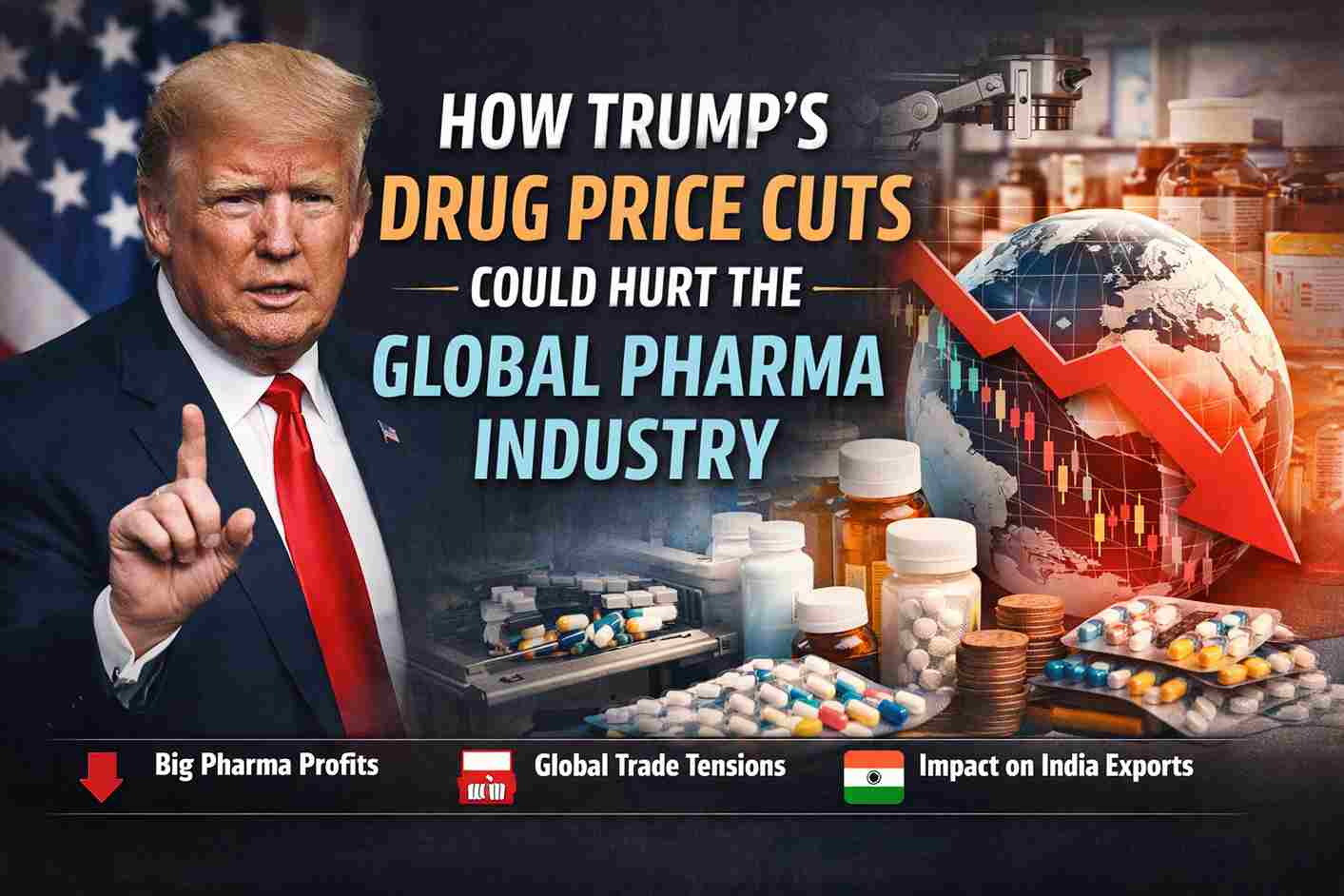
President Donald Trump’s push to cap U.S. drug prices at the lowest level paid anywhere in the world could profoundly reshape pharmaceutical markets far beyond America. The policy, based on “most favoured nation” pricing and backed by tariff threats, may trigger a chain reaction globally.
Why the Move Matters trump
The U.S. accounts for around 40–45 percent of global pharma revenues.
American drug prices are often two to three times higher than in Europe or many emerging markets.
Big pharma uses high U.S. profits to fund research and offset lower prices elsewhere.
A significant shift in U.S. pricing could ripple through global supply chains, investment decisions and national pricing strategies.
How It Could Hurt Pharma Companies Worldwide
1. Revenue hit for multinational drugmakers
Forcing U.S. prices down to global lows could slash earnings. Companies such as Pfizer, Merck, Novartis, Roche, GSK and Sanofi rely heavily on U.S. sales. Lower cash flows may affect shareholder returns and expansion plans.
2. Pressure on R&D and innovation
High U.S. margins subsidise costly drug development. Price caps could mean fewer blockbuster drugs, delayed trials and tighter research budgets.
3. Global price convergence
If the U.S. benchmarks to cheaper markets, companies may try to raise prices elsewhere to protect margins, potentially pushing up drug costs in Europe and some developing countries.
4. Tougher negotiations with governments
Countries with state-controlled pricing may face pressure from Washington to increase prices. Pharma firms could reduce supplies or delay launches in lower-price markets.
5. Volatility in pharma stocks
Investors may re-rate global pharma stocks due to weaker earnings outlook, leading to reduced valuations worldwide.
6. Trade and tariff risks
Using tariffs to enforce price alignment could disrupt supply chains. Export-focused pharma hubs may face higher trade barriers and uncertain regulatory environments.
U.S. Drug Import Data: Latest Figures
In 2024, the United States imported approximately $212.7 billion worth of pharmaceutical products, making drugs one of the country’s largest import categories.
Around 90 percent of prescription medicines consumed in the U.S. are imported, underlining deep reliance on foreign manufacturing.
Top Suppliers of Medicines to the U.S. (2024)
Based on the latest trade data:
Ireland – about 28 percent of U.S. pharmaceutical imports by value; a manufacturing hub for Pfizer, Johnson & Johnson, AbbVie and Eli Lilly.
Switzerland – roughly 8–9 percent, key supplier of high-end biologics and patented medicines.
Germany – around 7–8 percent, known for specialty drug exports.
India – significant supplier (about $12.7 billion), especially of generic finished drugs, though lower by value share.
China and others (Belgium, Italy, UK, France) – the remainder, with China a major source of APIs and intermediates.
In short:
Europe leads by value in branded medicines.
India leads by volume in generics.
China underpins the supply chain with raw materials.
Who Gets Hurt the Most Globally?
Big Pharma in the U.S. and Europe: likely the biggest revenue loss.
Countries hosting branded drug plants like Ireland and Switzerland.
R&D-heavy firms dependent on U.S. pricing power.
Export-driven generic makers, including those in India, due to tighter margins.
Who May Benefit?
U.S. consumers and insurers through lower prices.
Governments globally if price negotiations yield fairer pricing.
Generic drug makers in volume terms, though margins could remain under pressure.
The Eastern Times View
Globally, Trump’s bid to benchmark U.S. drug prices against the lowest in the world threatens to cut Big Pharma revenues and unsettle the funding model that supports innovation. For India, even after recent relief from pharmaceutical tariffs, lower U.S. prices could squeeze margins for generics exporters and keep the risk of renewed trade pressure alive. If tariffs resurface as leverage in pricing talks, tensions could rise again.
Bottom line: While patients in the U.S. may benefit from cheaper medicines, the global pharmaceutical industry faces uncertainty, tighter margins and potential disruption in investments, manufacturing strategies and international pricing systems — with significant implications for India’s role as a leading generics supplier.
Connect with us through social media
Facebook:
 https://www.facebook.com/profile.php?id=61577015427068
X (Twitter):
 https://x.com/tet_editor
Instagram:
 https://www.instagram.com/the_eastern_times_/?next=%2F&hl=en
- Youtube : https://www.youtube.com/@TheEasternTimesOfficial
Mail (Email):
 contact.theeasterntimes@gmail.com

https://theeasterntimes.com/us-venezuela-tensions-will-oil-prices-rise/