Advertisement

Embracing Old Age: Wisdom, Resilience, and Purpose in Later Life
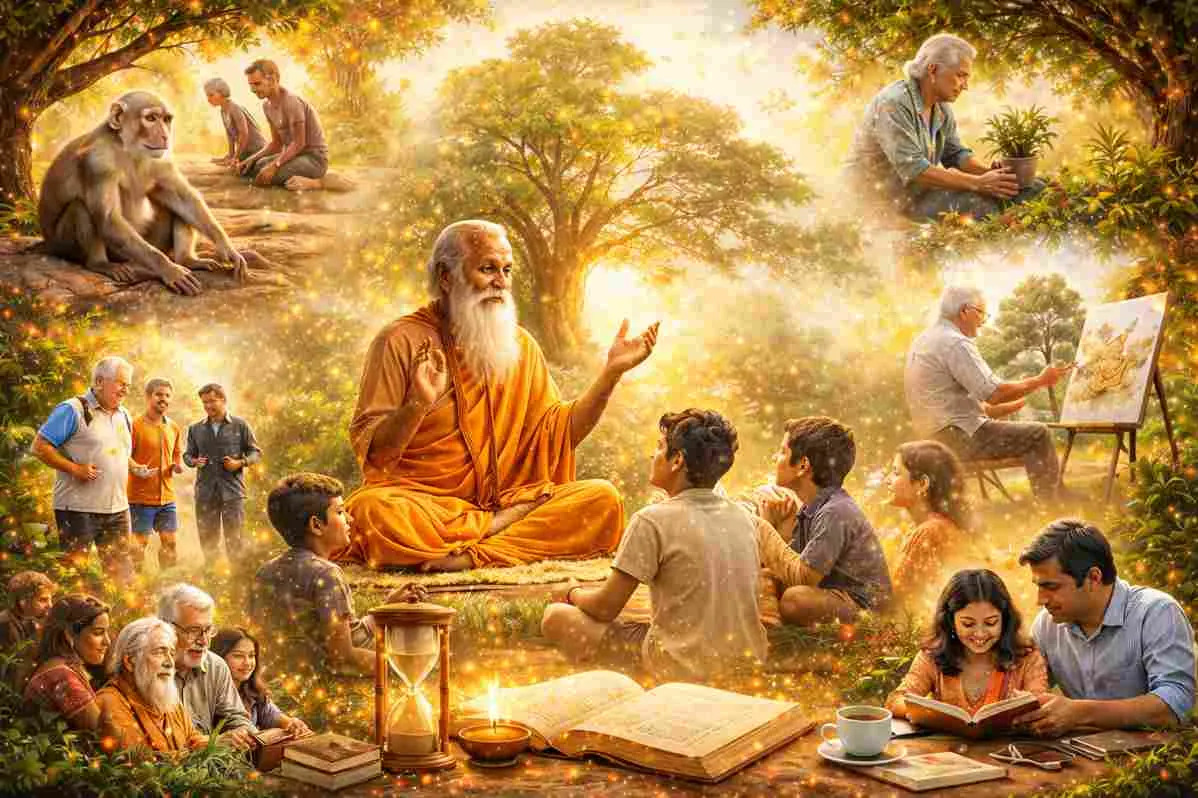
In a certain kingdom, near the queen’s palace, stood the royal kitchen, and beside it, the royal stable that housed the state’s prized horses. A troop of monkeys often wandered into the area, creating chaos by sneaking into the kitchen, stealing fruits and vegetables, and disturbing the royal chefs.
Among them was an old, wise monkey who repeatedly warned the younger ones to stop their mischief. He urged them to stay away from the palace grounds. But the young monkeys, brimming with energy and arrogance, ignored his advice. Frustrated and fearful of the consequences, the old monkey eventually left and took refuge deep in the jungle.
Days passed. The young monkeys continued their disruptive behavior. One day, enraged beyond control, the head chef threw a burning log at them to drive them away. The log missed its target and landed instead in a pile of dry fodder meant for the royal horses. Within moments, the fodder caught fire, and the flames spread rapidly through the stable. The trapped horses were severely burned.

Since the horses were vital to the kingdom’s army, the king ordered immediate treatment. The royal physician declared that the only effective remedy for the burns required medicine made from monkey fat. Acting under royal command, soldiers captured and killed many monkeys to prepare the treatment.
The tragedy could have been avoided had the young monkeys listened to the wisdom of the old one.
The story reminds us that age brings foresight, experience, and prudence — qualities often dismissed by the impulsiveness of youth.
Old Age: A Blessing of Experience
Old age is not a burden; it is a blessing — a confluence of wisdom, experience, and awareness. Today, nearly 500 million people worldwide are aged 65 or older. In developed nations, the elderly constitute about 10–15 percent of the population. Yet many people are mentally and spiritually unprepared to embrace aging, often perceiving it as decline rather than growth.
In modern society, one of the greatest challenges for seniors is finding meaningful engagement and purpose during later life.
Old Age Through the Lens of Ancient Wisdom
In the Vedic era, old age was celebrated as a joyful and dignified stage of life. Longevity was considered a divine blessing. The Atharva Veda expresses the aspiration:
"Pashyema Sharadah Shatam, Jivema Sharadah Shatam"
— May we see a hundred autumns; may we live a hundred years.
Even today, we bless others with “Dirghayu Bhavah” — may you live long.
In the Mahabharata, old age symbolizes responsibility and accumulated wisdom. In the Ramayana, Lord Rama sends Lakshmana to learn life’s profound lessons from Ravana at the moment of his death, acknowledging that insight often accompanies age.
Outside Indian tradition, other philosophies equally honor aging. Taoism views old age as a time for reflection and spiritual maturity. The path of Vairagya (renunciation) encourages clarity and detachment in later years.
The Roman philosopher Marcus Tullius Cicero, in his essay On Old Age, emphasized the dignity, productivity, and philosophical richness of this life stage.
Philosopher J. Krishnamurti described old age as the maturity of the mind — though sometimes accompanied by resistance to change. Yet many thinkers regard it as a period of mental peace and deep reflection.
Arthur Schopenhauer highlighted two virtues often found in later life: profound love and humility. Far from decline, old age offers opportunities to share wisdom with younger generations.
Lessons from Lives Well Lived
The legendary artist Pablo Picasso remained creatively active until the age of ninety-nine. Psychologist Erik Erikson emphasized that later life brings clarity through reflection — asking questions such as:
“What do we hold on to? What do we let go of? How do we find fulfillment?”
German poet Johann Wolfgang von Goethe completed the second part of Faust despite serious illness. Albert Ellis, founder of Rational-Emotive Behavior Therapy, wrote Optimal Aging: Get Over Getting Older at eighty, urging positive thinking and resilience.
Viktor Frankl, Holocaust survivor and psychiatrist, warned against living “just to live” without purpose. He insisted that life must have a why — especially in old age.
Friedrich Nietzsche urged us to affirm life despite suffering:
“Say yes to life in spite of everything.”
The Eternal Spirit: Living Beyond Age
Many elderly individuals feel their lives are over, perceiving themselves as having nothing left to achieve. The gap between youthful dreams and present realities can create despair. This is why preparing for old age — physically, mentally, emotionally, and financially — is essential.
A person who has confronted life’s struggles with courage and meaning can continue to flourish in later years. Like Sisyphus, endlessly pushing his boulder uphill, one can still find dignity and even joy in perseverance.
Old age does not mean surrender. Even amidst sorrow and hardship, one can affirm:
“I will not give up.”
By harmonizing body, mind, and spirit, we transcend the limitations of age. Through purposeful action and noble conduct, we approach a form of immortality.
The spark of life must remain alive within us. With the ancient affirmation: “Aham Brahmasmi” — I am the divine essence.
Original Writer: Gouro Chandra Tripathy
Translation: The Eastern Times
Author Bio
Gouro Chandra Tripathy is a senior columnist and social thinker known for his reflective writings on culture, philosophy, and human values.
